
Green hero
Driving environmental action through creativity, collaboration, and a commitment to a sustainable future.
Cyan hero
Driving environmental action through creativity, collaboration, and a commitment to a sustainable future.
Plum hero [spark]
Driving environmental action through creativity, collaboration, and a commitment to a sustainable future.
Teal hero
Driving environmental action through creativity, collaboration, and a commitment to a sustainable future.
Pink hero
Driving environmental action through creativity, collaboration, and a commitment to a sustainable future.
Black hero
Driving environmental action through creativity, collaboration, and a commitment to a sustainable future.
Trusted by top organisations across the globe



Discover the Impact of our work on climate change and sustainability.
50%
Engagement in Initiatives
40%
Reduction in Carbon Footprint
60%
Support for Sustainability
40%
Reduction in Carbon Footprint

our journey towards a
sustainable
future
Morbi sed imperdiet in ipsum, adipiscing elit dui lectus. Tellus id scelerisque est ultricies ultricies. Duis est sit sed leo nisl, blandit elit sagittis. Quisque tristique consequat quam sed. Nisl at scelerisque amet nulla purus habitasse.
Nunc sed faucibus bibendum feugiat sed interdum. Ipsum egestas condimentum mi massa. In tincidunt pharetra consectetur sed duis facilisis metus. Etiam egestas in nec sed et. Quis lobortis at sit dictum eget nibh tortor commodo cursus.
Odio felis sagittis, morbi feugiat tortor vitae feugiat fusce aliquet. Nam elementum urna nisi aliquet erat dolor enim. Ornare id morbi eget ipsum. Aliquam senectus neque ut id eget consectetur dictum. Donec posuere pharetra odio consequat scelerisque et, nunc tortor. Nulla adipiscing erat a erat. Condimentum lorem posuere gravida enim posuere cursus diam.


Short heading goes here
Morbi sed imperdiet in ipsum, adipiscing elit dui lectus. Tellus id scelerisque est ultricies ultricies. Duis est sit sed leo nisl, blandit elit sagittis. Quisque tristique consequat quam sed. Nisl at scelerisque amet nulla purus habitasse.
Nunc sed faucibus bibendum feugiat sed interdum. Ipsum egestas condimentum mi massa. In tincidunt pharetra consectetur sed duis facilisis metus. Etiam egestas in nec sed et. Quis lobortis at sit dictum eget nibh tortor commodo cursus.
Odio felis sagittis, morbi feugiat tortor vitae feugiat fusce aliquet. Nam elementum urna nisi aliquet erat dolor enim. Ornare id morbi eget ipsum. Aliquam senectus neque ut id eget consectetur dictum. Donec posuere pharetra odio consequat scelerisque et, nunc tortor. Nulla adipiscing erat a erat. Condimentum lorem posuere gravida enim posuere cursus diam.
Accordion Information
Find answers to your questions about our mission, initiatives, and how you can get involved.
Adaptive Futures Bradford programme is closed to new applications, but we will share knowledge gained and examples of initiatives that local Bradford organisations are working on. Sign up to our newsletter to receive new resources and insights as they’re published.
From January 2026, two free programmes led by Julie’s Bicycle (JB), will focus on Bradford’s unique culture and environment, offering space to connect, learn, workshop and create responses to the challenges (and possibilities) of our shared future.
Watch our six short step-by-step tutorial videos, taking you through practical approaches to reducing your energy usage.
Tutorial 1: How to spot energy saving opportunities through energy monitoring
Tutorial 2: Carbon investment vs. offsetting
Tutorial 3: Getting to know where energy is used in your buildings
Tutorial 4: Optimising energy use at night
Tutorial 5: What is net zero and how do we get there?
Tutorial 6: The difference between the Science Based Targets Initiative and Race to Zero Campaign
Download the fifth section of the Buildings Net Zero Energy programme which includes:
Download the second section of the Buildings Net Zero Energy programme, which includes:
Download the third section of the Buildings Net Zero Energy programme which includes:
Download the second section of the Buildings Net Zero Energy programme, which includes:
- Understanding Energy Needs and Use (PDF)
Self Audit (accompanying resource – Docx)
Night Time Audit worksheet (accompanying resource – Excel)
Equipment Asset worksheet (accompanying resource – Excel)
Alongside completing the Self-Energy Audit use the Equipment Asset and Night-Time Energy worksheets to gain a fuller understanding of energy use in the building and identifying energy efficiency opportunities.
Download the first section of the Buildings Net Zero Energy programme which includes:
Ecocide literally means “killing the environment” and it relates to any crime resulting in mass damage or destruction to ecosystems, as well as serious harm to the health and well-being of inhabitant species, including humans. Environmental activists are campaigning for the crime of ecocide to become written into international law and be recognised by the United Nations. So that no crime against the natural living world would go unpunished, from ocean damage to deforestation, mineral extraction to deep sea mining. Campaigns such as ‘Stop Ecocide‘ are leading the movement to end ecocide damage which has been committed repeatedly over decades, and INTERPRT investigates environmental crimes using geospatial analysis, design and architectural methodologies. Their work actively supports criminalizing Ecocide as an international crime.
If ecocide crimes are written into law, it will also determine who is responsible for environmental damage, from governments to corporations and individuals, ensuring they are criminally liable. Arguably you could say that some forms of ecocide – depending on your definition – are already recognised by UK law, such as the destruction of habitats and species under the Wildlife and Countryside Act. Many cases of ecocide have been committed repeatedly over decades, and cumulatively are directly linked to the climate and ecological emergency the world now faces.
Loss and damage is essentially about responding to climate change impacts. These are the impacts that cannot be prevented through climate mitigation and adaptation efforts. ‘Losses’ are seen as permanent losses that cannot be recovered – for example life loss, biodiversity and species loss or loss of cultural heritage – while ‘Damage’ refers to impacts that may be able to be repaired or restored. Ultimately, as a result of shortcomings in both mitigation policy, and inadequate action and support for adaptation in communities already experiencing the biggest impacts from climate change, the need to deal with Loss and Damage is rising up the political agenda. There is a need to support those most impacted by climate change through both technical support and finance. Key to this issue is who takes responsibility for these losses, with calls for reparations from richer countries to poorer ones for historical emissions.
This is a highly complicated and technical part of the Paris Agreement, which essentially sets out the framework for voluntary global cooperation on trading emissions reductions – also referred to as international ‘carbon markets’ or in technical Article 6 language ‘Internationally Traded Emissions Outcomes’ (ITMO’s) – to enable countries to reduce their emissions and meet the pledges set out in their NDC’s (Nationally Determined Contributions – see explainer 11 above).
The intention is to establish a fair system, where countries that find it more difficult to absorb carbon emissions (for example, due to lack of land area and natural carbon sinks), can gain credit for paying for reductions in other countries where carbon can be absorbed or captured more easily or cheaply. The overachieving countries that are capturing carbon in excess of their National pledges could then be paid for their efforts by other countries. Done well, this supports the aims of Net Zero globally and presents an opportunity for a win-win for emitters and those offering effective carbon reduction solutions. But done badly, it could let the big emitters ‘off the hook’ from making meaningful cuts to their emissions, by double counting of carbon credits or trading fictional emissions reductions. Getting the rules for carbon markets right is essential to the success of the Paris Agreement. There are several sub-sections of Article 6 governing different aspects of the agreement. Achievements in the agreement on Article 6 made at COP26 are summarised here.
Nationally Determined Contributions (NDC’s) are proposals outlining each country’s own aims and plans of action for reducing National greenhouse gas emissions and outlines suggested routes to adapt to a changed climate. These pledges to act to reduce emissions are a central part of the Paris Agreement (made in 2015 at COP21, and explained here), whereby each participating country would set out their own plan for decarbonising their economies, and monitor and share progress towards achieving these goals. NDC’s are submitted by all participating countries every 5 years as part of the UNFCCC (United Nations Framework Convention on Climate Change) process, outlined in the Paris Agreement.
The planned reductions are combined to assess 3 areas: global efforts in reducing greenhouse gas emissions; whether plans are sufficient to stay within the global temperature goal (1.5 degrees above pre-industrial levels), and; whether they are being achieved in reality. Every 5 years countries are expected to report on their progress, but also to raise their ambitions, updating their plans to be able to decarbonise to meet the global temperature goal.
This agreement was updated in the ‘Glasgow Climate Pact’ during 2021’s COP26 summit, where countries are ‘requested’ to revisit and strengthen their climate pledges by the end of 2022. This goes beyond the Paris Agreement for updating pledges every 5 years, to place an expectation on countries to raise their ambitions next year. This is critical, because the next round of NDC’s will cover the period from 2031 onwards, and at the moment there is a large gap between current pledges to 2030, and the 1.5 degree goal. There remains only the narrowest of opportunities to keep 1.5 degrees within reach, which makes increasing ambitions imperative to the success of the Paris Agreement.
Net zero should mean zero emissions are created from areas such as energy generation, buildings, surface and road transport. Net zero is about making the largest possible reductions that you can make to your overall footprint, using all of the means available to you. You then ‘net out’ the remaining emissions through removing greenhouse gases from the atmosphere, but only from sources such as aviation and agriculture which can not be avoided. ‘Net zero’ only allows you to neutralise these unavoidable emissions using projects that actively remove carbon emissions from the atmosphere – so there is a ‘net’ balancing out between what you put in and what is removed through natural carbon sinks and removal technology. Projects such as peatland and mangrove restoration, afforestation or direct carbon removal technology can be used to reach ‘net zero’. The market for ‘high quality’ net zero carbon credits is fast developing – there are serious concerns that the current boom in ‘net zero’ commitments will once again rely too much on buying credits rather than reducing emissions at source (mirroring issues with offsets that go back several decades). There is also a scale of ‘permanence’ – e.g. forestry projects are not really permanent removals/sinks, so we can argue that they shouldn’t be used as net zero commitments either.
Most importantly, it is the level of emissions reductions that really matters, and having a transformative sustainability strategy. This is because there is not enough land or greenhouse gas removal technology in the world to ‘net out’ current levels of emissions.
A net zero commitment is not the same as zero carbon, or zero emissions, which means that no greenhouse gas emissions are emitted. A net zero commitment, instead, requires that all remaining greenhouse gas emissions are ‘balanced’ – removed – with an equivalent amount via offsets that remove or capture carbon from the atmosphere, such as peatland preservation, or carbon capture technologies. For a net zero commitment to be meaningful it cannot rely on offsetting as a main strategy. There is a finite capacity for carbon removal and we need absolute reductions.
Land and water are resources we depend upon for vital infrastructure development, from agriculture to sanitation. Land justice is about the historic unequal distribution of land, and the extraction of resources and displacement of people from that land. Today’s land justice movement is focused on land ownership laws, communal space, rewilding, food sovereignty and housing in the UK and across the world.
Land justice is also deeply tied to the protection of nature and biodiversity. Worldwide species loss due to land use change, increasing temperatures, and environmental pollution is at a devastating high. Indigenous peoples make up less than 5% of the world’s population but safeguard 80% of the world’s remaining biodiversity. This is increasingly difficult to maintain as land is lost to deforestation, climate impacts such as sea level rise and wildfires, and policy which values private over communal ownership.
In the UK, organisations like Land In Our Names work to provide access to land, nature and food systems for BIPOC (Black, Indigenous, People of Colour), and in his book ‘Who Owns England?’, Guy Shrubsole explores the history of land ownership in England. Globally, organisations like The Green Belt Movement in Kenya are empowering communities, particularly women, to conserve the environment and improve livelihoods.
Carbon ‘offsetting’ is the idea of ‘balancing’, ‘compensating’, or ‘neutralising’ the carbon emissions from a given activity, by paying into a scheme or project that will reduce emissions somewhere else. Offsetting investments are made in environmental and climate restoration projects such as tree planting, or renewable energy development schemes around the world. These schemes are not a magic solution, however. They can fall short of their promised climate benefits and may not always be as ethical as they seem. So any offsetting programme should be carefully researched and the use of a Gold Standard certified (or similar) carbon offset provider is recommended.
Carbon offsetting has exploded in recent years, as organisations rush to make net zero carbon claims and individuals look for quick fixes to balance their carbon footprint by ‘offsetting’ the emissions they make. But it’s not possible to ‘net’ ourselves out of the current level of emissions already in the atmosphere without also making significant reductions. So offsetting should only ever be considered as a last resort.
The global Covid lockdown has highlighted our increasing reliance on technology to allow us to work from home, stay connected with loved ones, and access learning, entertainment and events. But the immaterial nature of the digital world means we aren’t often aware of the environmental impacts of sending our colleagues an email, sharing memes with the group chat, or video calling our mums.
If the internet was a country, in terms of greenhouse gas emissions it would be the sixth largest polluter. But where do these emissions come from?
Digital emissions can be divided into four areas:
- Devices (34%) – energy used to power our phones, tablets, desktops, wearables etc
- Communication Networks (29%)- construction, operation and maintenance of networks for both mobile and fixed networks
- Data Centres (21%) – construction, manufacture and operation of the centres that store all the data on the internet
- Manufacture (16%) – energy for making all the equipment
You can start to address these issues by looking at ways to measure your impacts. For some examples – EarthSpeakr by Studio Olafur Eliasson, is an international digital artwork project which has worked with JB to comprehensively scope out all measurable aspects of the artwork’s footprint. Fast Familiar, a participatory arts organisation, have written a case study explaining how they developed their first carbon-neutral project. You can also start to consider how you dispose of your e-waste, recycle your electrical items, and encourage your staff to switch energy provider to a renewable provider such as Good Energy.
You can find out more about digital carbon footprints and how to mitigate them in our briefing on Creative Digital Impacts.
When it comes to your sustainability strategy, divestment can be a bit like everybody’s least favourite chocolate left lonely and forgotten at the bottom of the office sweetie tin. It can be a complex issue, wrapped in controversy and one that is hard to get stuck into. Toffee metaphors aside, divestment, put simply, is the opposite of investment.
It is about taking back or refusing to contribute or receive resources (usually money) to a project or company for environmental or ethical reasons. Some recent examples of divestment campaigns come from environmental campaigners and members of the public putting pressure on banks, universities, and other large institutions to stop investing money in climate-damaging activities such as fossil fuel extraction, and instead, divert their investments to projects and organisations which match their values, sustainability strategies and net-zero ambitions.
Pensions are another good example, much of the UK’s pension funds being tied up with environmentally damaging activities. ‘Make My Money Matter‘ and Share Action are campaigns that seek to move UK pensions into causes with positive social and environmental impacts. For inspiration, check out Culture Unstained and Platform London who have been leading and winning divestment campaigns, and the 2019 event ‘Take The Money and Run’, which discussed how the arts sector might engage with ethical and environmentally responsible funding models.
The phrase “Just Transition“ is currently receiving a lot of airtime. And for very good reason. It should be obvious that social inequalities result in health inequalities; that the impacts of climate change generally hit “first and worst” on those most vulnerable, and who do the least to cause it… that the histories and legacies of violence against Black, Indigenous, and People of Colour continue to this day – and remain manifest in the environmental movement.
So what are the strategies put forward to counter this – to remedy and recompense these injustices? Very simply put, Just Transition refers to: decarbonising the economy fairly i.e. a green economy which overcomes injustices experienced by all workers, ensuring no people or places are left behind.
As described by Climate Justice Alliance, the Just Transition is rooted in workers defining a transition away from polluting industries in alliance with fence-line and frontline communities… nowadays it represents: “a host of strategies to transition whole communities to build thriving economies that provide dignified, productive and ecologically sustainable livelihoods; democratic governance and ecological resilience”.
However, like with so much “sustainability” language, it is backed by very different levels of ambition and can be used to obfuscate both root causes and systemic solutions. Helpfully, the Climate Justice Alliance has a brilliant set of principles to guide a truly Just Transition as well as a list of “false solutions” which can easily detract and derail efforts to tackle climate injustice. Read more.
“Transition is inevitable. Justice is not.” – Quinton Sankofa, Movement Generation
Climate justice is about where human rights, social justice and the climate and environmental movement intersect. It is the need to recognise climate change as a systemic issue, which is not purely environmental or scientific but also ethical and political. An issue which includes conversations about equity, colonialism and the disparity between distribution of resources and wealth. Climate justice connects up intergenerational issues and stewardship for future generations, it is about renewing the social contract to protect those most vulnerable, both locally and globally.
To do this we need to acknowledge the history and legacies of violence against BIPOC (Black, Indigenous, and People of Colour), and recognise and redress the fundamental inequalities, prejudice and oppression that exist today, meaning marginalised communities across the world are the worst and first affected by climate change and environmental disaster.
On a global scale, it requires accountability and responsibility to be held by those predominantly more affluent nations who have caused the greatest carbon emissions and environmental harm.
This protects the right for poorer countries, communities and individuals to develop and build resilience whilst requiring a fair allocation of resources, which the Principles of Environmental Justice highlights. For an account of addressing privilege in the environmental movement, read Chiara Badiali’s guide to climate racism red flags and associated resources.
In environmental circles, WEEE is not an exclamation of joy, but an abbreviation for ‘Waste Electrical and Electronic Equipment‘. We have a specific abbreviation for it because there are European and UK laws (the WEEE Directive) that govern how we dispose of and recycle WEEE, because of the complex range of materials including some hazardous substances it’s made from. E-waste is also a human rights issue. A lot of e-waste is illegally exported from the UK to countries in the global south, where people taking it apart for recycling can be exposed to health-harming chemicals without appropriate protective gear, and it can contaminate local soil or water.
E-waste isn’t just electronics discarded by households – more e-waste comes from the supply chain. So while we should be aware of how we dispose of our electronics, this is also about buying less in the first place, sharing, fixing, buying things second-hand/refurbished, and asking for policy change to make things longer-lasting and more repairable (like the EU’s ‘right to repair’ rules).
A few years ago, JB ran an ‘e-waste teardown’ together with the RSA’ s Great Recovery Project at which we invited people to take apart turntables, phones, Walkmen and more to better understand the stuff that ‘powers’ our music making and listening, and come up with ideas for shifting towards a circular economy.
The WEEE Regulations cover most things that have a plug or need a battery. Don’t throw WEEE in your normal bins – bring it to a collection point (if you’re an individual) or hire a collection service that is WEEE compliant (if you’re a business getting rid of lots).
And if you want to get creative, check out Colchester Arts Centre‘s ‘Cables Amnesty’ day organised by Creative Climate Leader Anthony Roberts, encouraging everyone to relinquish the box of cables we all have somewhere, gathering dust.
IPCC stands for the Intergovernmental Panel on Climate Change. It is the United Nations body tasked with assessing and summarising ALL OF THE SCIENCE relating to climate change on which governments at all levels base their decisions and climate policies on.
The IPCC doesn’t do its own research – rather, it brings together everything that has been published in scientific journals to create the best possible overview of what we know. IPCC reports might constitute the most ambitious collaboration processes that exist anywhere. (If you’ve ever worked to get a piece of text signed off by a group of people, you might think it is a miracle anything gets published at all). IPCC scientists volunteer their time. Whilst individual governments don’t get to mess with the science, the final text of IPCC Assessment Reports and Special Reports has to be endorsed by IPCC member governments, (all 195 of them!), meaning that, on occasion, the language has ended up being more cautious and likely to understate possible impacts.
The IPCC Special Report on Global Warming of 1.5C (2018) had 91 authors and review editors from 40 countries, cited more than 6,000 scientific papers, and brought together thousands of experts and government reviewers, including the brilliant Diana Liverman, who sits on Julie’s Bicycle’s board of trustees and was one of the report’s co-authors. The next full IPCC ‘Assessment Report’ is due in June 2022.
How can we work with our communities in a flexible way, to translate conceptual discussions into practical action?
In this episode host Paola Moreira speaks with Yociel Marrero Báez from Festival Internacional de Medio Ambiente de Cine del Caribe (Isla Verde, Cuba), a film festival focused on insularity and environmental themes in the Caribbean, that aims to highlight solutions, over problems.
Yociel discusses their approach to working with communities, stressing the importance of understanding the unique characteristics of each place, and listening to the needs of the people – remaining flexible, adapting methods and involving them in the design of the festival’s activities.
Guest speaker
Yociel Marrero Báez is an Environmental Engineer, Director of the Economics and Responsible Consumption Programme of the Fundação Antonio Núñez Jiménez de la Naturaleza y el Hombre. He is focussed on implementing the concepts of socially and environmentally responsive business management on projects in Cuba.
How can festivals innovate to address the climate crisis while also fostering social impact?
Oliver Knust Restucci from Fluvial Valdivia festival in Chile and Beatriz Cisneros Contreras from Mi Primer Festival in Peru discuss how their festivals respond to the social, environmental, and economic challenges their audiences face with host Paola Moreira. By sustaining innovation (such as the music train through Patagonia and the solar van to power mobile cinema) and highlighting local and indigenous musicians, these festivals examine environmental themes while engaging those who are often excluded.
Guest speakers
Oliver Knust, Fluvial is a festival in Valdivia that promotes the development of the Chilean music industry. Through environmental and heritage education activities, it aims to raise awareness and encourage action on the climate emergency caused by the music industry.
Beatriz Cisneros, My First Festival (MPF) is an international film festival in Lima, Peru, that nurtures a love for cinema among children and youth. It incorporates an innovative solar energy program that emphasises accessibility in communities.
Transcript for this podcast episode in English, Portuguese and Spanish.
What challenges do we face when attempting to fix everything at once?
In this episode, Reneé Chalu from The Se Rasgum Festival and Gabriel Cevallos from Kino Beat, both based in Brazil, unpack the importance of sustainable goal setting for long-term structural change. They share insights on the value of peer sharing with creative networks that face similar economic, social and environmental challenges in the Global South, whilst highlighting the importance of localised efforts to drive positive change.
Guest speakers
Reneé Chalu, The Se Rasgum Festival is a vibrant multicultural platform held annually on the banks of the Guamá River in Belém, in the heart of the Amazon. It showcases the richness of Amazonian and Brazilian music, uniting legendary artists with emerging talents from Pará and beyond. With performances spanning genres from tecnobrega, samba, and carimbó to indie, psychedelia, and funk, the festival fosters bold, unexpected collaborations. It has made multiple environmental improvements including achieving zero waste certification.
Gabriel Cevallos, Kino Beat is a multilingual art festival. With experimental curatorial projects, it presents exhibitions, performances, shows and educational activities, promoting dialogues between art, technologies, ecology and society.
Transcript for this podcast episode in English, Portuguese and Spanish.
Traditional knowledge and culture has a deep understanding of the crucial connection between community and the preservation of our environment.
Marvin George from Groundwork (Jamaica) discusses how the festival’s masterclasses connect academia and traditional knowledge holders, and Keron Niles from Welcome to Freetown (Trinidad and Tobago) talks about the importance of making traditional knowledge accessible and fun at their family-friendly Carnival event.
Guest speakers
Dr Keron Niles, Welcome to Freetown is Freetown Collective’s annual Carnival festival. Over the years, its safe, communal atmosphere has been loved by patrons. The event offers a unique interpretation of Carnival while staying true to indigenous traditions. With a core audience aged 25-44 who are socially and environmentally conscious, the festival is a space for like-minded individuals. Designed as a family-friendly event, it ensures enjoyment for all ages.
Marvin George, GROUNDWORK festival, (Jamaica). A festival run by Edna Manley College of the Visual and Performing Arts’ School of Drama that took place in March 2025. It consists of masterclasses in traditional Caribbean cultural forms including Kumina, an expressive artform celebrating life, death, and spirituality through dance, music, and the Kikongo language; Anansi Storytelling; and Jonkunnu, one of the oldest dance forms in Jamaica.
Transcript for this podcast episode in English, Portuguese and Spanish.
How can we transform our relationship with cities through culture, and place sustainability at the heart of festival practice?
In this episode, LuisRa Bergolla, ITINERANDO and Juan Murua Palacio, Córdoba Music Biennial, share their experiences of engaging with one another and public space at their events. The Córdoba Music Biennial in Argentina has developed innovative approaches through participatory design, circularity, and music. Itinerando, in Caracas, Venezuela emphasises sustainable mobility and its connection to heritage and accessibility, creating new ways to navigate the city. Together they explore how the Cultura Circular Programme has facilitated significant shifts in sustainability in their organisations from design and planning stages to execution and public engagement.
Guest Speakers
LuisRa Bergolla, ITINERANDO, the Sustainable Urban Tours Festival, is a platform driven by Collectivox to transform the way Caracas residents move around to explore and enjoy their city’s heritage. With a remarkable team of expert guides, the festival offers urban itineraries and experiences designed to reconnect with local heritage and identity while promoting sustainable mobility. Activities include walking tours, cycling routes, electric scooter rides, metro journeys, and guided shared transportation.
Juan Murua Palacio, Córdoba Music Biennial is an unprecedented space in the country’s music scene. Its stage extends across much of the city and its various spaces, engaging in a fluid exchange of meanings and experiences. It serves as a hub for thought and creative interconnection between industry professionals and citizens alike.
Transcript for this podcast episode in English, Portuguese and Spanish.
How can the transformation of public space through art create meaningful social change?
Featuring Cultura Circular alumni Laura Varon from Festival IBANASCA, Women’s Urban Art Festival (Colombia) and Patricia Contreras and Bárbara Martinez from Luciernagas para la Paz (Mexico), discussions centre on the festivals’ shared commitments to community engagement, gender equality and creating environmental awareness through public art. Guests reflect upon their festivals’ programmes of creative activities – ranging from lantern parades to recycling workshops, collective mural painting, and river clean-ups – and explore how to reclaim public spaces to embed sustainability and community at the heart of their work.
Guest Speakers
Laura Varón, IBANASCA Women’s Urban Art Festival, Colombia. A transdisciplinary platform for empowering and promoting the work of local, national, and international women artists, with a special focus on decentralising the “official” art spaces. It embraces decolonial perspectives that advocate for memory practices, the recognition of popular cultures, ancestral knowledge in communities, cultural geography, and the identity of territories.
Bárbara Martínez Moreno and Patricia Contreras, Luciérnagas para la Paz Festival 2025, Cuautla, Morelos, Mexico. A festival that reclaims public space at night through engaging its community in artistic creations. Running from March 5 to April 5, it features workshops for lantern making, an artistic experimentation lab, a discussion on cultural management, and the Grand Nocturnal March. This edition is strengthened by the participation of the UK-based organisation B-Arts.
Transcript for this podcast episode in English, Portuguese and Spanish.
No problem, send us an email.
The CCC Switzerland programme will be led by the Julie’s Bicycle team in partnership with Vert le Futur.
About the facilitators:
Alison Tickell (she/her), Founder and CEO of Julie’s Bicycle. Alison established Julie’s Bicycle in 2007 as a non-profit company helping the music industry reduce its environmental impacts and develop new thinking in tune with global environmental challenges. JB has since extended its remit to the full performing and visual arts communities, heritage and wider creative and cultural policy communities. JB is acknowledged as a leading organisation bridging sustainability with the arts and culture. Originally trained as a cellist, Alison worked with seminal jazz improviser and teacher John Stevens. She worked for many years at Community Music and at Creative and Cultural Skills where she established the National Skills Academy. She has been on many advisory and awarding bodies including Observer Ethical Awards, RCA Sustainable Design Awards, D&AD White Pencil Awards. She has been on the boards of the Music Business Forum, Live Music and Sound Connections.
Taghrid Choucair-Vizoso (she/her), Head of Programmes, Julie’s Bicycle
Taghrid is the Head of Programmes at Julie’s Bicycle. She works as part of the senior leadership team across business and strategic planning, co-designing and maintaining overview of programmes, developing partnerships, shared learning, and training and advocacy. She has fifteen years of curatorial, producing, artistic and educational experience across multi-art form projects and cultural organisations. Prior to JB she was Joint CEO of Shubbak Festival.
She is passionate about the transformative power of cultural practice to mobilise for climate action, social & climate justice; particularly in relation to restoring nature, circular economy practices, just transition, and decolonisation. Her work is rooted in action-centred community practices that also advocate for freedom of expression and movement, and the liberation of indigenous peoples. She is a regular public speaker and facilitator, on the board of Book Works, Another Sky Festival, a member of Equity’s International Solidarity Committee, White Kite Collective, and organises with grassroots collectives.
Zamzam Ibrahim (she/her), Creative Climate Leadership Facilitator at Julie’s Bicycle. Zamzam is a Climate Justice Activist that joined JB in 2022. She was previously based in Brussels as the Vice President of the European Students Union. She is a co-founder of Students Organising for Sustainability UK, and Vice Chair and Founder of the Muslim Leadership foundation. She’s a finance graduate from the University of Salford, Manchester, were she started her work becoming the first Black Muslim woman to become the President of her union, and went on to becoming the President of the National Union of Students in the UK. She currently serves as an Advisor for the Union of Justice. She’s been the student representative for almost a decade leading work on a fully funded and just education system to tackling societal injustices, leading campaigns from; climate justice to tackling racial injustice. Zamzam has been a leading voice on tackling climate injustice more specifically in the education system, diverting away from a Eurocentric lens in which the climate crisis is currently portrayed.
Laura Giudici (she/her), co-director of Vert le Futur, CCC Switzerland Project Manager and Facilitator. Laura joined VlF in 2022, focusing primarily on sustainability issues in the visual arts and museum sectors. She studied art history and cultural management and, over the past 15 years, has worked for various cultural organisations across Switzerland. Prior to joining VlF, she was Exhibition, Documentation and Communications Manager at Studio Mirko Baselgia. Alongside her work as an independent curator, author, educator and lecturer, she served as project manager at the ACACA arts and cultural centre in Graubünden. Over the past decade, Laura’s work has focused on the intersection of visual arts, ecology, and environmentally responsible cultural production. Her national network connects disciplines and linguistic regions, promoting dialogue between practice, cultural policy, and research.
Stefanie Günther Pizarro (she/her), Co-director of Vert le Futur, CCC Switzerland Project Manager and Facilitator. Stefanie has been part of Vert le Futur since its founding in 2020. She studied law, journalism, acting, and cultural management and has been active in the Swiss cultural sector for over two decades. Since 2019, she has dedicated her work to the intersection of art and sustainability, translating European best practices into the Swiss context and engaging in projects at both regional and national levels through associations such as Vert le Futur, reflector, and fOrum culture. Driven by a passion for shaping meaningful processes, connecting people across disciplines, and creating spaces where culture can evolve in sustainable and future-oriented ways, she brings together artists, cultural practitioners, and institutions to build alliances that strengthen both creative practice and ecological responsibility. Her intercultural background fosters openness, multilingualism, and cultural fluency, which infuse all aspects of her work.
Please note: an additional facilitator may join
Julie’s Bicycle delivers Creative Climate Changemaker with different funders and partners. More than 200 creative climate changemakers working in 30 countries have participated in programmes in the UK, Benelux, Canada, USA, Slovenia, Sweden and Scandinavia.
CCC Switzerland will be delivered by Julie’s Bicycle in partnership with Vert Le Futur, initiated and funded by Pro Helvetia and Stiftung Mercator Schweiz.
Julie’s Bicycle (JB) is a not-for-profit that unites culture, creativity, and climate action to drive change. Founded nearly 20 years ago, JB was one of the first organisations to recognise the cultural sector’s potential to lead climate action, and through continuous innovation, advocacy, and collaboration has remained at the forefront of the creative climate movement. JB has partnered with thousands of organisations, networks and artists.
Vert le Futur (VlF) is dedicated to making the Swiss cultural sector more environmentally responsible, socially equitable, and diverse – and thus more sustainable. Founded in 2020 by professionals from both the cultural and environmental fields, the association quickly gave rise to an interdisciplinary network of artists, cultural workers, sustainability experts, and activists, driven by the initiative of its founding members. Vert le Futur’s mission is to offer guidance, foster connections among stakeholders, facilitate knowledge exchange, and strengthen sustainable working practices. The association also works to emphasise the vital role of the cultural sector in building a resilient and just society – both within the sector and through dialogue with policymakers and the civil society.
The Swiss Arts Council Pro Helvetia supports artists and cultural practitioners from Switzerland and disseminates their projects in Switzerland and abroad. Pro Helvetia is committed to international cultural exchange and initiates cultural and thematic programmes. Within its sector Innovation & Society, Pro Helvetia promotes networking, knowledge transfer and provides tools to foster sustainable development in the arts and culture scene.
Stiftung Mercator Schweiz focuses on the topics of democracy, diversity and climate, addressing current issues of digitalisation, promote learning for the future and strengthen civil society. Stiftung Mercator Switzerland wants to enable social innovation and trigger developments for an open, equal and ecologically sustainable society by initiating and funding groundbreaking projects and by supporting broad alliances. Through cultural and creative approaches, we want to promote an engagement with and further development of social issues and enable new, courageous, surprising approaches.
Participants do not need to do any work prior to attending the course, other than preparing a short session to share their skills, knowledge, or experience with the other participants. However, an important part of CCC is active participation.
We are committed to making the course as accessible as possible. If you need alternative versions of the application form, or any help completing it, please contact the Julie’s Bicycle team.
Yes, if you would prefer to submit a video application, please record a video of max 5 minutes addressing the questions in the application form, and send this as an MP4 file via WeTransfer to us with the subject line ‘CCC Switzerland Video Application’ along with your Personal Details.
If you would like to discuss submitting an application in another format, please email us.
Yes. You can see the application questions directly on the application form. Please note we will not accept applications in Word/PDF format unless previously agreed. Please email us to discuss.
We don’t currently have a specific commitment to run another CCC Switzerland, however we are always looking to expand our network of CCC courses with partners in different regions.
If you are unable to participate in this residential programme but want to be kept up to date with future CCC opportunities, please sign up to the Julie’s Bicycle newsletter – and sign up to the Vert le Futur newsletter for other training opportunities and events specific to climate action in the Swiss cultural sector.
If you are a funder or interested in partnering with Julie’s Bicycle to develop a CCC for your region or community, please contact us.
As part of the Creative Climate Changemakers Switzerland programme, we are pleased to be able to offer up to three collaborative CCC Seed Grants of CHF 10,000 each to support programme participants to develop their projects and work.
A short application will be shared after the CCC residential with further information. Proposed activities may take any shape – it could be an event, artwork, exhibition, publication, research, or any other format you can think of – as long as you can explain why this approach is the best way to achieve your aims. We want to support alumni to undertake projects that fit into their personal Creative Climate Changemakers journey and will enable them to unlock future projects, resources, and work in this field.
The CCC Seed Grants are intended for collaborative projects. These collaborations should include at least one participant from CCC Switzerland 2026 and may also involve participants from CCL Switzerland 2024 or other actors in the Swiss arts/climate scene.
The proposed activity may develop a new project, or significantly develop an existing project in a way that would be impossible without a grant. Activities will need to be delivered between June 2026 to January 2027. Grant recipients will need to provide a short project evaluation report and a financial report detailing how the funds were spent, at the latest 30 days after the completion of the activity.
Please note: we will not be able to offer CCC Seed Grants if:
the same part of the submitted project is already receiving funding from other federal bodies (e.g. Federal Office of Culture, Presence Switzerland, Swiss National Science Foundation, Swiss Agency for Development and Cooperation);
funding is intended to cover infrastructure and equipment costs, as well as the costs of operating cultural facilities, archives and collections.
The CCC programme will provide you with new knowledge, skills and insights on cultural action on climate change and connect you with a network of international change-makers. The experience will enable you to design and implement solutions relevant to your organisation, which will support organisational resilience as well as provoke new ways of thinking about what creative engagement with climate change looks like.
Yes, but we would expect to see a track record of work in the arts or creative sector.
Yes, we encourage self-employed applicants.
No. Places are limited, and applications will be evaluated on an individual basis.
Yes, although places are limited and depending on the number of applications received, we may prioritise a wider spread of participants. This should be taken into consideration when making an application.
Yes. This programme focuses specifically on leadership in the context of climate change, through the lens of culture and creativity. It is specific, but will be explored in relation to broader leadership challenges relevant to the cultural sector.
Yes, if your current role involves significant work with the cultural/creative sector, for example working with networks, funding bodies, commissioning, communications, education and other sectors related to the cultural field. You will need to show how your particular experience fits with our criteria when applying, and to evidence your commitment to the cultural sector in the longer term.
You do not need to be a specific age or have a particular level of experience to attend the CCC programme, but we are looking for a commitment to making change. Before applying you need to consider how the programme will enable you to make a greater impact through your work, specifically in relation to climate change and the challenges it poses to culture, leadership and society.
Students are generally not eligible to apply unless you are doing a PhD or MA and already have some form of established existing artistic practice or involvement in cultural creation. Please email us for any clarifications.
Applicants must be Swiss citizens, or verifiably permanent residents of Switzerland and regularly involved in artistic/cultural activities and productions in Switzerland.
Fees are defined according to the type of participant:
- Freelancers and artists: no participation fees
- Cultural workers from institutions and organisations within the arts and culture sector: CHF 955 (Basic Contribution)
- Staff members of public administrations (cities, cantons, etc.) and foundations: CHF 1,200 (Privilege-Aware Contribution)
We have developed the BFI Sustainable Screen Resource Hub with trainings, top tips and case studies of climate action from screen sector organisations.
You can also find more information by watching our introductory webinar series:
Climate Literacy
Developing Environmental Priorities and Plans
Getting to Grips with Environmental Performance and Progress
You can also contact the JB team here, using the ‘BFI Sustainable Screen Programme’ option in the ‘What is this enquiry about?’ form field.
If your organisation doesn’t operate from an office or venue/cultural building, then think about the ‘Project’ tools on the CC tools and your BFI funded activity.
- If you deliver a tour, then use the Tour footprint tool to report this.
- If you deliver a festival, use the Indoor or Outdoor Event tools to report this.
- If you deliver a training course, use the Indoor Event tool to report this.
No, you do not need to submit the same data again in a different footprint to report for the BFI. Make sure to add the BFI to your profile as a funding organisation.
- Click on top right (under organisation name) select ‘organisation details’.
- Under funding portfolio select BFI (multiple can be selected e.g. BFI and ACE NPO)
- Select Save.
The reporting you already submit will cover any building impacts. Then you will want to think about any specific BFI funded activity e.g. a tour, festival or training course which can be reported on separately using the project footprint tools.
Focus on thinking about your whole organisation’s activity, rather than the funded activity.
Use the footprint options on the Creative Climate Tools as a guide.
- If your organisation is building based, then start with an Office or Venue/Cultural Building footprint.
- Then think about additional activities that you deliver that are funded by the BFI.
- If you deliver a tour, then use the Tour footprint tool to report this.
- If you deliver a festival, use the Indoor or Outdoor Event tools to report this.
- If you deliver a training course, use the Indoor Event tool to report this.
Due to the variety of projects which are funded by the BFI, to simplify the process for awardees and provide meaningful carbon footprint data it is better to focus on the whole organisation.
Many organisations already calculate a carbon footprint annually for their corporate or other funder reporting. We are asking you for your organisational footprint to reduce the amount of work you have to do to clarify the proportion of your footprint which is attributed to BFI funded activity.
Using a carbon calculator tool such as the Julie’s Bicycle Creative Climate Tools can help to build your understanding of the environmental impacts of your activities and day to day operations. The results of a carbon footprint calculation can clearly show you the areas of your organisation’s activity which have the greatest environmental impact.
Highlighting your main areas of impact can help you to focus and prioritise your environmental actions, set targets and track progress over time.
There are different reporting timelines depending on your project.
Fixed term projects: If you are funded for a fixed term project that doesn’t align with the financial year, you should report as soon as your project is completed and prior to your final drawdown request.
Multi-annual awardees: Your designated reporting window is between 1 May – 30 June 2026.
Film Academy awardees: Please report by 31st March 2026.
If you have the data available, you can begin to add data to the tools at any time. You can report Beyond Carbon at any time.
If there is a reason you cannot complete reporting by Monday 30th June 2026 (e.g. because your activities run in line with the school year for educational organisations) and you haven’t already told us, please send a message to the BFI Helpdesk to let us know.
The BFI Sustainable Screen programme 2023-2026 is designed to support both BFI National Lottery awardees – who are now asked to apply the principle of environmental sustainability to their funded activity – and the wider screen sector.
Please read our BFI FAQs page for additional detail.
For any queries relating to reporting beyond this, please contact our team.
When you create an account, please ensure you select ‘BFI’ under the ‘Funding portfolio’ title. (For organisations funded by both the BFI and ACE: Please ensure when signing up you select both ‘BFI’ AND the ‘ACE 23-26 portfolio’ under the ‘Funding portfolio’ section).
Familiar with the Tools?
Never used the Tools, or need a refresher?
Watch our playlist of step by step how-to videos for using the Tools. This resource is in development – more videos are coming soon.
The aim of reporting is to help you develop an understanding of the environmental impacts of your organisation, across both your carbon footprint and Beyond Carbon data. The main impact areas for reporting will depend on your organisation, but may include:
- Energy
- Water
- Waste
- Materials
- Business Travel
- Audience Travel
We recognise that there are various challenges to reporting for different organisations. Plan ahead: you may need to work with colleagues and/or contractors across your organisation to gather data. The expectation is not to have a completely comprehensive carbon footprint. There may be some areas that you are unable to collect data for, and you’ll find plenty of guidance for troubleshooting in our BFI specific FAQs coming soon.
If you cannot report, there are ‘Additional information’ boxes on each page of the CC Tools platform – please provide information there about why you were unable to report.
If your organisation receives BFI National Lottery funding via any of the below programmes then you need to submit one environmental impact report (including both a carbon footprint and Beyond Carbon report) for each year that you receive funding.
If you receive multiple awards from the BFI, you only need to submit one organisational environmental impact report.
For this year’s reporting period you should report on your activity for the last financial year 2024/2025.
Audiences:
- Audience Projects
- Film Audience Network: Film Hub Lead Organisations only (note: there is no reporting requirement for organisations funded through the FHLOs)
- Open Cinema
Screen Heritage:
- Resilience Awards
- Project Awards
Industry Services:
- British Film Commission
- Production Across England
Innovation:
- Innovation Challenge
- Good Work
Education and Skills:
- Careers & Progression
- Young Creatives
- Teaching with Film
- Skills Clusters: the lead organisation should report on organisational impacts and if possible look at reporting on cluster related travel and events.
- Business Development
Film Academy:
- Film Academy Plus
- Film Academy Courses: the lead organisation should report and consortium members can report if feasible and useful.
Film-making:
- BFI Network
- Documentary Delegation
You can use the CC Tools at any time, but there are different reporting timelines depending on your project.
Fixed term projects: If you are funded for a fixed term project that doesn’t align with the financial year, you should report as soon as your project is completed and prior to your final drawdown request.
Multi-annual awardees: Your designated reporting window is between 1 May – 30 June 2025. During this time, JB will have a dedicated team on hand with extra guidance and support to ease the process.
Film Academy awardees: Please report by 31st March 2025.
Julie’s Bicycle recent resources developed under Arts Council England’s Environmental Programme
• Programme: Arts Council England Environmental Programme 2023-26
• Arts Council England x Julies Bicycle collaboration animation
• Webinar: An introduction to climate adaptation
• Blog: How can cultural organisations adapt to climate change?
• Insights: Adapting with Nature Peer Sharing Session
• Insights: Peer-Sharing Session on Place-Based Adaptation for Culture
• Briefing: Counting on Culture: How to stop financing the environmental crises
• The Creative Freelancer’s Climate Almanac
• Report – Energy Impacts: Taking meaningful action in the midst of a crisis
• Guidelines – Environmental Policy and Action plans: An overview
• The Creative Climate Justice Resource Hub
• Creative Climate Justice Guide
• Briefing – Food culture: The impacts of what we consume
• Taking the Temperature series
• Culture: The Missing Link – an online event at COP26
• Briefing report: Putting a price on Carbon
• Webinar: Putting a price on carbon
• Briefing Report: Environmental Sustainability in the Digital Age of Culture
• Webinar: Sustainable digital creativity
• Webinar: Sustainable cultural mobility
• Webinar series: Creative Climate Literacy 101
• Creative Climate Chats
• E-learning sign up: Creative Climate E-learning
• Briefing: Communicating your Climate Action
Other Julie’s Bicycle resources
• Top Tips Guides for Museums and Music sector
• BFI Sustainable Screen
Other resources
• Arts Council England Strategy 2020-2030 Let’s Create
Transforming Energy – Capital Investment Ready Cohort 1 (2023-24)
Courtyard
Farnham Maltings
London Transport Museum
Midlands Arts Centre, Birmingham
Queen’s Theatre
Royal Opera House
Royal Shakespeare Company
Sage Gateshead
Sadlers Wells
Unicorn Theatre
Watershed
Transforming Energy – Capital Investment Ready Cohort 2 (2025-26)
Hampshire Cultural Trust – Winchester
Tullie House Museum and Art Gallery – Carlisle
New Wolsey Theatre Company Ltd – Ipswich
SS Great Britain Trust – Bristol
Birmingham Museums Trust – Birmingham
Oxford Playhouse Trust – Oxford
The Hall For Cornwall Trust – Cornwall
Brighton Dome & Festival Limited – Brighton
The Met – Manchester
The Almeida Theatre – London
Stories of Action
Organisation – Complicité
Region – London
Artform – Theatre
Topic – Building an Organisation-Wide Environmental Strategy
Organisation – Disability Arts Online
Region – South East
Artform – Visual Arts
Topic – Matching Environmental Ambition with Access Needs
Organisation – Film London
Region – London
Artform – Screen Industries
Topic – Collaboration and knowledge sharing to reduce emissions reduction in film and TV
Organisation – Motionhouse
Region – Midlands
Artform – Dance
Topic – Using Data For Sustainable International Travel
Organisation – National Centre for Writing
Region – South East
Artform – Literature
Topic – Intergenerational Community Building in Green Spaces
Organisation – The NewBridge Project
Region – North
Artform – Visual Arts
Topic – Collective Community Co-creation with Sustainability at its Core
Organisation – North East Museums
Region – North
Artform – Museums
Topic – South Shields Museum Cuts Carbon with Major Energy Upgrades
Organisation – Settle Stories
Region – North
Artform – Literature
Topic – Reimagining Storytelling Sustainably through a Digital-first approach
Organisation – South London Gallery
Region – London
Artform – Visual arts
Topic – Collaboration and Data Driving Sustainable Exhibitions
Organisation – Sunderland Culture
Region – North
Artform – Combined arts
Topic – Programming for Biodiversity, Wellbeing and Climate Awareness
Organisation – Thackray Museum of Medicine
Region – North
Artform – Museums
Topic – Embedding Environmental Responsibility with a Risk Register
Organisation – Unfolding Theatre
Region – North
Artform – Theatre
Topic – Waste Reduction
Stories of Change – Transforming Energy
Organisation – The Courtyard
Artform – Combined Arts
Organisation – Midlands Arts Centre
Artform – Combined Arts
Organisation – The Glasshouse
Artform – Music
Stories of Change – Creative Climate Accelerator
Emerging Leader – Laura de Moxom
Partner NPO – Jelly
Emerging Leader – Emma Ford
Partner NPO – Barnsley Library
Emerging Leader – Andrea Ku
Partner NPO – Rule of Threes
Travel can open up new opportunities and bring many benefits. Being able to travel for work, especially internationally, is a privilege for the few, which comes with a big environmental cost, felt most by those least responsible.
For example, just 2-4% of the global population flew internationally in 2018, 80% have never flown and just 1% of the world’s population are responsible for 50% of aviation emissions. In addition, some people e.g. with disabilities, health issues and caring responsibilities, can face barriers to certain types of travel e.g. air travel, public transport and slow travel, which may limit their opportunities.
When thinking about your travel policy and how to reduce your business travel impacts, it is essential to factor in fairness, accessibility and inclusivity.
- Ensure you have a process for understanding who has specific issues, needs or responsibilities which impact their ability to travel.
- Allow for flexibility in the travel options available e.g. don’t make slow travel the only option as some people may find it easier to fly to reduce fatigue or time away from home or don’t make public transport the only option, if accessibility is an issue.
- Don’t put a blanket ban on international speakers or contributors to your events, as this might unfairly take away opportunities for creatives and professionals from countries beyond Europe, in particular the Global South.
- Travelling less but having better options for virtual participation and engagement at events can be positive for people who are not able, or easily able to travel, especially longer distances or for longer periods of time. Find out what virtual options there are, and push for solutions which maximise virtual participation and engagement.
If you do need to travel, it’s important to be aware of the impact of different types of travel. The ‘sustainable travel hierarchy’ below, gives an overview from lowest to highest impact, with considerations for each type of travel.
Type of travel and considerations
1. Active travel (walking, wheeling, cycling)
Benefits physical and mental wellbeing.
Avoids traffic, delays, or congestion.
Consider ebikes or bike hire schemes for longer distances (e.g. Santander Cycles in London, Starling Bank Bikes in Manchester, or Lime Bikes) and use the National Cycle Network to plan your route.
Active travel may not be an option for everyone, in particular people with disabilities or health issues.
2. Public transport
Work or relax during the journey, often with free WiFi, tables or power plugs.
Overnight trains can save on accommodation costs.
Longer-distance public transport may be tiring and stressful for some people.
Sometimes it can be more expensive, especially if booked last-minute – consider allowing more budget for longer-distance public transport.
3. Electric vehicles (EVs) and hybrids
If you lease or hire cars for business travel, look for EVs or hybrid vehicles first: EVs produce no direct greenhouse gas emissions. After EVs, hybrid cars are the next best option.
Look for taxi or transfer services which offer electric or hybrid vehicles or use Uber Green.
4. Cars or motorbikes (petrol or diesel)
Look at journey and car-sharing options, using car clubs or apps like BlaBlaCar.
If you lease or hire petrol or diesel cars, consider the fuel efficiency and fuel type of the car. Petrol cars have slightly higher emissions per kilometre but diesel cars have more harmful exhaust particles.
5. Air travel
Flying is nearly always the most polluting way to travel, and there are very limited viable or widely used alternatives for sustainable aviation fuel.
Sometimes flying is unavoidable. If this is the case, travel Economy where possible. Compared to Economy class, Premium Economy generates 1.6 times more emissions and Business nearly three times more emissions.
Some booking sites indicate lower emissions routes – generally due to newer, more efficient planes or fuels.
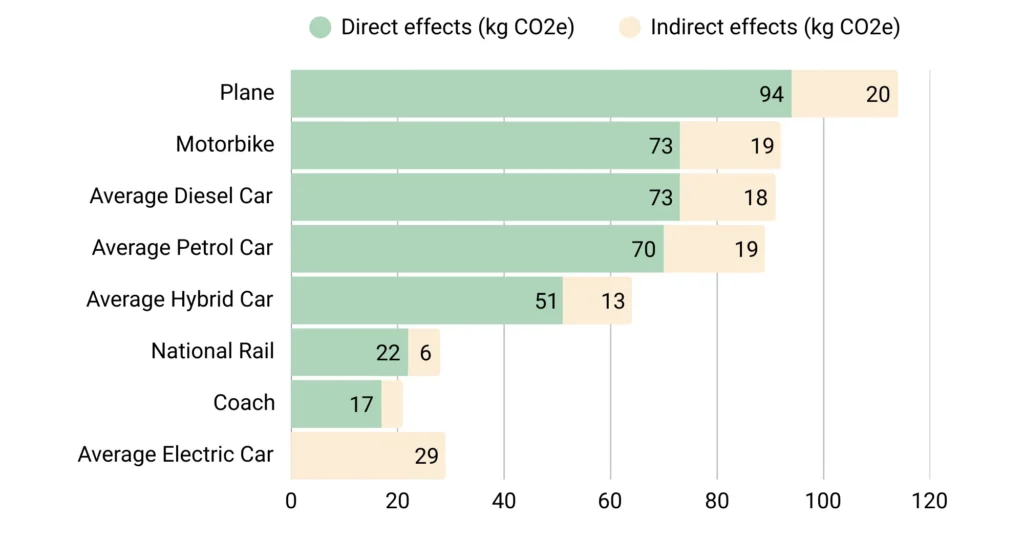
The following graph shows indicative emissions for one person travelling from London to Glasgow by different modes of transport, based on the Department for Transport’s Journey Emission Comparison’s interactive dashboard. You can use the dashboard to compare other common routes across the UK. Other sites such as EcoPassenger also allow for travel impact comparisons.
Indicative GHG emissions for one passenger travelling London-Glasgow
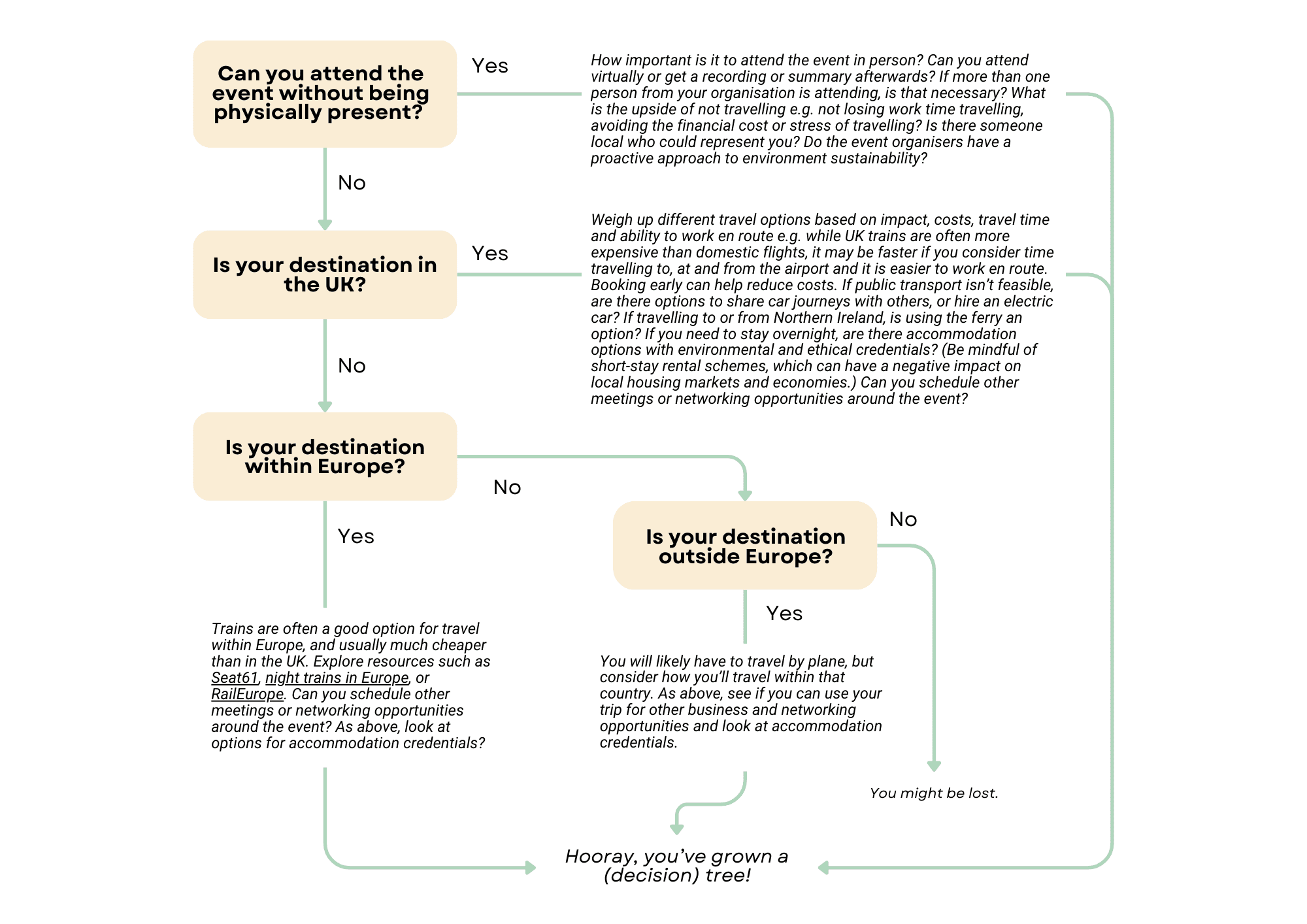
Meeting people face-to-face can be essential for building relationships and business connections, and sharing knowledge. It’s vital to the screen sector in many ways. However, emissions and other pollution from air and ground transport can add up quickly, so it’s essential to consider how you can meet your business needs, while reducing business travel impacts. A set of questions or a ‘decision tree’ can support planning and decision-making around which events – meetings, conferences, training, festivals – you go to where, how many people need to go and how they get there.
You might find a travel booking service helpful. They can help streamline bookings, track your carbon footprint, and help enforce travel policies from the start to ensure staff are supported to make sustainable travel choices.
If you run events, there are a number of considerations, depending on whether you run them in your own building/s or workspace/s or a host venue:
-
- How easy is it to get to the venue by public transport? If not directly on a public transport route, can you organise a shuttle bus or shared car journeys from the closest station to the venue?
- What can you do to promote lower-impact travel options for getting to the venue?
- Can you align event start and end times with public transport timetables?
- Can you offer options for people to join virtually?
- What are the environmental credentials – of the venue and/or for the event – and are they visible and well-communicated?
If you provide travel grants for people to go to events, consider the following:
- What can you do to raise awareness of travel impacts with people applying for and awarded funding and to promote lower-impact travel options?
- What are the environmental credentials of the events you fund travel to, and are they visible or communicated? How you travel makes a difference.
Creative Climate Tools – updates
Data submitted by NPO users of the Creative Climate tools underpins the insights in this report, meaning the reliability of the findings depends heavily on the quality of that input. Some impact areas – particularly audience travel, waste and materials – continue to reflect limitations and should be interpreted with an awareness of their scope, acknowledging the variability in the data. Collective reporting strengthens both data accuracy and the sector’s ability to drive meaningful climate action. Julie’s Bicycle remains committed to improving, simplifying and strengthening reporting methods to support this ongoing work.
Operational Waste & Materials and Project Waste & Materials
Further reading can be found in the Resources section of the Creative Climate Tools. The following improvements have been made to the new materials and waste methodology and conversion factors:
• Composition – Consideration of composition with the new “Material type” dropdown and tailored factors for each scenario calculation.
• Treatment type options – Additional end-of-life treatment types for specific waste compositions.
• Lifecycle Conversion Factors – Consideration of relevant lifecycle emissions for the materials and waste beyond just transportation emissions. Our emissions are now calculated in two parts: Generation and Treatment. Generation includes emissions from the production, manufacturing, transport, storage and the direct use of the materials which have now become waste. Treatment includes emissions from end-of-life treatment of the materials and the avoided burdens (if applicable).
• Bulk density – Consideration of different bulk density factors used in the calculations for different waste compositions and containers.
• Containers – Additional common containers added to the “Unit” dropdown and possibility to select stand-alone containers.
• Tonnage Estimation – Additional Operational Waste Tonnage Estimator spreadsheet to estimate weight of operational waste for the year based on weekly/monthly collections.
Audience Travel
The audience travel footprint contains a ‘default’ tickbox which organisations can use if they are unable to collect the data themselves. The CC Tools guidelines strongly suggest that this is only done as a temporary, one year option and organisations may want to look at audience travel data collection specific to their work in subsequent years. The default emissions factor was updated this year and this has created a significant rise in audience travel flights. For more information, please contact support@juliesbicycle-test.picl.co.uk.
The carbon emissions from electricity have been falling over the years, mainly due to the shift from coal to gas and the growing use of renewable energy. However, this progress has levelled off recently. In 2023 and 2024, the emissions factor remained almost unchanged at around 0.207 kgCO2e per kWh. This plateau is partly due to the energy crisis, which led to temporary use of more polluting sources like coal, oil and open-cycle gas turbines, along with increased reliance on electricity imports. Despite this, emissions from electricity are still expected to decrease in the long term, supported by strong government targets – aiming for a fully decarbonised grid by 2030, though whether this will be achieved remains uncertain. Energy prices have continued to drop since the recent spike. In 2024, the average cost for gas was 5.5p per kWh (down from 7p in 2023), and electricity was 26p per kWh (down from 29p). These are average prices across the non-domestic sector, so larger organisations may pay less per unit than smaller ones.
This helps keep you accountable, builds trust with your audience, and can also inspire others in the screen and wider arts sector. It can be as simple as a social media post or a more in-depth report, depending on your time and resources.
Your cinema or film festival audience might have unique pain points that aren’t immediately visible. Do visitors want later buses? Can you better align start or end times with public transport services? For larger film festivals or a consistent timing or route issue (e.g. a bus stop being quite far away from a cinema), your data might help local transport providers with their planning.
For example, the Royal Shakespeare Company (in Stratford-upon-Avon) used audience travel data and partnered with local bus company Stagecoach to provide late-night bus services post-show.
Start with small actions and work your way up as you gain knowledge and experience. Use the data you’ve gathered to shape your ideas. For example:
- If lots of people cycle – or you want more people to cycle – can you provide more secure or covered bike storage?
- Do you have signage or information on your website to help people navigate nearby local transport?
- For event marketing, would it be better to target local audiences or run geographically-bound ticket presales or discounts, instead of targeting international or visitors coming from further away?
- Look at the sustainability plans of other similar organisations for ideas (see Good Practice), or attend webinars or focus groups.
Audience travel commitments and actions should be included in your wider environmental policy and action plan. See our guide to getting started for more on this.
1. Start with what you want to achieve
- You can define a qualitative goal, or, if you are already measuring audience travel impacts, you can set a quantitative target.
- Qualitative goal example: Our goal is to reduce the negative impacts of audience travel, and connect with others in our community to work collaboratively.
- Quantitative target example: We’re aiming for 40% of our audience to travel by public or active transport by the end of this year.
2. Then identify key actions to reach what you want to achieve, for example:
- We will measure our audience travel using the BFI Film Audience Network survey (or other audience travel survey) and review the data each year to understand where we can improve.
- We will share audience travel findings with local transport authorities, to better inform their planning.
- We will provide information on public and active transport options on our website, and post about sustainable transport on social media at least twice yearly.
- We will learn more about transport and accessibility, so we can apply an accessibility lens to sustainable audience travel initiatives.
- We will put up posters (see our editable templates) to share sustainable transport options with our audiences.
- We will run at least one creative initiative (e.g. a workshop, focus group, art competition) to understand and/or raise awareness of our local barriers to sustainable transport.
Using a carbon footprint calculator, work out audience travel emissions and include it in your wider carbon footprint. The Julie’s Bicycle Creative Climate Tools have a section for ‘Audience Travel’. Reporting using the Tools is a requirement for some BFI National Lottery awardees.
Set a schedule to monitor how your audience travel survey data is changing over time – at least once a year, but ideally more often if you have a higher volume of visitors – and use this to inform your planning.
- Can you integrate travel survey questions in your booking or checkout system? You might already be collecting some of the information you need (e.g. postcode data). Or, can you link to your travel survey on your ‘thanks for booking’ page?
- Share the link to your audience travel survey periodically in your newsletter, through social media, or on your website.
- At your venue or festival, create a QR code for your survey to put on signs in areas where people are likely to have their phone out, or be waiting in line (e.g. near toilets or bars).
- Depending on your venue or event, front of house staff might be able to talk directly to visitors and fill out the survey on their behalf.
- Ask about how someone travelled to your event or venue when you collect post-event feedback.
- Consider offering small incentives for survey completion, e.g. 5% off a drink or food item, or a chance to win a monthly prize.
Embedding climate justice into all areas of their work, Boundless Theatre formed a People Planet sub-committee, developing guiding principles, focusing their work more locally, and championing youth and international voices through a climate justice lens. Gary Clarke Company Ltd have a newly formed Green Team, comprising a Trustee, Admin Director and Production Manager to lead on the monitoring and implementation of their recently developed environmental policy and action plan.
2Funky Arts Ltd embed sustainability in all their decision making; they include it as an agenda item in regular staff meetings, survey staff travel and remote working patterns, and collect audience travel data. They provide sustainability updates in quarterly board reports, have added sponsorship guidelines to ensure alignment in partnerships, and staff engagement with sustainability policies embedded in the appraisal process.
London Museum (formerly Museum of London) hired a Sustainability Lead who has worked with 3Adapt to develop a Net Zero Implementation Strategy and 10-year delivery programme, alongside drafting key policies on waste, procurement, and their 2035 net zero goals. Recognising the need for compromise and collaboration from all involved, Kiln Theatre now include a sustainability clause in all technical and creative agreements, ensuring everyone aligns from the outset. They have also committed to meet Theatre Green Book’s Basic standard on all their shows.
Thanks to Westminster Carbon Offset funding, The Photographers Gallery has completed their environmental upgrade of halogen lights to energy efficient LEDs. Emma Rice Company (formerly Wise Children) have invested in their sustainability expertise through professional development, including training in the ISEP (formerly IEMA) Pathways to Net Zero, ISEP Carbon Footprinting and Reporting, and the Organisational Sustainability Bootcamp.
International Curators Forum have joined Gallery Climate Coalition and formed a Green Team, implemented a new environmental policy and action plan, and published an environmental responsibility statement on their website. Setting out their environmental intentions, CoDa Dance have developed a Green Rider to share with venues and partners, suggesting practical actions they can take and championing climate responsibility across the wider sector.
Oxford University Museums Partnership are actively working towards net zero by 2035 across their museums, libraries and gardens with a clear baseline now set. Their focus includes reducing emissions from exhibitions, loans, digital activity, and travel, while also enhancing biodiversity and cutting waste.
Open Clasp Theatre Company toured a filmed version of a live production, Mycelial, internationally, cutting environmental impact by avoiding travel for the 14-person cast and crew, while reaching those previously unable to attend live shows due to distance. Programming, such as Black Country Landscapes at Wolverhampton Art Gallery, reflects a growing engagement with environmental themes, from climate-focused poetry to creative use of recycled materials, all encouraging a deeper connection with the natural world.
The environmental working group at The Open Eye Gallery welcomed two new expert board members to help guide sustainability efforts through regular meetings and initiatives like a Staff Green Day workshop. The Poetry Society is committed to enhancing young people’s connection to nature and environmental issues by combining poetry with hands-on experiences such as the Bog Talk project and a partnership with green engineering firm AESSEAL. Royal Ballet and Opera have been working with Dutch National Opera and Ballet and Opera Europa to explore sustainable production design, finding that standardised practices and better collaboration between design and technical teams are key to success.
Norton Priory Museum Trust Limited’s new heritage orchard, featuring local apple varieties, was planted by their local community through public workshops and school learning programmes. The living ‘apple library’ boosts biodiversity and provides a community space for future generations. The artist-led Allotment Climate Resilience Project from Talking Birds Theatre Company Ltd showed the power of socially rooted, low-cost, creative approaches to climate adaptation, affirming that art can drive meaningful action. Despite budget constraints, they undertook a DIY green roof experiment at The Nest using recycled materials and native seeds – resulting in an influx of birds, bees, damselflies, and other rich biodiversity. Green spaces remain central to Tees Valley Museums’ programme with the sensory garden at Kirkleatham enhancing wellbeing, biodiversity and connection to nature.
Successful funding bids allowed Wysing Arts Centre to transform their land management by increasing wildflower areas, and ending all herbicide use, supporting biodiversity and soil health. Charnwood Arts’s Feel Good in The Forest project in partnership with Charnwood Forest Geopark inspired community connection with nature through creative experiences and promoted awareness of environmental responsibility. In a bid to breathe new life into a previously industrial setting, Hopetown Darlington has opened an ambitious community garden, bringing greenery and pollinators to regenerate the land.
The set for Jasmin Vardimon Company’s latest creation, NOW, has been designed to fit into a single touring van, decreasing haulage emissions. Outlands Network launched an Environmental Responsibility Membership Working Group and began shaping their Environmental Strategy. They kept their touring footprint light by choosing rail over air travel for an international performance, and played a key role in Attitude is Everything’s updated No Climate Action Without Us toolkit. After establishing a carbon emissions baseline for practitioners, volunteers, and audiences linked to their work, Writing West Midlands are
offering free public bus transport to attend the Birmingham Literature Festival when booking via their website. Open Sky Theatre leased an electric vehicle resulting in low emission transport.
Shakespeare North Playhouse’s solar PV panels have generated 17,912 kWh, (enough power for 179,120 cups of tea!) while a further 43.3% of their billable energy comes from clean and renewable sources. Global Grooves put green energy front and centre for visitors with live energy displays showing real-time power use and solar generation. Using Arts Council England capital funding, Level Centre Ltd upgraded their building with energy efficient technology including LED lighting and an air source heat pump, while also responsibly reusing or recycling old equipment and materials to minimise waste.
Creative Arts East moved into a permanent office with another cultural organisation thereby reducing their combined carbon footprint, improving staff access, and providing cost effective, sustainable operations. They’ve also focussed on deeper community engagement, partnerships with reuse charities, and the integration of Arts Green Book practices into their policies and artist contracts.
Supported by government funding and launched by the Minister for Small Business, Art Classes Group joined the 5-Point Action Plan for Small and Medium Enterprises (SEMs) sustainability research, demonstrating how SMEs can take control of their energy efficiency. A similar collaborative effort saw Film London work with Creative Zero to produce The Fuel Project: The Shift, a report which outlines a clear, collective roadmap to decarbonise supplier transport through planning, renewables and policy change. The Courtyard Centre for the Arts secured funding for an extensive LED lighting upgrade in summer 2025 which will enhance their energy efficiency and reduce their carbon footprint.
ZoieLogic Dance Theatre’s HUB Festival combined community engagement with innovative waste management and renewable energy practices to create a low environmental impact event that raised sustainability awareness. They promoted climate action by inviting young attendees to design recycling bins, and involving their community in activities like discussing renewable energy, daily rubbish collection, and ensuring accurate waste tracking.
Rich Mix teamed up with OITIJ-JO Collective and local partners to install a council funded
food waste composting system, transforming kitchen scraps into nutrient-rich compost. They were able to achieve zero-to-landfill waste by increasing their plant-based menu options, eliminating single-use plastics, and switching to reusable or recyclable items. Similarly, Full House Theatre reduced food waste in their participatory workshops by improving ordering accuracy and sharing any leftovers with participants and staff, ensuring nothing went to waste. Exeter Phoenix installed two rainwater harvesting tanks and a living wall, with the collected water supplying both their annex toilets and the living wall’s irrigation system.
Across the sector, organisations are prioritising reuse and repurposing of materials and reducing waste. Emma Rice Company (formerly Wise Children) have been setting clear expectations through green clauses, team champions, shared agreements, and consistent conversations from first meetings to final production. They also moved all of their production programmes to digital formats. Shape Arts launched Another Day, an animation by James Lake made using repurposed cardboard, shared with hundreds of young people through workshops.
Oily Cart’s tour When the World Turns advanced their reuse of materials by working with an eco-scenographer to source second-hand materials, while another of their tours, A World Beneath Us, offered its audience a booklet suggesting how families could repurpose items. Through their Access Library, Zoo Co Creative Ltd shared materials with peer organisations. They also ran events using repurposed items and gave away or sold items, highlighting the power of networks in reducing waste.

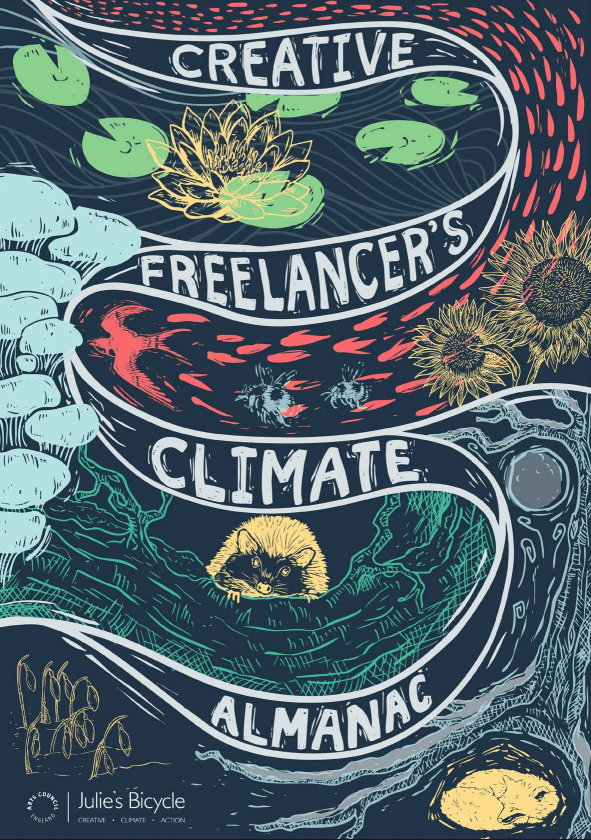
CREATING NOW FOR THE FUTURE supports artists, creatives and freelancers, and led to the creation of the Creative Freelancers Climate Almanac. In 2025-26 additional sessions, shaped by the interests of freelancers in particular, will further explore how individuals can make a difference through sustainable and regenerative creative practices.

The CREATIVE CLIMATE ACCELERATOR is for underrepresented creative changemakers, offering a free training course to help them build skills and confidence to create change in their communities. Participants are nominated by a local NPO/IPSO that supports their work. In 2025, 29 participants took part. In 2026, the programme will run alongside the Adaptive Futures programme, focusing on how individuals can support their communities to adapt and build resilience to the impacts of climate change.

LEADING RESILIENCE is an ongoing pilot and mentoring programme that has been supporting and cultivating leadership across the portfolio and wider sector. This programme has the following strands:
1. Adaptive Futures is a place-based programme kicking off in 2026, helping to strengthen creative climate work in one city focusing on resilience and adaptation. It supports creative organisations working in partnerships that bring together climate data and local community knowledge, exploring and establishing pathways to greener, fairer, and co-designed futures – putting culture at the centre of building climate-resilient communities.
2. Resilient Horizons was a collaboration with Arts Council England’s Creative People and Places programme during 2024-25. It explored pathways towards creative adaptation and resilience for placebased, creative community-led projects.
3. Adapting Culture offered bespoke sessions for leaders to incorporate adaptation thinking into governance and policy for NPOs and IPSOs. An additional series of webinars, workshops and peer sharing sessions were open to the wider sector to build an understanding of adaptation to climate change in the context of place-making, nature and biodiversity, and venues. The resources created are freely available online.

Designed to support trustees and board members of National Portfolio Organisations (NPOs) and Investment Principles Support Organisations (IPSOs) to embed Environmental Responsibility at the governance level of organisations, BOARD ENVIRONMENTAL CHAMPIONS has ongoing enrolment, supported by a Champions Guide. Valuable twice-yearly inspiration and network meetings enables knowledge sharing, skills, and confidence building to increase ambition and inspire peers and audiences. There are currently 221 organisations signed up to the Board Environmental Champions programme.2
2 Figure correct at time of publication.

Designed for building-based organisations, the TRANSFORMING ENERGY programme is made up of two strands:
1. Buildings Net Zero Energy is for organisations at the beginning of their environmental journey, looking for additional support to ramp up their efforts. This strand of work offers free self-service resources online, access to an energy scorecard and training modules on Building Energy Management. There are currently 64 individuals signed up to the Building Net Zero Energy strand.1
2. Capital Investment Ready provides enhanced support to selected cohorts of organisations advancing their environmental commitments, assisting them in preparing their cultural venues for electrification and focusing on 2030 decarbonisation goals. A total of 21 organisations are taking part.
1 Figure correct at time of publication
The Resilient Horizons programme is closed to new applications, but we will share knowledge gained and examples of initiatives that organisations can apply to their own adaptation plans. This includes:
-
- Useful resources to share with the sector
- Blogs, case study and best-practice examples
- Tools to inspire cultural organisations’ own responses to climate impacts they may face in their locality.
Visit our adaptation resources page, and sign up to our newsletter to receive new resources and insights as they’re published.
We are working with organisations participating in the Creative People and Places programme that are already addressing climate-related issues in towns, cities, and rural areas facing socioeconomic and health inequalities. Projects are building skills in food growing, gardening, and designing accessible green spaces.
Feel free to contact us.
We expect you would have had some level of engagement in climate issues, but we don’t need experts! This programme will explore some of the knowledge and ideas you might need to take your ideas to a new level.
If the organisation or the nominee are approaching as complete beginners, we have plenty of other resources to help you get started.
Yes! That would be fine. We ask that you apply with a solid commitment, set out in the criteria above and that you can consider through the project idea, how you collaborate with a meaningful legacy in mind from the outset and share learning in partnership between the nominee and organisation.
No, this programme is designed to support the planning and development of your ideas, even in early stages or something you’ve been working on already. For example, it could be an internal project that needs a kickstart from the training to give it a new lease of life. You could even consider this training as the research and development stage of a bigger project or idea. You might already have funding for a project or you might want to use this programme to develop more climate justice focused ideas for action.
Not at all. You can apply with any idea you would like to work on. This could be related to thinking about production in a new way, rethinking your organisational values to centre climate adaptation, and of course could also be working towards a creative project, or developing ideas for a performance piece. We are looking for projects from all parts of the cultural ecosystem.
Applications are now closed.
Each online workshop will be hosted on Zoom, from 10am-12:30pm on the following dates. The first and final session will be held in-person in Bradford (location TBC).
- 3rd or 4th Feb 2026 (date tbc): Introductory workshop (in person)
- 11th Feb 2026: Online workshop 1
- 25th Feb 2026: Online workshop 2
- 11th March 2026: Online workshop 3
- 13th or 14th April 2026 (date tbc): In-person workshop (Action planning)
The Creative Climate Accelerator is free to attend. We expect participants to be available to attend all sessions. We also invite the nominating person from the organisation to join the opening workshop and final gathering, in order to support the development of the project or idea.
- Consider who you would like to nominate to apply for this programme and collaborate with them to develop the initial project or action idea and application.
- Define the commitment you are making to support the legacy project and the participant, (for example through space for them to work, mentoring, materials, funding to support their time/travel/plans); and ensure that there is structure in place to deliver on this commitment. If the participant is a freelancer, we would expect your commitment to include fair compensation for their time.
- The nominating organisation contact person should be available to attend the final action planning session in person.
- We strongly encourage you to support the travel costs for the freelancer to attend the in-person events, however if this proves a challenge or a barrier, please do get in touch with us at JB as we may be able to cover a small number of travel fees.
- Nominating organisations will have dedicated support from the JB team and guests to develop climate action projects either within their organisation or through a meaningful partnership with a freelancer/associate
- The participant will have access to guidance and resources from the JB team to build confidence in their climate action projects
- Participants and their nominating organisations will be part of a network of supportive peers in Bradford.
“I applied for a developing your creative practice grant, as well as an AN bursary grant to deliver this project and have received both. The funding will allow me to push this work to its fullest. I feel that being able to say I was doing this project as part of this programme added real weight to the proposal.” – CCA 2024 participant
“CCA style space to think ideas through openly is invaluable.” – CCA 2024 participant
This programme is for underrepresented creative changemakers in Bradford, for example, people of colour, disabled people, LGBTQ+ people, or people from low income backgrounds. You might have some knowledge or experience in climate issues but would like to be supported to advance your skills.
We aren’t looking for experts, but you may already be on your climate journey. For example, you may have been part of writing an environmental policy for your organisation, a voluntary group around environmental issues, or have been involved in a creative project addressing climate change.
Participants will be nominated by a Bradford based culture or community organisation. You will be in current roles that have the ability or potential to make change happen, and this does not have to be tied to seniority.
The Accelerator will be hosted by culture and climate advocate Farah Ahmed (she/they); JB’s Arts Council England programme team Vicky Sword-Daniels and Hannah Graham; and sector-leading guests.
Broader societal issues you can advocate for, for example:
- What public transport options are available?
- How can you expand your reach to include others who may not have access or opportunity to engage in climate action?
- Who is in your neighbourhood and how you can support local environmental and social justice initiatives?
- What national or international movements do you want to connect with?
Areas where you can influence others, for example:
- Who do you work with?
- Who are your suppliers?
- How do your audiences travel?
Areas where you have direct influence, for example:
- How much energy do you use?
- How much waste do you generate?
- How and when do you travel?
- What do you programme?
- Who or what do you fund?
We have created lots of useful resources to support you on your journey with the Creative Climate Tools.
If you require a walkthrough of the Tools, check out our User Demonstration Video. For more in depth information around the different impact areas, why not have a look at our different bitesize videos. We also have User Guides available for the different functions and footprint options within the Tools.
If you have further queries, we offer ongoing support through our CC Tools Support Helpdesk to organisations funded by Arts Council England (ACE) or the British Film Institute (BFI).
On the Results pages there are several ways in which you can download the graphs, tables and datasets. For the pie charts and graphs, click on the 3 lines in the right hand corner of the image and then select the format in which you would like to download the image. You can also download the numerical data or overall graphics using the “Download results as CSV” and “Download results as PDF” buttons on the right of the screen.
On the Data page click on the Footprints subheading. Here you will see all your Buildings and Projects listed with their relevant footprints. You can see an overview of the data on your account and edit any old data.
On each tab of a Footprint you will find an option to save at the bottom of the page. You can save and return to your Footprints as you see fit – we don’t expect organisations to fill everything out all at once. Incomplete footprints (unsubmitted) will appear on the “Add data” page until you submit these for review.
When you have entered all of your data into your Building or Project’s Footprint head to the final tab in the form called “Submit”. Here you can submit your data for review by Julie’s Bicycle and then view your data in the Results pages.
For ACE organisations, refer to our ACE FAQs.
For BFI organisations, refer to our BFI FAQs.
For organisations who are funded by both ACE and BFI, we recommend that you have a look at the respective programme information and FAQs to ensure that you are reporting on the correct information for both.
Please make sure that you have marked on your CCTools account that you are funded by ACE and/or BFI. You can do this by logging onto the tools, clicking your organisation name in the top right hand corner, going to the Organisation Details page in the dropdown and selecting the options under the Funding Portfolios section.
The new Beyond Carbon format is now accessible through the left navigation panel. The survey has 3 pages of multiple choice questions and an opportunity to tell a story about any environmental achievements that took place within the last year. You can to save and return to the survey whenever you like, and then submit. You are also able to edit and resubmit after submitting.
Previously, Beyond Carbon was placed at the end of every footprint, resulting in organisations having to complete multiple surveys across their reporting. We decided it would be more efficient for users to only have to complete one survey per year for the organisation, as this prevents unnecessary data entry for users and also makes survey responses easily accessible all in one place.
Any Beyond Carbon reports submitted in the previous format can still be accessed by going into the record of the existing footprint where it was filled out. However, please note that you will not be able to complete and submit new reports in the previous Beyond Carbon format.
We highly encourage accurate data collection where possible, but if data is unavailable, you can estimate. For example:
- You may need to apportion data if you do not have data that is granular enough (e.g. you only have your whole building’s energy bill, but you just want to input your office’s energy use). To do this, refer to our Energy – Buildings and Indoor Events bitesized video for a worked example.
- You may only have data for some months of the year, and you may need to take a monthly average and use that average for periods with missing data (See ‘I don’t have 12 months of data for my organisation’s building. Do I still need to report?’ FAQ).
If you are estimating your data, in the Additional Information section, please write down:
- Why you needed to estimate
- How you estimated (e.g. the method) and what data you estimated
- If possible, how you will improve your data granularity or reduce the need for estimation in the future.
There are certain impacts which we have not yet been able to introduce to the Creative Climate Tools at this stage because we do not yet have access to reliable conversion factors for them. This is especially the case for newer types of emissions such as digital footprint and certain types of hybrid vehicles.
If you have calculated your own footprint we encourage you to include it in your reporting. Each impact section has a ‘custom emissions’ section where you can input any other emissions. You can simply input your custom data into the section that feels most relevant to your data. Note that the unit for this is kgCO2e. If your figure is in TCO2e, this will need to be multiplied by 1000 before entering. Please put information about your calculation methods and/or conversion factors wherever possible in the ‘Additional information’ section.
If you are not able to obtain custom emissions figure for your activity from other sources, we would recommend that you still enter whatever data you had regarding the activity that is not yet available in the Tools, in the “”Additional information”” sections at the bottom of each tab. For example if you had travel data on a hybrid vehicle that we aren’t yet able to calculate for you, we would recommend that you still take note of the mileage of the vehicle so that you can report on its emissions after an appropriate carbon conversion factor is released.
As an organisation you may not have access to 12 months of data for your current building due to particular circumstances e.g. new building, serviced building etc. You should still report any data that you have available to you. If you can’t collect 12 months of data then we would recommend trying to estimate the missing months based on what you have available.
Option 1) If you have previously reported on the tools, you could use some of your previous year’s data as an estimate for the missing months. For example, if you have all of your gas bills to hand apart from your May or June bills, you could use your consumption from May and June in the previous year to give you an idea of what your consumption this year could have looked like. Please note that if you have made significant changes, such as changing location or switching your system, this may not be the most accurate method for estimation.
Option 2) You could use the data of the months you currently have available for your year of reporting to estimate those missing by extrapolating. For example, if you only had 7 months of your water bills available, you can take the your water consumption for the whole 7 months and divide this by 7. This will then give you your building’s average water consumption for 1 month. To make up the year, we need to estimate 5 months of missing water bill data. Do this by multiplying your average 1 month of water consumption by 5, and adding this number to the 7 months of accurate data you have.
When you are estimating, please make sure to enter information about your assumptions and calculations in the “Additional information” sections at the bottom of each tab, where possible.
We encourage you to measure and report on all possible impact areas that are relevant to your type of footprint. You may not be able to report across every area, this is expected especially if this is your first time reporting. Where you cannot report, we encourage you to use the ‘Additional Information’ box at the bottom of each tab to detail why you could not measure and how you plan to improve your data collection in future years.
If you are struggling with a particular bit of data within the Creative Climate Tools, there are little red icons with an “i” above each field that can help you. If you hover over these icons, a black box will appear with useful information on the type of data required to be entered and some tips on where/who to go to collect it.
For information on how to enter information and what data collect for the different impact areas within the Creative Climate Tools, we recommend having a look at our bitesize videos which go into more detail including examples and useful resources for collection.
Buildings refer to the organisation’s fixed spaces for day-to-day operations. Under Buildings, there are the following footprint journeys available:
- Office: The footprint covers the activities regarding the energy, water and waste consumption of the office building, as well as the employee travel.
- Venue/Cultural Building: The footprint covers the activities regarding the energy, water and waste consumption of the building, as well as the employee and audience travel.
Projects refer to organisation’s activities beyond their Buildings. Under Projects, there are the following footprint journeys available:
- Indoor Event: This could exhibitions, screenings, performances, fairs etc. The footprint covers the activities regarding the energy, water and waste consumption of the event, as well as the employee and audience travel.
- Outdoor Event: This could be festivals, open-air shows, installations etc. The footprint covers the activities regarding the energy, water and waste consumption of the event, as well as the audience travel.
- Tour: This could be a theatre tour, music tour etc. The footprint covers show power, materials and the travel involved from moving as part of a tour.
- Custom Project: allows organisations to create a bespoke report where they can select which impact areas are included within their footprint. We would recommend that in the first instance organisations utilise the other set footprint reports where possible and then use the Custom Project footprint if they do not feel the set footprints best suit their project.
Building footprints cover a year of data and Project footprints can be set to a particular time period. If you are a part of a programme where you have been asked to report against a specific period, please make sure this has been correctly inputted on the General tab of your footprint.
Organisations can create as many Buildings and Projects on their account as they wish to – there is no set recommended amount. We would suggest having a look at what data you have available and our user guides for the different footprints available to help you identify which footprint(s) might work best for you.
For a quick runthrough of how to get set up and start adding data to the CC Tools, check out our “Get Started” bitesize videos. Below maps out the different options you have available for adding data to your account via the Data page:
Option 1: Add data to an existing Building or Project
Use Option 1 to create a new Footprint and add a year of data to your pre-existing Buildings or Projects. Use the filters to select your Building or Project followed by the year of your data entry.
Option 2: Create a new Building/Project
Use Option 2 to create a new Building or Project to report on. Once created you can create a Footprint to your Building/Project using Option 1.
Option 3: Edit an incomplete Footprint
Option 3 lists all the incomplete Footprints you have on your account for your different Buildings or Projects. Use this to quickly view and edit the Footprints you are still working on before you are ready to submit your data.
Option 4: Edit a completed Footprint
Use Option 4 to edit any completed footprints for your Buildings or Projects. You can also edit these through the Footprints page.
Option 5: Copy an existing Footprint
Use Option 5 to also add data to an existing Building or Project by copying an existing footprint report. You can find the record on the Footprints tab of the Data page, and select the copy button of the footprint which they would like to copy.
There is no option to delete your account from the user end of the Tools. If you would like to delete your account and/or organisation, please contact us.
The Creative Climate Tools are optimised for Google Chrome, and this is our primary test environment so it is the browser where technical issues are the least likely to occur. However, the Tools are designed to work across all major browsers, including Edge, Safari, and Firefox.
We recommend using a desktop or laptop with an up-to-date operating system and browser. It is also possible to use the Tools on smaller screens like iPads, but these devices are not optimised or tested regularly by us.
From the CC Tools Login page, you can click the ‘Forgotten your password?’ button. You should then receive an email which will give you a link to reset your password. If you are still having trouble resetting your password or accessing your organisation’s account, contact us.
New users can be added by clicking the name of your organisation in the top right corner of the Tools site, and clicking ‘Organisation Details’ in the dropdown menu and going to the ‘Add New Users’ tab at the top of this page.
On the “Add New Users” page, there will be a box where you can enter the email address of the person you would like to add to your organisation’s account. You can also add multiple email addresses by pressing enter and writing another address on the line below. Once you have entered all of the email address you would like to add, please press the “Add” button.
An invite will then be sent to the new user with instructions on creating a password and how to gain access to the organisation’s account.
Accounts on the Creative Climate Tools are created at an organisational level. If your organisation has used the CC Tools before, you will need to ask a current user to add you as a new user to the organisational account (refer to the ‘How can I add a new user to my organisation’s account?’ FAQ).
If your organisation is unsure if it has an account, please email us with your organisation’s name and your email address so that we can assist you with gaining access to the correct account.
Check out our “Get Started” bitesize video to help you get set up on the Creative Climate Tools. This video will guide you through the different pages and show you how to set up your first report.
For more detailed guidance, our General Navigation user guide illustrates all the different functions within your account, the footprint reports and the platform.
This certification has now been discontinued however organisations which previously registered can still view their past certifications here. Julie’s Bicycle is no longer accepting registration for new certification applications.
Julie’s Bicycle works in partnership with organisations and networks to offer paid consultancy, guidance and support to international organisations looking to develop their own tools, using and sharing the learnings gained from our years of experience working in footprint calculation and strategic environmental action.
We also offer custom licences, working collaboratively with you to develop bespoke adaptations of our Tools for you and your communities. We tailor aspects of the Tools to meet your specific needs, from multi-level user accounts, data input and storage, and impact data generation to report creation and support services.
We believe that using carbon calculator and impact measurement tools are just a first step to taking environmental action. Our digital team collaborate with the wider team of cultural and environmental specialists at JB who can support you on this journey.
To get in touch and find out more, contact us by filling out the form.
In 2023, the Creative Climate Tools went through a development project to improve the functionality of the Tools, make them more user-friendly and relevant for the sector. Below are some of the updates that were made during this project:
- The Waste and Materials tabs were updated with more accurate conversion factors, a more comprehensive choice of materials and waste treatment types, and more relevant units for the sector.
- New features were added, such as the Forecasting, Carbon Budget Setting, and Return on Investment (ROI) functions.
- The Custom Project footprint was introduced, which allows users to choose which impact areas to include if their activity does not fit into the predetermined formats.
- The Footprint tabs now offer custom emissions fields where organisations can include emissions for impacts/units that they have been able to calculate outside the tools or get directly from their suppliers.
- The business Travel tab underwent a restructuring to make it more simple and clear what data points where needed. The changes also included new vehicles and unit options.
- Beyond Carbon is now its own page accessible through the left hand navigation panel on the Tools. The questions and format have also been updated.
The Tour footprint underwent significant changes such as the addition of new vehicles, improved freight functionality, the inclusion of the Audience Travel and Materials tabs and the simplification of the show power calculations.
Although this particular development project has now finished, we are constantly reviewing and looking at ways to improve the Tools. For certain areas, methodology and data availability is consistently evolving and will be refined over time. As a result, please be aware that you may notice some changes in your emissions recorded. These changes are made to bring greater accuracy and a more complete picture of your organisation’s impacts.
If you have any questions about any of these changes or require further details, don’t hesitate to get in touch with us.
You can find the Creative Climate Tools Methodology and Conversion Factor paper on the CC Tools Resources page.
Historically, the conversion factors used in the tools have been predominantly sourced from government-published conversion factors by the Department of Energy Security and Net Zero (previously published by BEIS: the Department for Business, Energy and Industrial Strategy). In 2023, the Julie’s Bicycle team worked with leading consultants to update the waste and materials underlying methodology and conversion factors – resulting in a wider range of sources used.
The platform will use the conversion factors applicable to the financial/calendar year submitted by users when creating a report, based on the “Majority approach” from best practice guidance for company reporting issued by the UK Department for Energy Security and Net Zero:
“If you are reporting on an April to March year, the factors from the calendar year in which the greatest portion of your data falls should be applied (for example, the 2024 factors should be applied to data in reporting year 01/04/24 – 31/03/25, the 2020 factors should have been applied to data in reporting year 01/04/20 – 31/03/21). Users that operate a July to June reporting year should apply the newest set of available factors.”
The Creative Climate Tools launched in April 2023 replacing the Creative Green Tools launched in April 2019 (which replaced the original IG Tools platform). Thanks to feedback we’ve received, we’ve developed our tools so you’ll find them more intuitive and responsive, with better functionality to capture meaningful data and measure your impacts.
Any organisation who held a pre-existing account with the Creative Green Tools can log into the new site with your existing details. You do not need to create a new account. All of your historic data has been migrated to the new site.
We know that environmental and climate action in the creative sector stretches far beyond carbon emissions, so we have created this section to capture more widely your organisation’s ambition and the positive effects and benefits arising in your organisation, the sector and beyond. Your organisation can use Beyond Carbon as a checklist to track your environmental actions beyond data reporting. It is a space for organisations to tell the wider story of their work in response to the climate crisis. By completing this section you are contributing to the art and culture sector’s shared knowledge. It will also inform the support that Julie’s Bicycle provides to the cultural sector.
Creating a carbon footprint provides an insight into where your biggest impacts are. This can help you assess the areas of operations that have the highest environmental impact, in order to understand where to focus your efforts to respond to the environmental crises.
It is very important to remember that there are also impacts which are difficult to quantify and may not be reflected in your carbon footprint but are vital in decarbonisation. Beyond Carbon in the CC Tools allows organisations to capture their environmental actions beyond data reporting and provide ideas for further action to be explored.
By adding your data, not only will you gain a better understanding of your environmental impact, but you’ll be contributing to the cultural community’s collective action on climate change. Reporting your carbon footprint and Beyond Carbon data as part of a cross-sectoral effort means that you are contributing to collective storytelling about the environmental impacts of the arts and cultural sector. The more people who contribute to this, the more holistic a narrative we are able to build about the impacts of our work.
A carbon footprint is the amount of greenhouse gas emissions released into the atmosphere by an individual, organisation or activity over a set period of time, expressed as a single number.
Julie’s Bicycle (JB) is a London-based charity that supports the creative community to act on climate change and environmental sustainability. Julie’s Bicycle has been working in partnership with Arts Council England to inspire environmental action across the arts and cultural sector for over a decade.
In order to support organisations further, Julie’s Bicycle delivers an ambitious and inspirational programme of activities as part of the Arts Council Environmental Programme. This programme is aimed at building literacy, skills and capacity in the sector so organisations feel confident to act on climate change and reduce their environmental impacts.
The Creative Climate Tools (CC Tools) are free for anyone to use without limits, and anyone with an email address is able to sign up and create footprints.
The CC Tools were created by Julie’s Bicycle to support the entire arts and culture sector in understanding organisational environmental impacts through a freely accessible footprinting tool.
We offer ongoing support through our CC Tools Support Helpdesk to organisations funded by Arts Council England (ACE) or the British Film Institute (BFI), however there are also a wide variety of free resources available throughout the website for anyone to make use of.
The Creative Climate Tools are a free set of unique carbon calculators developed by Julie’s Bicycle specifically for the creative industries. Since 2021, over 2,000 organisations across more than 20 countries have used the Tools to measure the impact and inform the environmental action of their cultural buildings, offices, events, tours and productions.
The Tools make it easy to measure your organisation’s key environmental impacts, from the energy use of your buildings, to the waste generated at your festivals, to the travel/material impacts of your touring productions.
In the final episode, host Emmanuella Morsi hears from design consultant Dr Sarah Suib and artist-researcher Dr Jen Rae about the transformative power of the arts in addressing climate change, and how we can draw from sustainable practice and indigenous and nature-informed wisdom from our past to inform contemporary strategies.
Dr Sarah Suib
Sarah is a consultant and the founder of Hint Studio, Brussels. She is also a designer and mender with years of experience in sustainable design and product development projects, user experiences, cleaner productions, ESG research, and frugal innovations. Her expertise lies in design thinking, design for sustainability, user research, and the circular economy. She works with small and medium sized companies to integrate sustainability and circularity strategies in their products and practices. Sarah is an alumnus of CCL Benelux (2023).
Dr Jen Rae
Jen is an award-winning artist-researcher whose practice-led expertise is situated at the intersections of art, speculative futures and climate emergency disaster adaptation and resilience. Her work is predominantly articulated through transdisciplinary collaborative methodologies and multi-platform projects, community alliances and public pedagogies. Jen is Co-founder and Creative Research Lead at the Centre for Reworlding, a member of the Australian Task Force for Creative Recovery and a 2023 Creative Australia Fellow. Jen is an alumnus of CCL Australia (2023).
Listen to the episode
Emmanuella Morsi explores what cultural policy is, its significance, and how it can influence societal change and play a role in social change, supporting us to reach our climate goals – with academic Solveig Korum and relations manager and cultural producer Rie Alkemade.
Rie Alkemade
Rie is a project and relations manager and a cultural producer with a keen interest in the creative artistic and cultural fields, and is a Project Officer for the Cultural Relations Platform. Her focus and passion has been primarily on cultivating sustainable partnerships and networks at a people-to-people level through fostering intercultural dialogue and exchanges based on mutual co-collaboration. Rie is an alumnus of CCL Benelux (2023).
Dr Solveig Korum
Solveig is an academic who works as an advisor for culture and sustainability at the R&D department of Kulturtanken – Arts for Young Audiences Norway. She is the co-founder of NaCuHeal Senegal, an NGO that operates tree-planting programs in West Africa and teaches Kundalini yoga at University of Oslo. Solveig is an alumnus of CCL Scandinavia (2022).
Listen to the episode
Host Emmanuella Morsi discusses the relevance of emerging technologies and creative tech in framing climate issues in a way that inspires meaningful action with artist, writer, educator and activist Alistair Gentry.
Alistair Gentry
Alistair is an artist, writer, producer and educator in creative writing, performance, live and participatory art. He has been an activist in artists’ livelihoods and wellbeing for about 15 years, with particular focus on LGBTQ+, disabled, low income background and self-taught artists and leaders. He has collaborated extensively with scientists and technologists, particularly in the social sciences. Alistair is an alumnus of CCL UK (2023).
Listen to the episode
Co-host Farah Ahmed closes the podcast series with an introduction to Julie’s Bicycle and unpacks why we developed the Creative Climate Leadership programme.
Listen to the episode
True leadership takes a lot of creativity and courage. Climate justice activist Payal Parekh and artist, activist, permaculture teacher Guy Ritani join Louis VI to talk about how creativity can feed into grassroots-led climate activism, and shape global climate policy in a truly intersectional and intergenerational way.
Payal Parekh is a climate scientist turned international climate justice activist mobilising ordinary people to get active on climate justice. She joined her first action at the age of 17 and has belonged to various movements since then on three continents. Payal has developed many winning campaigns and is an expert on successful strategies for social change.
Guy Ritani is a Ngāti Toa Rangatira, Ngāti Koata, Ngāti Kahungunu & Macnamara takatāpui Māori artist, activist, designer and teacher currently living on Kombumerri Country. They are co-founder of PermaQueer, Pacific Climate Warrior & community organiser and President of regional arts council Tamborine Mountain Arts Collective.
Listen to the episode
How do we use our curiosity to move towards deeper connections? Host Louis VI, and guests researcher Zoe Rasbash and curator Mateo Chacón Pino discuss how research can utilise different forms of knowledge to develop communication strategies and actions to bring communities along.
Zoe Rasbash is a researcher, writer and programmer working at the intersection of creative industries and climate justice. She is currently Climate Action Researcher at Watershed in Bristol, a cultural organisation focussed on togetherness. She is co-founder of Lilith Film Club, climate editor for Shado-Mag and previously campaigned with UKYCC, Amnesty International and for the UN Taskforce on Climate Displacement.
Mateo Chacón Pino is a Colombian-Swiss art historian, curator and author. He has curated projects in Switzerland, the Netherlands and Germany. Mateo Chacón Pino currently works as a research assistant at the documenta Institute and at the University of Kassel at the Department of Art and Society.
Listen to the episode
Podcast host Emmanuella Morsi speaks with documentarian, campaigner and activist Syed Jazib Ali about what is needed to build authentic narratives, campaigns and projects that are both moving and high-impact.
Syed Jazib Ali
Jazib is a documentarian, campaigner and activist hailing from the indigenous Pahari tribe of the lower Himalayan region of the politically and ecologically sensitive Jammu and Kashmir. His award-winning documentaries and advocacy work are globally recognised, amplifying the stories of the underrepresented. His creative projects have been part of COP26, COP27 and he has worked with international NGOs, Think Tanks and United Nations organisations. Jazib is an alumnus of CCL Benelux (2023).
Listen to the episode
How can we collectively explore different kinds of care? Louis VI talks to choreographer Dawit Seto and arts manager and curator Ceyda Berk-Söderblom about how creativity supports climate leadership from the Global South, and provides insight on why we need diverse approaches to language beyond words and through sensory expression.
Dawit Seto, a performing artist in African contemporary dance and choreography based in Switzerland, merges migrant histories with a strong climate justice advocacy in his art. As co-founder of Contemporary Nights, Dawit hosts events for artists to shine in Addis Ababa and East Africa.
Ceyda Berk-Söderblom, Helsinki-based arts manager, curator, festival programmer, entrepreneur, and expert of DEI, is the artistic director of MiklagardArts, a facilitator for transnational and transcultural collaborations. With over 20 years of experience, Ceyda has specialist knowledge in programming, curating, cultural branding, fundraising, advocacy, lobbying, societal transformation, and DEI management.
Listen to the episode
How we connect to the earth and each other is more important than ever. Designer Gaja Mežnarić Osole and visual artist Allison O’Connor talk to Louis VI about how public art in unexpected spaces can engage communities with nature, and in turn help us to repair our relationships with each other and the more-than-human world.
Gaja Mežnarić Osole is a designer, working in cross-disciplinary fields between design, ecology and participation. She currently runs an NGO Trajna with her working partner Andrej Koruza.
Allison O’Connor is a Franco-Canadian multidisciplinary artist and art administrator working at the intersection of ecology and public art. Her practice emphasises the symbiotic relationship between artists, audiences, and the ecological context they occupy. Allison generates artworks that consider the environment and its inhabitants by utilising environmental sciences and consultative practices.
Listen to the episode
Host Emmanuella Morsi speaks to activist and artist Jessica Sim and communications professional Yula Rocha about using research and data to understand the attitudes and behaviours of their audiences, and creating impactful and effective campaigns.
Jessica Sim
Jess is an activist and artist who is passionate about ecology, and committed to developing creative communication methods to inspire more mindful living. She established the Museum of Garbage with FLYING roots, co-founded Circuit Istanbul and Nadas Istanbul – organisations that focus on establishing community spaces that foster nature connection through creative programming. Jessica is an alumnus of CCL Creative Europe Wales (2017).
Yula Rocha
Yula is a journalist and communications manager at People’s Palace Projects, where she works with artists from the Xingu Indigenous Territory and favelas of Rio de Janeiro. She produced the first Indigenous Film Festival at the ICA and an arts installation at Venice Architecture Biennale and has chaired climate and arts events at Chatham House and for Chevening scholars. Yula is an alumnus of CCL UK (2023).
Listen to the episode
How can culture tell another story about the climate crisis? Louis VI speaks to producer and artist Eliki Reade and cultural leader Julie Forchhammer about how the arts and culture can utilise our power as an industrial ecology, to challenge the influence of fossil fuels through grassroots action and in policy spaces. They explore art and culture beyond professionalisation, and generate ideas on how we could live “artfully” alongside the more-than-human world.
Eliki Reade is an Interdependent Producer and artist of kailoma-Fijian heritage. Eliki works with many forms of storytelling and the ways it is creatively embodied, engaging with work that centres the practice, creating critical connection. They wear multiple creative hats including Curatorial Collective member at MPavilion, Co-instigator with Lana Nguyen for A Climate For Art, a collaborator with Big Four Holiday Camp – Aaron Claringbold, Jack Mitchell and Rebecca McCauley – amongst many other personally fun and exciting projects and loves.
Julie Forchhammer is the co-founder of Norwegian non-profit Klimakultur, working for climate justice and a fossil free culture sector. She lives in the mountains in Vang in Valdres with the national park Jotunheimen next door. Previous jobs include: festival manager Vinjerock, environmental manager Øyafestivalen, advisor and board member The Rainforest Foundation Norway.
Listen to the episode
How can playfulness interact with our Climate Action? Our host Louis VI is joined by theatre-maker and experience designer Toby Peach and director and theatre-maker Ntando Cele, who invite us to think about how humour can connect us to difficult subjects. Toby and Ntando discuss playful activism as a tool to engage audiences with creative climate action, inspire empathy across borders, and give us the permission to step into leadership on climate action.
Toby Peach is an award-winning theatre maker & experience designer who specialises in using games & play to engage young people and communities to spark change. As Associate Director at Coney, he developed a practice called Playful Activism that uses game mechanics to explore social change, particularly focused on climate justice, which he has been developing alongside Greenpeace. He has made digital playable experiences that have landed in heritage sites, museums, classrooms and hospitals across the UK and worldwide.
Ntando Cele is a director and theater maker from South Africa. She has created and staged numerous political and musical comedies since 2012. In 2023, she won the Swiss Diversity Award for “Wer hat Angst vorm weissen Mann” & the Swiss Prize for Performing Arts from the Federal Office of Culture.
Listen to the episode
Climate change disproportionately affects different communities, and the fight for justice in the face of this crisis is essential. In this first episode host Emmanuella Blake Morsi speaks to Julie’s Bicycle’s Farah Ahmed and academic and activist Vasna Ramasar for a deep dive into how practitioners, artists and activists use their talents and platforms to raise awareness and advocate for climate justice.
Farah Ahmed
Farah is the Climate Justice Lead at Julie’s Bicycle and also a facilitator on the Creative Climate Leadership programme. Their interest lies in how art and culture can centre perspectives from the frontlines of climate impacts, and how we can imagine and build meaningful decolonial, care-centred, and anti-capitalist communities. Farah is also co-founder and facilitator of Diaspora Futures, and a trustee for Platform London.
Vasna Ramasar
Vasna is a senior lecturer in the Division of Human Ecology and program director for the Culture, Power and Sustainability international Masters at Lund University, Sweden. She/ they engage feminist and decolonial approaches to research in environmental and social justice and finding alternatives to destructive development paradigms. She is also a member of the Collective Against Environmental Racism in Denmark, Global Tapestry of Alternatives, and Women Against Harmful Extractivism in Africa network.
Listen to the episode
Meet co-hosts Louis VI and Farah Ahmed.
Louis VI is a Rapper, Musician, Zoologist, Wildlife film presenter & Nature activist from North London. Using his unique position as both a rapper/musician and a Zoologist, he uses the sound of nature as an emotive way of talking about climate change and biodiversity and to connect young people, especially from the diaspora, with nature.
Farah Ahmed is the Climate Justice Lead at Julie’s Bicycle. She manages the Creative Climate Justice programme, developing resources, curating events and advocacy, connecting environmental, racial and social justice, and creative activism. Farah is also a facilitator on the Creative Climate Leadership programme.
In this bonus episode, show producer Diego Galafassi, host of the Creative Climate Leadership program Sweden and Scandinavia, speaks to Emmanuella Blake Morsi, host of the 6-part series podcast.
Emmanuella Morsi (aka Emma Blake Morsi)
With over a decade in the creative industry, Emmanuella Morsi is an award-winning multi-disciplinary arts producer, Non-Executive Director of Rising Arts Agency, and former Bristol City Council Culture Board member. She challenges approaches to inclusion and innovation in the spaces she works, producing work that can be experienced by all but most importantly gives visibility to and engages those from marginalised groups. Emmanuella is an alumnus of Creative Climate Leadership UK (2023).
Listen to the episode
- 25 days annual leave (plus bank holidays)
- £250 cultural entitlement per year to spend on arts and cultural experiences
- 1 hour per week of paid wellbeing time
- 1 day per annum of birthday leave
- 6% employer pension contributions
We are committed to being an Equal Opportunities Employer. We welcome applications from all suitably qualified persons regardless of race, gender, disability, religion or belief, sexual orientation or age.
We don’t usually offer internships, except through paid schemes linked to specific projects. In addition, if you have a placement built into your educational or training course, please get in touch to see if there’s a good connection.
You’ll need the right to work in the UK. Unfortunately, we cannot sponsor visa applications at this time.
At each stage of your application we will ask if there are any adjustments we can make to support you. Don’t hesitate to contact us with any questions on accessibility at info@juliesbicycle.com
All our vacancies are listed on this page which connects through to our recruitment portal. We don’t accept unsolicited applications, but we’d love you to sign up for alerts so you can apply when a relevant role is open
Our team works in a hybrid way with regular full-team in-person days. Staff work from our office in the iconic Somerset House on the banks of the river Thames at least once a week, but space is always available for those who prefer not to work from home.
If you are an Arts Council England (ACE) NPO or IPSO and you have reported your data as part of your funding requirements with ACE, then the data you have agreed to submit will be compiled with that of other NPOs and IPSOs. This whole set of data will be used to reflect the status of the cultural sector in England in Julie’s Bicycle and ACE’s annual environmental report.
The publication of this data is designed for the purpose of collective storytelling about our sector and understanding the ways in which impacts and approaches are changing over time. It also helps the wider sector to understand which areas of cultural operations are the most impactful so that decisions can be made about where best to focus efforts to reduce impacts.
Organisations can upload the latest versions of their environmental policies and action plans onto their Creative Climate Tools account. When logged into your CC Tools account, use the Documents page to upload and save your policies and action plans.
Organisation’s environmental policies and action plans do not need to follow a set date range as with the environmental reporting. Typically, a good policy and action plan will be updated annually covering the upcoming financial or calendar year.
There are not strict requirements on the content of the environmental policies and action plans required by NPOs as part of the Arts Council Environmental Programme. Julie’s Bicycle has developed guidelines to help organisations develop their own environmental policy and provide examples to see what a policy could look like in practice. NPOs are free to interpret this guidance and make it relevant to their own organisation.
Check out the ACE programme on Julie’s Bicycle to know more about our various trainings and workshops we provide to NPOs and IPOs.
We have created a Creative Climate Tools badge to celebrate your action and contribution to a collective understanding of culture’s role in shaping a sustainable future for the arts.
The reporting badge will be sent to you once your CC Tools account has met 2 criteria.
- Submit a carbon footprint for the financial year 2025-26
- Submit a Beyond Carbon report (if you are reporting on 2025-26, the Beyond Carbon submission should be for 2025).
Once these are both submitted, the badge will be sent to the email address signed into the account submitting the data and survey, you are then encouraged to share it with pride! For more information about the badge, please see the Creative Climate Tools Badge page.
You don’t need to send anything to ACE after submitting; Julie’s Bicycle will compile and share all data with ACE at the end of the reporting period.
When you have entered all of your data into your Building or Project’s Footprint head to the final tab in the form called “Submit”. Here you can submit your data for review by Julie’s Bicycle.
Users are not required or expected to report on their commuter travel data as part of their reporting commitments with Arts Council England, but you are welcome to do so. We would recommend either using the Business Travel tab of your Office footprint and clearly marking that this is commuter travel data in the label description, OR creating a new footprint alongside your Office footprint to keep your commuter travel and regular business travel separate and be able to better analyse the size of your impacts.
Yes, you are encouraged to report on anything that gives you a more in depth idea of your environmental impacts and will be useful when trying to reduce your carbon footprint!
We encourage all organisations to report on as much data they have accessible to be able to understand their own impacts and to inform decisions and actions – this can be done using a range of different footprints on our Creative Climate Tools, depending on your organisation’s set up.
If you’re not sure about what is essential for you to report, your ACE Relationship Manager should be able to give you advice on exactly what is required as part of your funding agreement.
NPOs are expected to report on the environmental impacts outlined in their funding agreements for the buildings/projects for which data is available. Organisations are not expected to report on all of their buildings and projects if unfeasible. Often your projects can be compiled into one individual footprint; for advice on how to do this, contact us.
As an organisation you may not have access to 12 months of data for your current building due to particular circumstances e.g. new building, serviced building etc. You should still report any data that you have available to you. If you can’t collect 12 months of data then get in touch.
Reporting is completed retrospectively for the previous financial year. For 2025-26, NPOs will need to enter data referring to the period April 2025-March 2026.
Reporting requirements have been tailored to suit each organisation individually, taking into account your organisation’s size, scope and activities. While documented in your funding agreements these requirements are kept flexible to reflect the changing nature of organisation’s work.
If you feel like your agreed requirements are no longer appropriate and need to be amended please refer to your ACE Relationship Manager.
NPOs individual reporting requirements are agreed between each NPO and their ACE Relationship Manager.
The requirements are designed to reflect each organisation individually taking into account your organisation’s size, scope and activities. Queries related to the requirements should be directed to an organisation’s ACE Relationship Manager.
We have created lots of useful resources to support you on your journey with the Creative Climate Tools.
- If you require a walkthrough of the Tools, check out our User Demonstration Video.
- For more in depth information around the different impact areas, why not have a look at our different bitesize videos.
- We also have User Guides available for the different functions and footprint options within the Tools.
There will be drop in sessions closer to the reporting period, the dates and times of these are still TBC. You can sign up to our newsletter to find out more here.
If you have further queries, please contact us.
The reporting window will be Tuesday 5 May – Friday 26 June 2026.
Designed for Arts Council England National Portfolio Organisations, this ambitious programme aims to reduce environmental impacts and drive action across the arts and culture sector.
The programme, first launched in 2012, builds literacy, confidence and leadership skills to give cultural professionals the agency to act on climate change and champion justice and fairness. The Arts Council England 2020-30 Strategy, Let’s Create, is built around four Investment Principles, including ‘Environmental Responsibility’.
- Guidance on climate-aligned programming
- Collaboration on cross-sector initiatives
- Brokering new partnerships across culture and sustainability
- Network partnerships and member support
- Progress tracking and knowledge sharing
- Partner mentorship and ambition alignment
- Sustainable production planning
- Communications strategy and storytelling
- Press support and public campaigns
- Energy audits and monitoring
- Impact analysis for tours, exhibitions and capital projects
- Attitudinal surveys and green business model evaluation
- Training and mentorship
- Role definition and sustainability team formation
- Staff handbooks, inductions and engagement campaigns
- Sustainability policy and action plan development
- Green procurement and governance structures
- Stakeholder engagement strategies and green riders
There are currently no active sessions but please sign up to the our Arts Council England Environmental Newsletter for regular updates.
Our Adapting Culture workshops and webinars enable participants to build awareness and understanding of climate change adaptation, focusing on actions at individual, organisational, and governance levels.
We will explore how we might adapt our buildings and venues, operations and infrastructure, policies and strategies. Through workshops and peer sharing sessions we’ll look at interconnections between climate resilience, nature and place-making, and the role of culture in shaping and transforming communities and places.
Other free Arts Council England programmes that include sessions on strategies for adaptation include:
- Transforming Energy – an emissions reduction programme for building-based organisations
- Board Environmental Champions – exploring adaptation and resilience at governance level
We expect you would have had some level of engagement in climate issues, but we don’t need experts! This programme will explore some of the knowledge and ideas you might need to take your ideas to a new level.
If the NPO or the nominee are approaching as complete beginners, we have plenty of other resources to help you get started.
If you already have a track record of creative climate action through your work, you might want to explore our Creative Climate Leadership programme and sign up to our mailing list to find out when applications for our next programme open.
Yes! That would be fine. We ask that you apply with a solid commitment, set out in the criteria above and that you can consider through the project idea, how you collaborate with meaningful legacy in mind from the outset and share learning in partnership between the nominee and NPO.
No, this programme is designed to support the planning and development of your ideas, even in early stages or something you’ve been working on already. For example, it could be an internal project that needs a kickstart or springboard from the training to give it a new lease of life. You could even consider this training as the research and development stage of a bigger project or idea. You might already have funding for a project or you might want to use this programme to develop more climate justice focused ideas for action.
Not at all. You can apply with any idea you would like to advance. This could be related to thinking about production in a new way, rethinking your organisational values to centre climate justice, and of course could also be working towards a creative project, or developing ideas for a performance piece. We are looking for projects from all parts of the cultural ecosystem.
Applications are now closed.
The application form asks for a contact for both the nominating organisation and the nominated participant. Please use the downloadable document below to prepare your responses collaboratively.
To apply, fill out the google form below or fill out the answers on the downloadable word document and email them to farah@juliesbicycle.com
If you need this in another format, please contact Farah Ahmed.
Applications are assessed based on the following criteria:
- Eligibility for the programme
Strength of collaboration and commitment between the participant and the nominating organisation
Potential to create impact through the project or idea
Each online workshop takes place on Zoom, from 10am-12:30pm on the following dates in 2024. The final session is a one-day workshop, held in-person (location TBC).
- April 10th – Online (introduction: culture and climate)
April 17th – Online (The big picture: science and justice)
April 24th – Online (Biodiversity)
May 1st – Online (Making change)
May 8th – Online (Action planning part 1)
May 22nd: In-person workshop (Action planning part 2)
The Creative Climate Accelerator is free to attend. We expect participants to be available to attend all sessions. We also invite the nominating person from the organisation to join the in-person workshop with the participant, in order to support the development of the project or idea.
- Consider who you would like to nominate to apply for this programme and collaborate with them to develop the initial project or action idea and application.
Define the commitment you are making to support the legacy project and the participant, (for example through space for them to work, mentoring, materials, funding to support their time/travel/plans); and ensure that there is structure in place to deliver on this commitment. If the participant is a freelancer, we would expect your commitment to include fair compensation for their time.
The named NPO/IPSO contact person should be available attend the final action planning session in person on May 22nd.
We strongly encourage that you support the travel costs for the freelancer to attend the in-person day on May 22nd, however if this proves a challenge or a barrier, please do get in touch with us at Julie’s Bicycle.
- NPO/IPSO nominators will have dedicated support from the Julie’s Bicycle team and external experts to embed climate action either within their teams or through a meaningful partnership with a freelancer/associate.
- The participant will have access to a wealth of knowledge and resources from the Julie’s Bicycle team to build their capacity for climate leadership.
- Participants and their nominating organisations will be part of a network of supportive peers.
This programme equips emerging leaders with the skills and understanding to act as agents of change in the sector, with a particular focus on underrepresented groups, for example, people of colour, disabled people, LGBTQ+ people, or people from working class backgrounds. Participants will have some knowledge or experience in climate issues but would like to be supported to advance their skills. You don’t have to be an expert, for example, you may have been part of writing an environmental policy for your organisation, a voluntary group around environmental issues, or have been involved in a creative project addressing climate change.
Participants are nominated by an Arts Council England NPO or IPSO to take part. They are in current roles that have the ability or potential to make change happen and this does not have to be tied to seniority.
The Accelerator is hosted by Julie’s Bicycle’s Climate Justice Lead, Farah Ahmed (she/they), supported by the broader Julie’s Bicycle team and sector-leading guests.
The Creative Climate Accelerator is a new training programme supporting diverse participants working within or connected to an NPO or IPSO to step into climate leadership.
The Creative Climate Accelerator supports participants to translate knowledge around climate issues into positive action. Participants are nominated by an Arts Council England NPO or IPSO, who will commit to supporting their nominee to implement collaborative legacy projects following the workshop series. The nominee can be a staff member or a freelancer / associate that the organisation wishes to collaborate with. This may be through making time, resources, professional development, and/or other relevant support available to the participant.
This six-part programme runs April-May 2024 and includes key introductory themes for culture and climate action. The workshop series covers the causes of climate and environmental degradation; adaptation and mitigation; climate justice; biodiversity; and leading change. We will also support participants to work on action plans for their project.
The first five Creative Climate Accelerator sessions will be held online on Zoom, with a final session in person.
Feel free to get in touch with us if you have any other questions.
You may also want to explore our Creative Climate Accelerator programme, or our Creative Climate Leadership programme and sign up to our mailing list to find out when applications for other programmes open.
- On the strength of answers provided
By demonstrating and evidencing a commitment to wanting to make meaningful impacts on climate change / environmental sustainability within your own work
On the basis that we have a diverse mix of people. We want to ensure representation of those most marginalised and often least engaged in climate and cultural activity. For example: those who are from the Global Majority, disabled, LGBTQ+ and working-class individuals
On the basis of a wide range of freelancers with different specialisms
To ensure a mix of those with some ideas to share across the three main areas:
1. Making work about climate change
2. Making work sustainably
3. Influencing others
To ensure a mix of established and early career creatives, individuals and producers, and those actively applying for development funds (personal or project based)
We will guide you through two workshops featuring discussions and hands-on activities. Together, we will determine the most useful resources and incorporate findings from our research task. As a group, we will create a framework for the resource, discussing its form and identifying key areas beneficial for a range of freelancers.
We aim to create something that doesn’t already exist. Julie’s Bicycle will take the lead in developing the actual resource, which will be publicly accessible by the summer of 2024.
These resources, shaped collaboratively with you, will assist a diverse range of creatives and individuals looking to initiate practical changes in their work, cultivate ethical approaches to climate action, influence others, or narrate stories about the environmental crisis.
All participants on the CNFTF project will be acknowledged for this work on our website and in any online publication.
We aim to maintain ongoing communication. We will establish a network of freelancers and individuals dedicated to exploring impactful climate action with you.
Through your involvement in this project, we will facilitate connections with other like-minded creatives during the in-person event and possibly beyond. This not only offers networking opportunities but also opens doors for potential collaborations with Creative Climate Accelerator alumni in the future.
What are the expected time and date commitments for participants?
- Two 3-hour workshops. Dates: Friday 22 March and Friday 19 April.
Home research. The research is to be done in between the two workshops, and can be done at any time. We expect you’ll spend three hours reading and compiling a summary.
One full day in person on Wednesday 22 May. This will be a sharing and networking event with the Creative Climate Accelerator programme cohort. (Please note: This day is paid as travel expenses only, so it is optional. We understand if you cannot join us).
This paid opportunity is £50 per hour (totalling £500), with up to £50 covered towards travel costs to the in-person event.
We’d like to hear from all kinds of individuals working in the creative sector. This could include: artists, musicians, theatre makers, filmmakers, directors, freelance producers, sculptors, composers, writers/authors, visual artists, graphic designers, photographers, illustrators, fashion designers, dancers/choreographers, actors/actresses, poets, spoken word artists, and event planners.
You must be UK-based but do not have to be working with a National Portfolio Organisation.
Resources and further reading
Julie’s Bicycle recent resources developed under Arts Council England’s Environmental Programme
- Briefing: Counting on Culture: How to stop financing the environmental crises
- Blog: How can cultural organisations adapt to climate change?
- Programme: ACE Environmental Programme 2023-26
- Webinar: An introduction to climate adaptation
- Report – Energy Impacts: Taking meaningful action in the midst of a crisis
- Guidelines – Environmental Policy and Action plans: An overview
- The Creative Climate Justice Resource Hub
- Creative climate justice guide
- Briefing – Food culture: The impacts of what we consume
- Taking the Temperature series
- Culture: The Missing Link – an online event at COP26
- Briefing report: Putting a price on Carbon
- Putting a price on carbon: webinar
- Briefing Report: Environmental Sustainability in the Digital Age of Culture
- Webinar: Sustainable digital creativity
- Webinar: Sustainable cultural mobility
- Webinar series: Creative Climate Literacy 101
- Creative Climate Chats
Other Julie’s Bicycle resources
- Top Tips Guides for Museums and Music sector
- The recently launched free Creative Climate Tools badge celebrates organisations taking environmental action.
Other resources
- Arts Council England Strategy 2020-2030 Let’s Create
Transforming Energy – Capital Investment Cohort 1
Organisations
- Courtyard Farnham Maltings
- London Transport Museum
- Midlands Arts Centre, Birmingham
- Queen’s TheatreRoyal Opera House
- Royal Shakespeare Company
- Sage Gateshead
- Sadlers Wells
- Unicorn Theatre
- Watershed
- Creative Folkestone, South East, Visual Arts, Capital Investment for reducing energy use
- Global Grooves, North, Combined Arts, Creative community skills building for sustainability
- Jelly, South East, Visual Arts, Sustainable approaches in temporary spaces
- LEVEL Centre Ltd, Midlands, Combined Arts, Creatively engaging audiences with creating a healthy world
- Multistory, Midlands, Combined Arts, Collaborating with nature in an urban setting
- Oily Cart, London, Theatre, Sustainable touring and partnerships
- Royal Ballet & Opera, London, Combined Arts, Addressing procurement and influencing others
- Shakespeare Birthplace Trust, Midlands, Museums, Adapting to future climate changes with nature
- The Poetry Society, London, Literature, Creative programming for young people
- Zoo Co Creative Ltd, London, Theatre, Community access equipment library for resource sharing
Voice from the Movement – Justine Themen
Most recent positions:
Leadership Associate, Royal Shakespeare Company;
Co-Artistic Director 2021, Belgrade Theatre
Current & recent work:
Like There’s no Tomorrow, commissioned by NT Connections/selected for Connections India ‘24
https://www.ncpamumbai.com/event/like-theres-no-tomorrow/
Nothello by Mojisola Adebayo, Belgrade Theatre/ City of Culture 2021
https://www.belgrade.co.uk/events/nothello/
Coventry Moves, the opening event for Coventry UK City of Culture 2021
https://www.bbc.com/news/live/uk-england-coventry-warwickshire-57363936
This Little Relic by Karla Marie Sweet, BBC Radio 3, Contains Strong Language
Creative Climate Tools updates to Waste and Materials
In 2023, Julie’s Bicycle consulted with the sector and implemented a variety of updates to the Creative Climate Tools. These included improved business travel and touring functionality, carbon budget setting, net zero carbon pathways, return on investment modelling, forecasting, custom emissions and bespoke project footprints. Waste and material emission factors were also closely analysed using the expertise of external consultants. It was agreed that in order to create as full a picture of waste and materials use across the sector as possible, that upstream and downstream emissions should be included. Therefore, when organisations submit data into the waste or materials footprints on the tools, the generation of that material is included as well as the treatment of it after use, i.e. recycled, incinerated, landfill etc, and avoided burden20. As a result, the new method of recording CO2e for waste and materials has produced significantly higher emissions than in previous programmes. However, this is part of the goal/aim to improve calculations to offer a more comprehensive picture of the sector’s consumption.
20 See pages 3 and 4 for definition of Avoided Burdens (source here).
Results normalisation
The energy usage results were normalised using the average UK household electricity and gas usage17:
Electricity = 2,700 kWh
Gas = 11,500 kWh
Total = 14,200 kWh
Cost analysis
For the cost analysis, costs were based on an approximate unit price of:
0.07 £/kWh for gas2
0.29 £/kWh for electricity18
0.08 £/kWh for district heating19
Custom emissions
The current database structure does not provide information on whether an emissions value is custom or not. The make up for this, the following rule was applied:
When “consumption” = 0 AND “emissions kg co2e” =/ NIL, then “custom emissions (y/n)” = y
17 SOfgem (source here).
18 Calculated averages for 2023 Q2-3-4 and 2024 Q1 of gas and electricity prices in the non-domestic sector, including CCL, not including standing charge (source here).
19 Heat Trust district heating average price (source here).
Through Creating Now for the Future, Julie’s Bicycle are collaborating with individual practitioners to co-design a
comprehensive new suite of environmental resources. They are designed specifically to support freelance artists, creatives and freelancers.
The Creative Climate Accelerator programme is targeted at people from diverse backgrounds and underrepresented groups. It allows an individual, nominated by a supporting NPO or IPSO, access to a free six-part online training programme designed to equip them with skills and understanding so that they can act as agents of change within the sector.
Leading Resilience is a new discovery and mentoring programme that will support and cultivate leadership across the portfolio and wider sector, developing an understanding of adapting and building resilience to climate impacts through practical support and upskilling. This programme has two strands:
- Adapting Culture offers bespoke webinars for leaders to support a focus on incorporating adaptation thinking into governance and policy for NPOs and IPSOs, with an additional series of workshops open to the wider sector to build an understanding of adaptation to climate change in the context of place-making, nature and biodiversity, and venues.
- Resilient Horizons programme is a collaboration with Arts Council England’s Creative People and Places programme which will focus on supporting action on adaptation and towards resilience for place-based, creative community-led action, with a deepening focus on one city, town or rural setting in 2025.
Supporting trustees and board members of NPOs and IPSOs, the Board Environmental Champions programme provides training, resources and a valuable peer network, which enables knowledge sharing, skills and confidence building to embed environmental responsibility within organisations at board level.
For building-based organisations the Transforming Energy programme is made up of two strands:
- Building Net Zero Energy (BNZE) for organisations at the beginning of their environmental journey and looking for additional support to ramp up their efforts. This strand offers free self-service resources, expert support from Pilio (Julie’s Bicycle’s technical partners), and training in energy management.
- Capital Investment Ready provides enhanced support to organisations advancing their environmental commitments, assisting them in preparing a key cultural venue for electrification and focusing on 2030 decarbonisation goals.
 Actors Touring Company has appointed a Climate Board Champion who has engaged with the Board Environmental Champions Programme and presented their touring practices at climate conferences, including at the National Theatre. Similarly, North Music Trust introduced an Environment and Equality, Diversity and Inclusion (EDI) Lead role to integrate sustainability into all departments, advancing their environmental goals and raising internal awareness. Open Eye Gallery formed an Environmental Working Group, added board members with environmental expertise, and collaborated with Liverpool’s SHIFT network and the Arts Green Book to achieve sustainability targets. Kiln Theatre trained seven Green Team members in carbon literacy this year, with plans to train all staff next year, and their Artistic Directors attended the Making Theatre in a Time of Climate Crisis conference, leading to the production of their first Green Book show in 2024-25.
 Milap Festival Trust recently relocated to a new office in Liverpool where they are collaborating with their landlord to enhance environmental policies. This includes new recycling initiatives and reducing single-use plastics. Their new office setup, which includes meeting rooms for board and staff meetings, also helps minimise travel and its associated impacts.
 The Poetry Translation Centre has implemented a Green Rider to promote sustainability, introduced six pro-rata days per year for employees to engage in climate action, and explored green team-building experiences. They also focus on opting for digital solutions over physical ones, such as using QR codes instead of printed programmes and preferring online meetings over in-person ones. Clod Ensemble has advanced internal sustainability by providing carbon literacy training for all staff, adopting ‘digital first’ marketing strategies, and advocating for better waste management with their landlords. Their sustainability policy is now part of staff induction, and they have committed to the Culture Declares Emergency pledge. Humanhood Dance Company has overhauled their environmental policies by implementing a comprehensive Environmental Policy, Action Plan, and Green Rider, focusing on the 5Rs: Refuse, Reduce, Reuse, Repurpose, and Recycle. Their new policy integrates sustainability into all operations, including zero-plastic policies for workshops and eco-friendly travel practices.
 A prime example of climate-themed programming is Oxford Contemporary Music (OCM)’s cocommissioning Warning Notes, an outdoor immersive show by Mark Anderson, utilising repurposed materials to address social and ecological issues. Funded by Without Walls for a 2024 tour, the production exemplifies sustainable practices. OCM also collaborated with Tŷ Cerdd Music Centre Wales, supporting four artists in developing environmental and climate-themed projects through mentoring and financial aid.
Liverpool Arab Arts Festival presented works on climate justice by artists Arwa Aburawa and Turab Shah, and the multidisciplinary performance What the Dog Said to the Harvest. Lancaster Arts focused on integrating social and environmental justice into its vision, driven by artistic practice. This involved staff and board training, a creative event with artists and environmentalists, and a public statement on environmental justice. Key outcomes included incorporating environmental justice into upcoming commissions, and contributing to the launch of Lancashire Arts Network for Developing Sustainability (LANDS).
 Metal Culture’s Shift network, a collective of 60 Liverpool arts organisations, recently hosted an event at the Everyman Theatre, sponsored by Ecotricity. The event, which focused on the Arts Green Book and potential energy cost reductions, fostered increased engagement and membership while promoting collaboration with Northern networks like Sustainable Arts in Leeds and Greater Manchester Arts Sustainability Team, and Project Constellation. Similarly, Future Arts Centre facilitated a practical discussion on green agendas and the Theatre Green Book, involving over 40 arts centres in a knowledge-sharing exchange that encouraged new sustainability initiatives and strengthened sector connections.
DanceSyndrome is leveraging its community outreach to raise environmental awareness, engaging both staff and participants in sustainability practices through dance, while collaborating with venues to enhance joint environmental responsibility. Northern Broadsides’ Iron People project engaged over 500 participants in creativity days inspired by Ted Hughes’ books, focusing on recycling, pollution, and nature, and gathering feedback on local environmental concerns. Somerset Art Works are integrating environmental practices into artists’ work, encouraging artists to share their sustainability strategies and incorporate them into projects. At the John Hansard Gallery, the JHG Sustainability Group has led a waste audit, hosted presentations, and organised Green Awareness Month, Green Away Day, and a solar farm visit for staff, advancing internal sustainability initiatives.
 Suffolk Libraries is launching nature-inspired programmes, Wild Reads and Go Wild, for Autumn Winter 2024. They’ve recruited two Environmentalist in Residence roles to promote environmental awareness through their creative activities. Midlands Arts Centre (MAC) has featured programming like the Art, Nature and Wellbeing season, including Michael Pinsky’s Pollution Pods and the Big Green Weekender. London Arts and Health moved to St. Margaret’s House, benefiting from its environmental focus, and organised a series of events exploring climate, health and creative practice. Highlights included panels with experts like Chantelle Lindsay from London Wildlife Trust and Kwesia, known as City Girl in Nature, who shared her transformative experiences with nature. Watch here.
Several organisations reported on using site space to promote biodiversity. Talking Birds Theatre Company created planters and a wildflower meadow, while Hastings Museum and Art Gallery improved their landscape by delaying mowing and launching engagement activities, aligning with local environmental policies. Wysing Arts Centre appointed a Site and Environmental Futures Manager to lead their transition to renewable energy, manage biodiversity initiatives, and reduce environmental impact, with ongoing biodiversity monitoring and development, rainwater harvesting, and the prohibition of herbicides and pesticides on their 11-acre site.
 Transport is a key contributor to an organisation’s carbon footprint, so implementing schemes to monitor and improve staff travel impacts is an effective way to reduce emissions. New Earth Theatre has reduced travel impacts by employing staff to work remotely, minimising travel between London and Manchester. The Children’s Bookshow operates with a small team, working remotely without an office, and relies on public transport and existing venue resources. They limit long-haul flights and have shifted to online meetings, significantly reducing their carbon footprint. The National Centre for Writing lobbied for a local bike station, participate in the Bike to Work Scheme, encourage public transport for artists, and promote car-sharing among staff when possible.
Audience travel and touring are among the largest contributors to emissions within the creative and cultural sector, and organisations are actively working on various strategies to address and reduce this impact.
By acknowledging and addressing touring travel impacts, including considerations around sets and costume freight, Open Clasp Theatre Company minimised travel by performing at a single venue and rehearsed within the same city, with 45% of the team based locally in Newcastle upon Tyne. Outlands Network similarly kept their touring footprint low by having artists travel together with portable equipment, avoiding the need for vans.
Many organisations face the challenge of working internationally. Greenwich+Docklands Festival reduced carbon emissions by encouraging train travel for international artists where possible, despite higher costs. During their 2023-24 tour, New Earth Theatre focused on reducing their footprint by choosing hotels with environmental credits, selecting flights with fewer emissions than average and using the Theatre Green Book to guide their efforts.
 This year’s reporting highlights waste as a major impact area, with organisations implementing various strategies to address it. Open Sky Theatre focused on reusing, recycling, and borrowing materials, while New Adventures’ Environmental Manager ensured 100% of costumes were recycled or reused. IOU Theatre has cut costs and emis
sions by repurposing materials, Lyrici Arts minimised transport emissions with compact sets, and Charnwood Arts upcycled surplus materials, often sourcing second-hand items from charity shops.
 The new portfolio includes organisations at various stages of their environmental journey –some making crucial changes like switching to LEDs, while others are upgrading their Building Management Systems (BMS) and advancing their carbon reduction efforts. Battersea Arts Centre (BAC) has a 5-year plan which includes zoning the building to optimise activities and implementing a funded BMS to reduce energy use and track carbon data. This will enable BAC to improve efficiency, cost savings and a more comfortable experience for audiences.
Many organisations struggle with data collection in shared spaces due to accessibility and transparency issues. However, Creative Arts East improved their environmental goals and staff wellbeing by securing space in another cultural building. Reporting highlighted numerous examples of organisations transitioning to renewables, either by installing new technology or switching tariffs. While there were reports of some organisations not yet able to address energy issues due to lack of resources, others had been successful in funding bids enabling significant progress. These transitions not only reduced their carbon footprints but also demonstrated the benefits of sustainable energy practices, including organisations such as Disability Arts Online who focused on minimising their digital footprint when redeveloping their website.
 Many organisations demonstrated strong examples of building roadmaps, targets and establishing baselines for long-term improvement. The Museum of London undertook a detailed consultation to measure and establish a baseline assessment of their footprint. By separating their environmental reporting into two footprints, SPILL Festival reported that they were able to use their data to better track their progress and identify areas for improvement.
Our mission is to empower the arts and creative sectors to tackle climate change. We aim to implement practical solutions that harmonise artistic expression with environmental responsibility. By doing so, we aspire to lead by example in sustainability.
Mi tincidunt elit, id quisque ligula ac diam, amet. Vel etiam suspendisse morbi eleifend faucibus eget vestibulum felis. Dictum quis montes, sit sit. Tellus aliquam enim urna, etiam. Mauris posuere vulputate arcu amet, vitae nisi, tellus tincidunt. At feugiat sapien varius id.
Mi tincidunt elit, id quisque ligula ac diam, amet. Vel etiam suspendisse morbi eleifend faucibus eget vestibulum felis. Dictum quis montes, sit sit. Tellus aliquam enim urna, etiam. Mauris posuere vulputate arcu amet, vitae nisi, tellus tincidunt. At feugiat sapien varius id.
Mi tincidunt elit, id quisque ligula ac diam, amet. Vel etiam suspendisse morbi eleifend faucibus eget vestibulum felis. Dictum quis montes, sit sit. Tellus aliquam enim urna, etiam. Mauris posuere vulputate arcu amet, vitae nisi, tellus tincidunt. At feugiat sapien varius id.
Mi tincidunt elit, id quisque ligula ac diam, amet. Vel etiam suspendisse morbi eleifend faucibus eget vestibulum felis. Dictum quis montes, sit sit. Tellus aliquam enim urna, etiam. Mauris posuere vulputate arcu amet, vitae nisi, tellus tincidunt. At feugiat sapien varius id.
Still have questions?
We’re here to help you!
Long heading is what you see here in this feature section
Lorem ipsum dolor sit amet, consectetur adipiscing elit. Suspendisse varius enim in eros elementum tristique. Duis cursus, mi quis viverra ornare, eros dolor interdum nulla, ut commodo diam libero vitae erat.

Business travel
xx million km
Lorem ipsum dolor sit amet, consectetur adipiscing elit.

Business travel
xx million km
Lorem ipsum dolor sit amet, consectetur adipiscing elit.

Business travel
xx million km
Lorem ipsum dolor sit amet, consectetur adipiscing elit.
Heading for stats
Rorem ipsum dolor sit amet, consectetur adipiscing elit. Nunc vulputate libero et velit interdum, ac aliquet odio mattis. Class aptent taciti sociosqu ad litora torquent per conubia nostra, per inceptos himenaeos.
Heading for stats
Rorem ipsum dolor sit amet, consectetur adipiscing elit. Nunc vulputate libero et velit interdum, ac aliquet odio mattis. Class aptent taciti sociosqu ad litora torquent per conubia nostra, per inceptos himenaeos.
| Method of travel | Lorem | Number | Team | Date |
|---|---|---|---|---|
| Full name | Consectetur Lorem | 14 | Team name | Jan 11, 2050 |
| Full name | Consectetur Lorem | 14 | Team name | Jan 11, 2050 |
| Full name | Consectetur Lorem | 14 | Team name | Jan 11, 2050 |
| Full name | Consectetur Lorem | 14 | Team name | Jan 11, 2050 |
| Full name | Consectetur Lorem | 14 | Team name | Jan 11, 2050 |
| Full name | Consectetur Lorem | 14 | Team name | Jan 11, 2050 |
Heading for stats
Rorem ipsum dolor sit amet, consectetur adipiscing elit. Nunc vulputate libero et velit interdum, ac aliquet odio mattis. Class aptent taciti sociosqu ad litora torquent per conubia nostra, per inceptos himenaeos.
Heading for stats
Rorem ipsum dolor sit amet, consectetur adipiscing elit. Nunc vulputate libero et velit interdum, ac aliquet odio mattis. Class aptent taciti sociosqu ad litora torquent per conubia nostra, per inceptos himenaeos.
Example title for video
Dorem ipsum dolor sit amet, consectetur adipiscing elit. Etiam eu turpis molestie, dictum est a, mattis tellus. Sed dignissim, metus nec fringilla accumsan, risus sem sollicitudin lacus, ut interdum tellus elit sed risus. Maecenas eget condimentum velit, sit amet feugiat lectus. Class aptent taciti sociosqu ad litora torquent per conubia nostra, per inceptos himenaeos. Praesent auctor purus luctus enim egestas, ac scelerisque ante pulvinar.
Latest insights
Stay informed about our network’s achievements and activities.
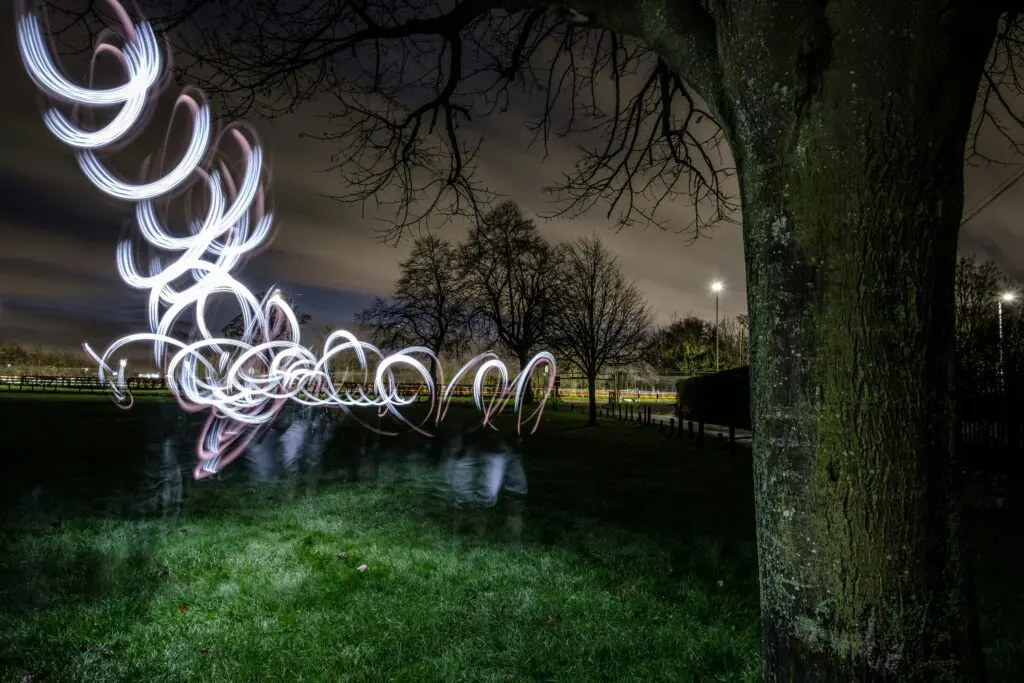

4 min read
London Climate Action Week 2026
Join Julie’s Bicycle at London Climate Action Week 2026 to put culture and creativity at the heart of climate action.
Explore our work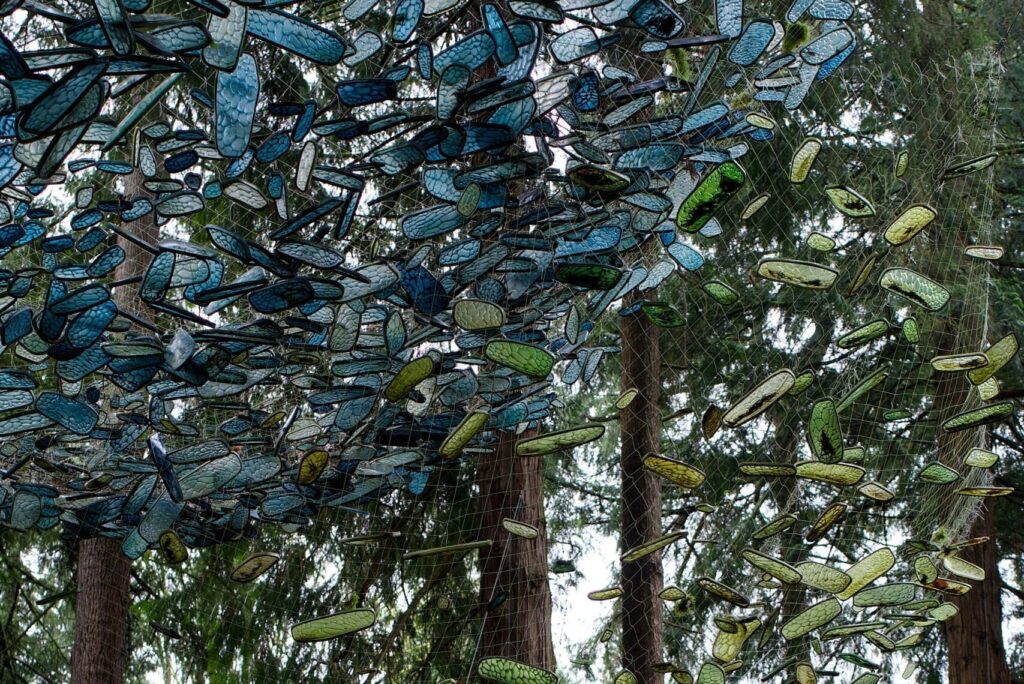
2 min read
Get involved: Sector opportunities June 2026
Discover funding opportunities, events, commissions, and open calls from within the creative climate community this May.
Explore our work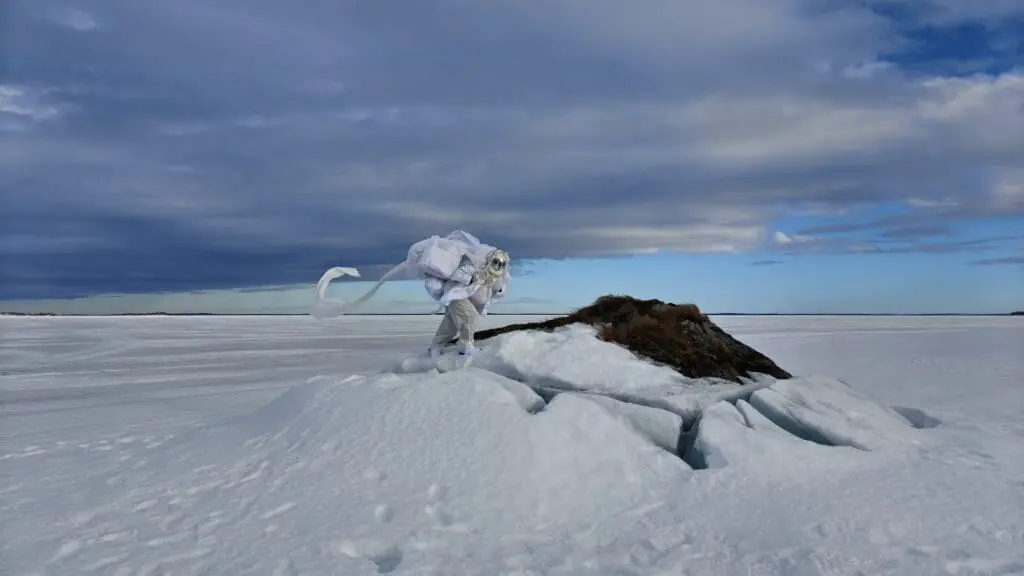
6 min read
Open call: International Touring & Environmental Responsibility Programme 2026
Applications are now open for this initiative supporting arts organisations in England, Denmark, and Norway to develop sustainable, inclusive, and equitable models for international touring.
Explore our work
programme link block
Our flagship training programme empowers artists, producers, and policymakers to lead creative responses to the climate crisis. Delivered internationally, CCL fosters peer learning, intersectional leadership, and practical action.
give as an individual
For people who care about climate action and want to act through culture.
Discover our impact
From influencing global climate policy to reducing emissions in local venues, our work drives real change across the cultural sector.
2000 +
cultural organisations supported
1.3 million
CO2e reductions tracked using our tools


Empowering Creative Solutions for Sustainability
Our approach integrates creativity with practical environmental strategies. We equip artists and organisations with the tools needed to make a meaningful impact.
Collaborative Projects for Lasting Change
Lorem ipsum dolor sit amet, consectetur adipiscing elit. Suspendisse varius enim in eros elementum tristique.
Resources and Training for the Creative Sector
Lorem ipsum dolor sit amet, consectetur adipiscing elit. Suspendisse varius enim in eros elementum tristique.
Join Us in the Movement for Change
Lorem ipsum dolor sit amet, consectetur adipiscing elit. Suspendisse varius enim in eros elementum tristique.
Medium length section heading goes here
Lorem ipsum dolor sit amet, consectetur adipiscing elit. Suspendisse varius enim in eros elementum tristique.

Medium length section heading goes here
Lorem ipsum dolor sit amet, consectetur adipiscing elit. Suspendisse varius enim in eros elementum tristique. Duis cursus, mi quis viverra ornare, eros dolor interdum nulla, ut commodo diam libero vitae erat.
Medium length section heading goes here
Lorem ipsum dolor sit amet, consectetur adipiscing elit. Suspendisse varius enim in eros elementum tristique. Duis cursus, mi quis viverra ornare, eros dolor interdum nulla, ut commodo diam libero vitae erat.
Short heading goes here
Lorem ipsum dolor sit amet, consectetur adipiscing elit.

Medium length section heading goes here
Lorem ipsum dolor sit amet, consectetur adipiscing elit. Suspendisse varius enim in eros elementum tristique. Duis cursus, mi quis viverra ornare, eros dolor interdum nulla, ut commodo diam libero vitae erat.

Medium length section heading goes here
Lorem ipsum dolor sit amet, consectetur adipiscing elit.

Medium length section heading goes here
Lorem ipsum dolor sit amet, consectetur adipiscing elit.
Short heading here
Lorem ipsum dolor sit amet, consectetur adipiscing elit. Suspendisse varius enim in eros elementum tristique.

Medium length section heading goes here
Lorem ipsum dolor sit amet, consectetur adipiscing elit. Suspendisse varius enim in eros elementum tristique. Duis cursus, mi quis viverra ornare, eros dolor interdum nulla, ut commodo diam libero vitae erat.

 — Renee Wells Director, ArtSpace
Julie’s Bicycle has been instrumental in guiding our organisation towards a more sustainable future.


— Renee Wells Director, ArtSpaceHere’s an example of a quote block that’s narrower, but it still supports a good chunk of text.

Contact Form
We’d love to hear from you!

join our creative community
Stay updated with our latest news and initiatives in environmental sustainability and the arts.
By clicking Sign Up, you agree to our Terms and Conditions.