

Written by Hannah Graham
What global futures are we really consenting to?
Technology has always been part of creative practice. We’ve harnessed, adapted and used it for centuries. It has been fundamental in the development and democratisation of artforms from music to digital media, animation, fashion, film, theatre and so on. Now AI, which has been around and evolving over decades, has explosively entered the chat. AI is everywhere, or as Bailey Bryan from Wholegrain Digital puts it “AI is the new plastic”. Some insights (and there are thousands of articles like this) may suggest exciting possibilities when AI is working and applied alongside human intelligence. But should it – could it – really be replacing creative skill, critical process and practice that takes years to develop, hone and refine? It is possible that as a society we’re becoming so enmeshed with it, we’ve forgotten what life was like without it?
Creating Now For the Future
Last year, as part of our Arts Council England programme, Creating Now For The Future, we ran a workshop called AI: Creativity, Climate and Choice. In the lead-up to the workshop, we surveyed freelance creatives and practitioners on their current uses of AI, alongside their hopes and fears about it. 77% those we heard from are using Large Language Models – or LLMs (generative AI such as Chat GPT, Claude, Grok) for both largely admin and some creative work.
Concerns about AI futures overall took up 47%, hope mixed in with concern equalled 38% and the remaining 15% reflected comments of hope only, or a feeling of uncertainty. The themes in responses often pointed to questions on consent and conformity. But technology and digital art has always been part of our world, so why does AI create such strong concerns that are far more nuanced than simply rejecting innovation and growth?
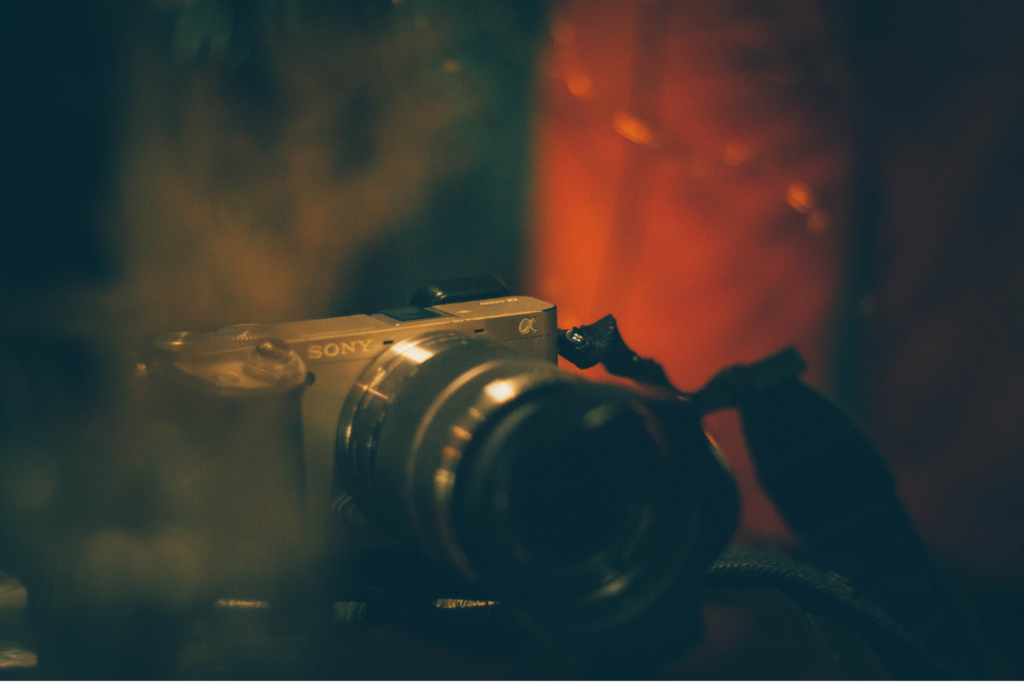
Take photography for instance. When the camera’s first photograph was taken by Joseph Nicéphore Niépce in the early 1820s, it sparked both wonder and fear and was, at the time, criticised for taking something from realist painting. Equally, it opened the door for new styles of painting to flourish. Art is always evolving. But unlike AI, the camera did not scrape millions of existing photographs without consent in order to make a new image, which is largely the way generative AI models work. As such AI is doing much more of the creative process, reproducing stylistic fingerprints on demand and a speedy finished AI product comes from prompting the machine.
The art of making a singular good prompt has become an art in itself, an expression of perfectionism and efficiency over iteration. The rise of generative AI is different to the rise of photography then, because it generates substitution at speed (often selected over enhancement), taking out much of the creative process altogether and raising big questions around rights and extraction. It’s no surprise then that 30% of respondent’s concerns to our survey covered job loss, loss of income/replacement or loss of opportunities, including loss of creativity, critical thinking, craft or skill (“real art”).
Of our respondents, 52% were also concerned about the environmental impacts of all AI, its energy use, Greenhouse Gas (GHGs) emissions, fresh water consumption and land use. The evidence suggests they are right to be. According to the UNU, by 2030 AI water use will match the needs of 1.3 billion people, while its power usage will triple that of 650 million people. Conversely, 2030 is Microsoft’s ‘carbon neutral’ target. As a major AI player, it recently released its sustainability report and with it, a notable drop off in the mention of ‘net zero’. In its 2024-25 report there is roughly a 53% decrease in its mention, in the 2025-26 report – 100% decrease. It has dropped completely.
This trend was discovered by Dr Ramy Salemdeeb, award-winning researcher and Chartered Environmentalist who went on to investigate the sustainability reports of other big AI players to see if the trend followed. All of them report increased emissions from AI data centres and product expansion, whilst simultaneously dropping ‘net zero’ from their reporting. These insights are still largely missing from AI conversations within the cultural sector and it is unclear whether the ‘net zero’ narrative is fading at the same pace here.
Climate Justice & AI
Conscious adoption of AI is often framed around being ‘ethical’, but rarely gets specific about environmental impacts or climate justice. As Ethical Consumer illuminates, it’s pretty hard to be ethical in a fundamentally unethically built model. AI growth is fuelling a relentless data centre boom, and a mounting toll of injustice on the communities and environments forced to host it. As Friends Of The Earth reports “data centers are frequently sited in low-income neighborhoods and communities of colour where residents already face heavy environmental burdens and have less political power to resist industrial development.” Consent here is a misnomer in the face of these huge tech companies, propped up by permissive governmental policy structures. Our AI blog series here, also explores more on environment, justice and ethics.
Important to note, that on a day-to-day level in an already financially stretched cultural sector and a challenging landscape for freelancers, using certain types of AI really can support freelancers and creatives. For some, it has made possible things that have been previously difficult or felt exclusionary. Being the individual end user is not the fundamental issue at stake, nor should it bring judgment or shame. That said, if generative AI is used by freelancers to cut admin corners, save time and bring more efficiency: who and what system does this efficiency serve and at what cost?
A Critical Moment for Creative Climate Action
We have a critical moment to question everything we’re being offered, rather than acceptance by default. Vital to remember is that it is you – the creative workforce – and how you engage with AI that already influences how it is funded, adopted and engaged with, in the cultural sector. Funders may not yet advocate for AI overtly but will map trends and projects embedding AI or AI skills growth, through data arising from funding applications. This will very likely influence and inform where future investment is directed towards. That is a significant amount of collective power held in the sector’s hands. The deeper work is how we might anchor our decisions around AI back to our values and the collective futures we actually want and choose to build. To ask whether this bright, loud, whole-world-open-arm-adoption of AI has a quiet, dangerous truth we should look at more deeply.
Recently, the Chief Executive of Anthropic (huge AI player) Dario Amodei, published an essay called ‘We Must Pace the Frontier’, in which he draws out a three part plan for how the AI industry must slow down. Within hours of Dario’s essay being published, two of his rival AI companies – Sam Altman (Open AI) and Elon Musk (Xai) replied to his essay and post on the X platform, with three stark words: “Dario is right”. His essay came just days after a safety researcher, Jocab Coxon, resigned from Anthropic with concerns that advancing AI poses a real threat to human life that could be significant within a decade.
It is really now that we must decide what our collective futures will look like. We have a window of time to act, to pause, educate ourselves, ask critical questions, reject the ‘productivity’ over process trap, and advocate for the rights of people, communities, nature and our precious global resources most at risk of harm and exploitation. As the AI Resist List outlines, there are active ways to challenge companies, funders and governments now.
We hope this blog and selection of supporting resources, help to bring some of the fundamental and missing pieces of the AI conversation into clearer view.
Spread the word