

Cultura Circular was a capacity-building programme for arts and culture festivals across Latin America and the Caribbean, delivered by Julie’s Bicycle with support from the British Council Americas. This case study highlights the work of VaPoesía Festival in Argentina from the programme’s 2025-2026 cohort.
In culture, sustainability and climate change are no longer distant concepts but immediate realities. Across music, literature, and the performing arts, various events are showcasing innovative formats for community engagement and environmental awareness.
Drastic changes in ecosystems and extreme weather events increasingly resonate in daily conversations. What can be done in the face of this scenario? How can one overcome anxiety or discouragement? These questions are pressing, and the cultural sector offers a fertile field of action for those seeking answers.
Festivals, regardless of their discipline—be it music, performing arts, literature, or visual arts—and whether they take place in cities or rural areas, on a small or large scale, are fundamentally gathering points. Once a year, they serve to bring together people, traditions, customs, rituals, and emotions, driven by shared interests and, increasingly, by environmental awareness.
VaPoesía Argentina: Literature and Inclusion
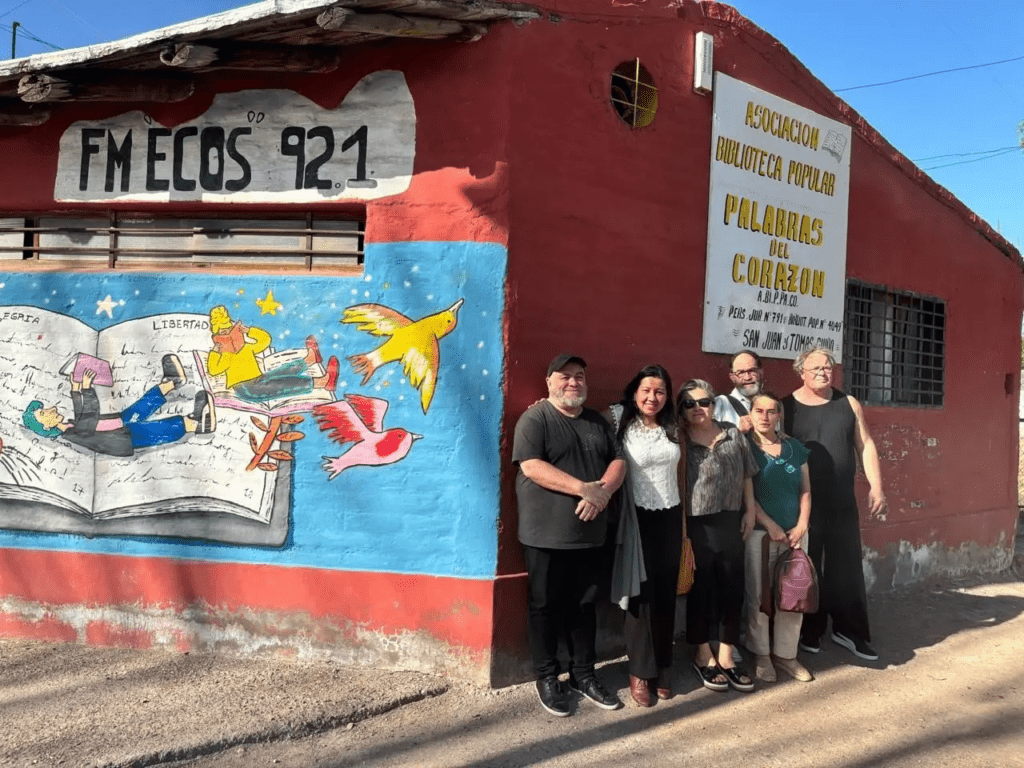
Under the motto “Literature and Inclusion,” this poetry festival is held in October, between Mendoza and Buenos Aires. Its purpose is to socially include people with varying levels of vulnerability through literature, creating spaces for expression in unconventional settings, such as Community Integration Centres, penitentiary complexes, juvenile institutions, public libraries, unions, and community soup kitchens.
The festival’s directors, Marta Miranda and Ricardo Rojas Ayrala, note that the event has featured over 180 poets from Argentina, Latin America, and Europe across its 13 editions. Its itinerant nature has enabled them to cover 26,000 km, forging connections between “languages, territories, and communities.”
In 2025, VaPoesía set out to equip participants with the tools needed for more environmentally responsible literary production, including paper recycling to create alternative editions. This initiative not only adds distinct value to the co-produced workshop material but also generates new prospects for participants.
Furthermore, their sustainability strategy focuses on mobility, integrating the programme’s development spaces (passenger buses or trains) to create a hybrid of venue and accessibility. The project’s underlying principle is to foster an egalitarian exchange in which the public’s existing environmental knowledge and practices are central to the experience.
Spread the word