

Today, the Independent Music Companies Association – IMPALA – has released its third annual carbon calculator report, giving an overview of the independent sector’s carbon footprint and providing an update on the important developments made to the tool in 2025. Building on the initial reporting identified in the first report and the practical actions outlined in the second report, this third edition marks a significant step forward in creating the most accurate picture of emissions to date and ensuring alignment with current best practices.
Launched in 2022, the IMPALA Carbon Calculator is the first bespoke environmental impact measurement tool for the independent recorded music sector. Powered by Julie’s Bicycle, the calculator helps IMPALA’s members measure their carbon footprint with a standardised methodology that is aligned with the Greenhouse Gas Protocol (GHG Protocol) Corporate Standard, the most widely used framework for reporting organisational greenhouse gas emissions. The tool is supported by Merlin and Murmur as well as IMPALA’s EU network grant.
Key highlights from the new report include:
1. Updates to the calculator
- Vinyl factors: This year’s report details a significant change to how vinyl manufacturing is measured in the IMPALA Carbon Calculator, following research by the Music Climate Pact and Vinyl Alliance.
- Recording studios: Users can now select “Recording Studio” as a building type, allowing labels to record impacts from occupied or third-party studios.
- Merchandise: The Beyond Carbon survey has been expanded to include a dedicated section on Merchandise to improve recording of environmental actions taken by labels.
- User experience and new guidance sources: Improvements to the reporting journey enable labels to quickly access targeted guidance and generate high-quality visual reports that facilitate clear and accurate communication of progress.
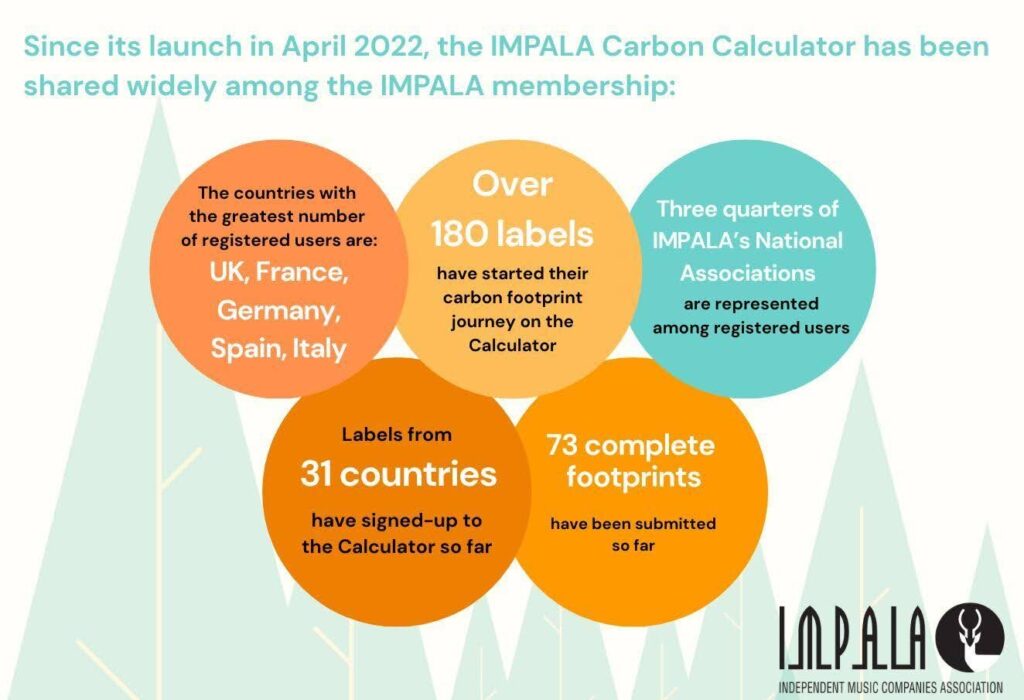
2. The Weidenmüller Sustainability Fund: The report highlights the ongoing partnership with Merlin, whose support through the Weidenmüller Sustainability Fund has been instrumental in making the calculator accessible to a wider range of independent labels globally.
3. Climate investment & business case: The report offers guidance on climate investment and organisations like Murmur, and outlines the “business case for sustainability,” demonstrating how resource efficiency and environmental transparency drive long-term commercial resilience.
4. US pilot project: The outcomes of the pilot project, launched in the US together with A2IM and Merlin. The project marked the first step towards rolling-out IMPALA’s Carbon Calculator in the world’s biggest music market. It has also provided a pathway for future calculator adaptations in other key territories.
5. Practical action & industry collaboration: A refreshed suite of practical tips helps labels move from data entry to carbon reduction, focusing on supply chain management and energy transitions, while also highlighting sector wide.
Richard Phillips, Music Lead at Julie’s Bicycle commented
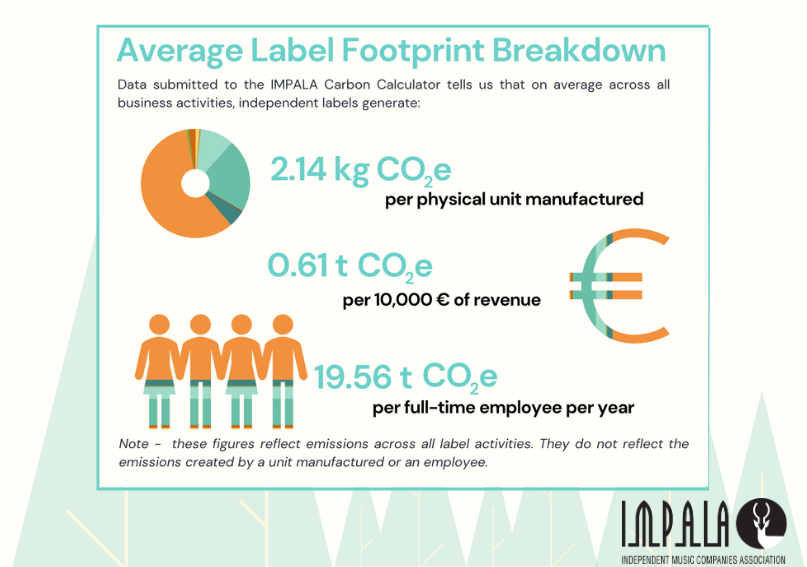
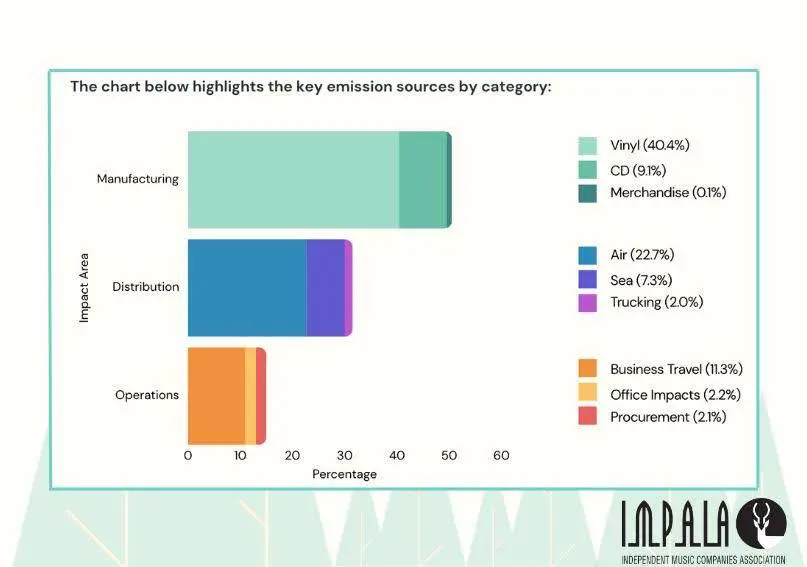
This third annual report of the IMPALA Carbon Calculator is a landmark moment for the independent recorded music industry. It provides the most accurate picture to date for the average emissions of an independent label. This follows important updates to how the impacts of vinyl manufacturing are measured, reflecting the latest research by the Music Climate Pact and Vinyl Alliance into lifecycle emissions of vinyl. Air freight and business travel make up a larger percentage of the total footprint than previously estimated. While vinyl manufacturing remains the largest source of emissions, the results mean that a holistic sustainability strategy is required to tackle multiple areas head on. With the support of Julie’s Bicycle, the IMPALA Sustainability Programme will help labels build this in for long term success.
Peter Quicke, Chair Ninja Tune, Chair of IMPALA’s Sustainability Task Force, added:
It’s great to be able to apply new vinyl factors and see how this changes our results. The independent sector is uniquely positioned to lead the music industry’s transition, and this report provides the foundation to do just that. Our goal remains the same, to provide labels with guidance and tools that turn goals into practical action. We are very grateful for the support from Merlin through the Weidenmüller fund, which allows us to take a truly global approach to these challenges and shows the importance of industry action.
Helen Smith, Executive Chair of IMPALA commented:
This third report is a testament to the independent sector’s commitment to long-term climate action. We have been able to further refine the calculator with updates to the vinyl factors and make other changes. This way, we are ensuring that our members have the most accurate data possible to make informed production decisions. Sustainability is no longer a peripheral issue, it is a core component of a modern music business. This report makes the business case clear: sustainability efforts matter to music fans. The support of our EU network grant, the Weidenmüller fund with Merlin and Murmur makes a huge difference to the sector’s work.
Spread the word