
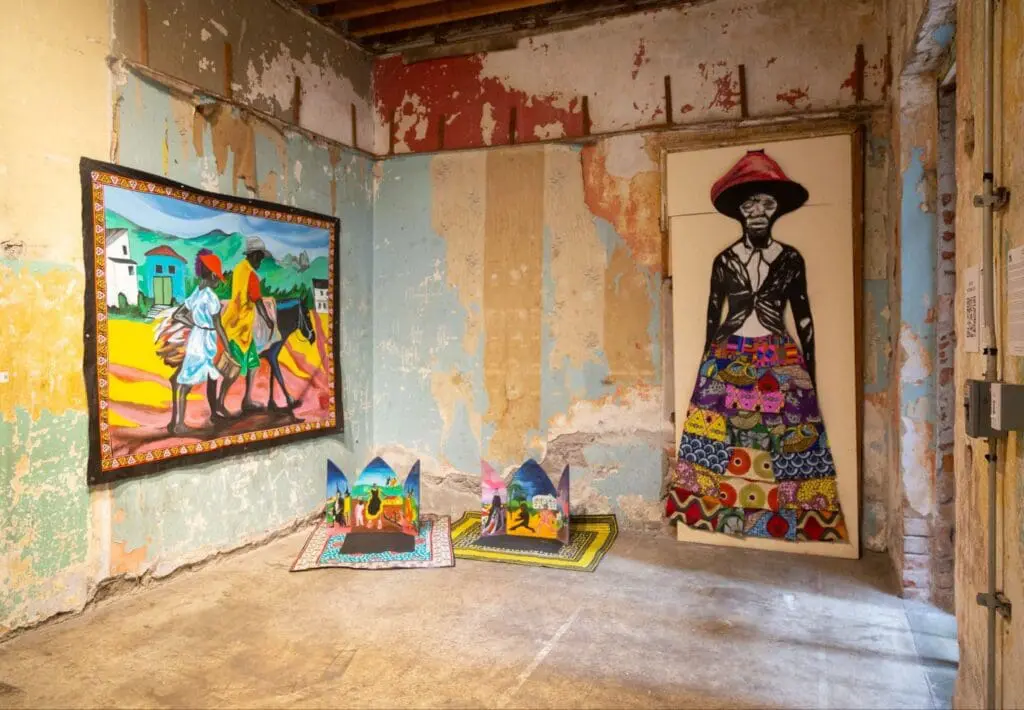

Cultura Circular was a capacity-building programme for arts and culture festivals across Latin America and the Caribbean, delivered by Julie’s Bicycle with support from the British Council Americas. This case study highlights the work of Salón ACME in Mexico from the programme’s 2025-2026 cohort.
Salón ACME: Art, Community and Sustainability
Salón ACME is a platform founded in 2013 in Mexico City by artists and geared towards emerging creators, with the purpose of providing them with visibility, momentum, and dissemination. This year, Salón ACME focused on deepening its sustainability project by participating in the Cultura Circular programme supported by the British Council in partnership with Julie’s Bicycle (who delivered the capacity building element). For the gallery, building a more sustainable event is a process of continuous learning. This path requires dialogue with other local and international actors, collaboration, and the systematisation of actions to identify opportunities to create and implement concrete practices, expanding its impact and challenges with each new edition.
Throughout its thirteen editions, it has brought together these talents with curators, collectors, and new audiences in the visual arts to foster dialogues, encounters, learning, and relationships that strengthen the artistic community. Furthermore, it features itinerant formats that have travelled to Germany, the United States, Colombia, and, recently, to the Museo de Arte de Zapopan in Jalisco, Mexico.
During its recent edition, from February 5 to 9, 2026, the festival presented specially curated works, performances, and music concerts, solidifying it as an “art event of great authenticity.” Nearly 150 artists, 30 exhibitors, and 10 guest curators gathered in the monumental hall, in an atmosphere of “hospitality and celebration.”
With a distribution across six sections: Convocatoria (Open Call), Estado (State), Bodega (Warehouse), Proyectos (Projects), Sala (Gallery), and Patio (Courtyard), the salon welcomed nearly 20,000 attendees and achieved significant coverage in the media, both digital and print. This solidifies ACME as a plural artistic event, capable of reaching non-specialised audiences, making art accessible and enjoyable. For its organisers, the most significant impact is the development of “a hub for community celebration” that “challenges the traditional and closed formats of the art industry.”
Exchange through the Cultura Circular project
Thanks to the Circular Culture programme, the 2025 edition featured guests from the United Kingdom.
Participants in the “Projects” section included:
- Catherine Chinatree: Multidisciplinary artist who works with the coexistence of opposites (such as movement and stillness). She participated representing Quench, a non-profit organisation in Margate that mobilises resources for local artists and offers artistic educational programmes for children and youth.
- Sol Golden-Sato: Artist who explores speculative myth-making, ancestral memories, and Afro traditions through sculpture, painting, sound, and immersive installation. She represented The Bomb Factory, a foundation focused on facilitating accessible spaces and training for artists to flourish through experimentation in its facilities.
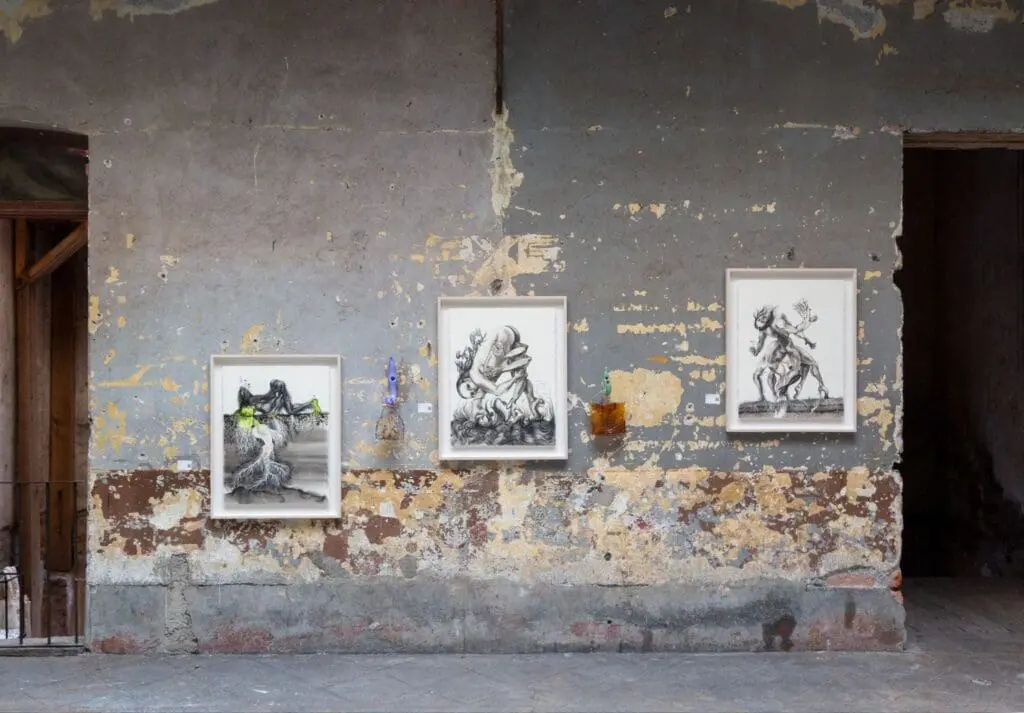
- Saelia Aparicio: Artist who invites the public to collectively imagine and think about alternative futures related to invasive species, housing problems, pollution, or the climate crisis. In a subtle way, her work helps to navigate the harshness of reality. She belongs to Somers Gallery in London, a reference gallery for Latin American art in the United Kingdom that fosters collaboration among communities.
Furthermore, the “Encounters” activities—Salón ACME’s public programme—featured UK artist Myles Westman, a multidisciplinary creator, poet, and artistic programmer from Market Gallery in Glasgow. Their work on coloniality and its impact on relational forms between artists from different geographies was considered the highlight of the entire week’s public programme.
Sustainability strategies and actions
The fair is an active member of the Gallery Climate Coalition. As part of its commitment to reducing its environmental impact, it carried out specialised consulting to identify and assess the environmental factors generated during the event, record probable or potential impacts, and draw up strategic plans for the future. Organisers also brought active participation from artists by organising a panel. During the talk Reframing Collaboration: Building Global Solidarities, guests Yvannoé Kruger, Myles Westman, and Ruben Steinum discussed how organisations can develop collaborative practices around the use of material, technological, and knowledge resources, with a focus on savings and impact reduction.
Another course of action was the virtual workshops open to participating artists of the 13th edition. The objective was to raise awareness of the importance of waste management in artwork packaging and the impacts of transport, both central tasks in the visual arts. The training was highly successful, as evidenced by the fact that a significant majority—90%—of the participating artists implemented immediate changes to their packaging as a direct result of the information and skills they gained. This demonstrates a strong uptake of the training material and a commitment to applying the new practices, and the production team wants to continue the capacity building in future editions.
Overall, the proposal was widely accepted, highlighting the importance of concrete environmental actions related to energy use, equipment replacement, and the reduction of materials and waste.
Opportunities for internal improvement for future editions were also identified. In this regard, the need to broaden training and dissemination of the topic took centre stage, both for the personnel involved and for attendees, who will be able to interact with innovations in signage and educational materials.
Spread the word