

Cultura Circular was a capacity-building programme for arts and culture festivals across Latin America and the Caribbean, delivered by Julie’s Bicycle with support from the British Council Americas. This case study highlights the work ofFestival Internacional de la Palabra en Escena in Argentina from the programme’s 2025-2026 cohort.
In culture, sustainability and climate change are no longer distant concepts but immediate realities. Across music, literature, and the performing arts, various events are showcasing innovative formats for community engagement and environmental awareness.
Drastic changes in ecosystems and extreme weather events increasingly resonate in daily conversations. What can be done in the face of this scenario? How can one overcome anxiety or discouragement? These questions are pressing, and the cultural sector offers a fertile field of action for those seeking answers.
Festivals, regardless of their discipline—be it music, performing arts, literature, or visual arts—and whether they take place in cities or rural areas, on a small or large scale, are fundamentally gathering points. Once a year, they serve to bring together people, traditions, customs, rituals, and emotions, driven by shared interests and, increasingly, by environmental awareness.
Festival Internacional de la Palabra en Escena
Created in 2015 by Revenir Grupo de Teatro, this festival takes place every June in the province of San Luis, Argentina. While its main base is in the provincial capital, activities extend to Villa Mercedes, La Punta, and El Volcán to make the performing arts accessible to diverse audiences.
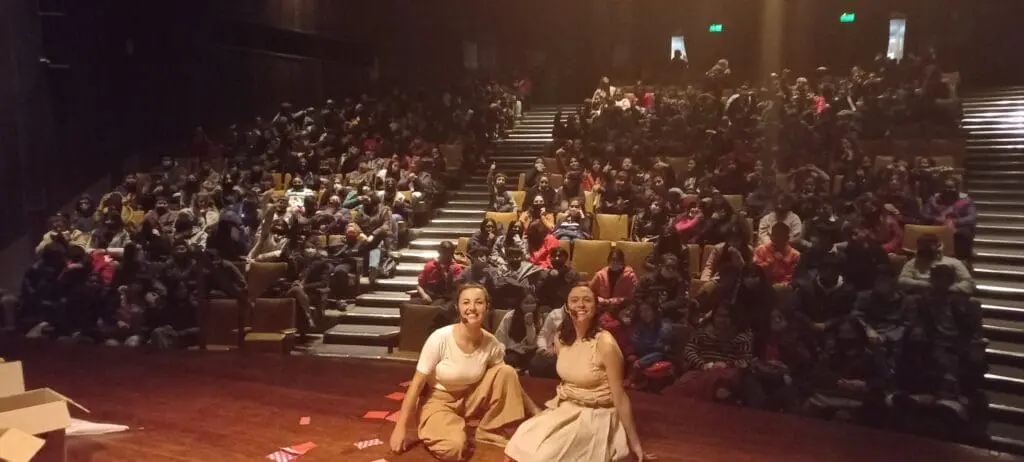
For 12 consecutive years, the festival has worked to democratise culture, with a particular focus on childhood and youth. It has brought shows from across Argentina and internationally to the province.
According to the coordinator Lic. Daiana Calabrese, the participation of major companies, artists, and international researchers has fostered an enriching and essential exchange for the growth of local theatre. This educational and cultural contribution has been recognised with declarations of National, Provincial, and Municipal Interest. Furthermore, the festival has the formal backing of the Universidad Nacional de San Luis (UNSL), which has supported it since the very first edition.
Since 2025, the festival has been a partner of the UNSL’s Transdisciplinary Environmental Institutional Program (PITSA), collaborating on environmental initiatives. This includes staging performances in unconventional spaces with low technical and energy demands.
In coordination with the provincial Ministry of Education, Palabra en Escena organises pedestrian itineraries for students. These tours visit key points of interest in the host cities and conclude at central theatres, where attendees can enjoy shows or visual arts exhibitions.
The festival has adopted several strategies to minimise resource consumption. Promotional materials, signage, and programmes are shared exclusively on social media to reduce paper use. It also encourages the use of reusable materials for promotional banners and beverage containers.
A core focus of the festival is environmental education. Its programme frequently includes presentations at educational institutions in small towns, areas where public transport is commonly used. Through meaningful artistic experiences, theatre is used to raise awareness and promote action to preserve local ecosystems and restore the value of fundamental concepts such as reduce, reuse, and recycle. The ultimate goal is to strengthen a critical and committed perspective among its young audience.
Spread the word