

Cultura Circular was a capacity-building programme for arts and culture festivals across Latin America and the Caribbean, delivered by Julie’s Bicycle with support from the British Council Americas. This case study highlights the work of AFROPUNK in Brazil from the programme’s 2025-2026 cohort.
Sustainability and Environment: The Legacy of AFROPUNK Brazil 2025
AFROPUNK took part in the British Council program Circular Culture 2025 and joined the capacity-building activities organised by the UK organisation Julie’s Bicycle to implement sustainable practices. This collaboration aimed to reduce environmental impact and promote cultural exchange through artistic residencies that connect British and Brazilian artists and offer mentorship.
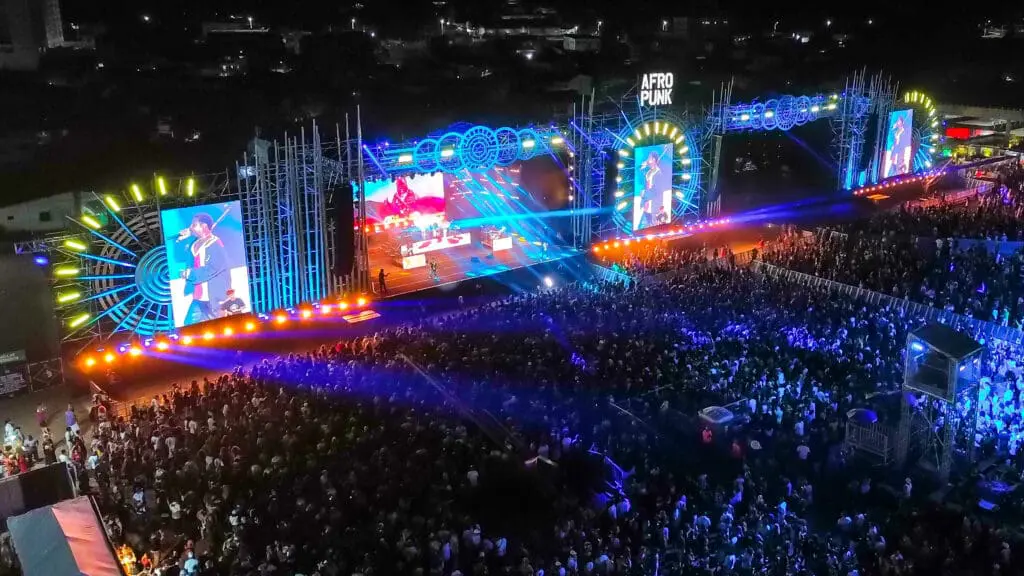
AFROPUNK (with the agency full service of IDW Company) is a global powerhouse that celebrates Black creativity in all its breadth, encompassing music, art, fashion, thought, and community. More than just a festival, it defines itself as a movement that connects people, strengthens identities, and amplifies Black culture, so that it occupies a place of strength and pride in the world. The 2025 edition in Bahia attracted people from all Brazilian states and 36 countries. Furthermore, the festival reached over 12 million Brazilians through its TV Globo broadcast and 1.3 million impressions on social media.
Living in the Community is based on the value that, together, we can achieve important changes. The platform is committed to practices that care for the environment, people, and good management. In 2025, a carbon inventory was carried out, and trees were planted in quilombola (Afro-Brazilian maroon) communities. Fashion becomes a form of expression and a way to leave a mark, such as on the ‘Black Carpet,’ a space where everyone can show their style and confidence, taking the lead and reflecting who they are through fashion.
The AFROPUNK Brasil 2025 festival demonstrated that large cultural events can be powerful agents of positive transformation, excellently integrating culture and sustainability. Through its platform, the festival implemented ESG (Environmental, Social, and Governance) strategies that not only reduce its negative impact but also regenerate the territories where it operates.
Environmental Commitment in Action
AFROPUNK’s environmental management focused on reducing waste and offsetting its ecological footprint through various actions:
- Waste Management: 3 tons of waste were processed, preventing them from being sent to landfills. This included collecting 1,830 kg of organic waste for composting and 45 litres of cooking oil for soap production.
- Carbon Inventory: For the first time, a system was implemented to map direct and indirect emissions (transport, energy, travel), totalling 20 tons of mapped CO2 for later offsetting.
- Ecological Restoration: In quilombola communities in Bahia, 915 native species seedlings were planted, and a 150 m² community vegetable garden with 856 vegetable seedlings was established.
- Sustainable Operation: The festival provided free hydration stations, eliminated single-use plastics in food service, and offered low-emission gastronomic options.
Social Impact and Governance
Sustainability at AFROPUNK also encompasses community strengthening and equity:
- Inclusion and Accessibility: More than 24 hours of translation into Libras (Brazilian Sign Language), audio description of shows, and psychological support spaces were offered.
- Local Employability: 90% of the hired team self-declare as Black, and 68.54% of the workers are local to the territories where the event was held.
- Education: Through the Masterclasses, debate was fostered on culture as an ESG impact platform and on the future of festivals in Brazil.
Recognition and Future
This comprehensive approach allowed the “ESG on the AFROPUNK Brasil platform” project to win the PRESE 2025 Award, the first award in Brazil to recognise sustainability actions in events. The festival thus reaffirms that “collectivity is the principle,” building a transitional ecosystem that leaves a lasting legacy in culture, economy, and the environment.
Spread the word