
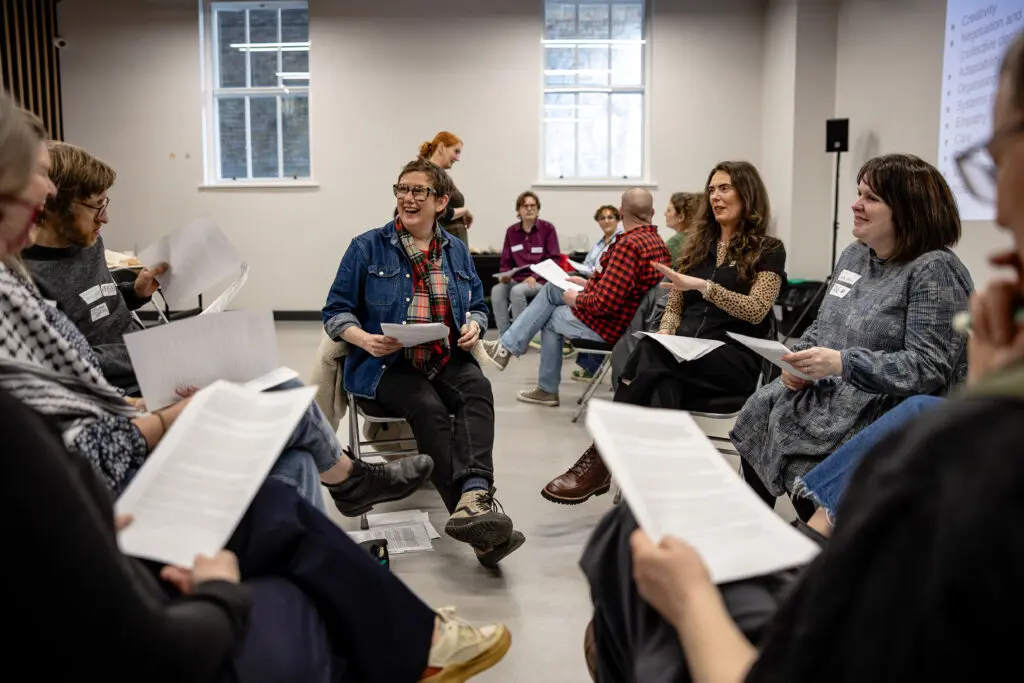

As part of our Arts Council England programme, JB is delivering a series of in-person and online workshops in Bradford through our Adaptive Futures and Creative Climate Accelerator programmes. These sessions bring together cultural practitioners, community leaders and local experts to explore how creativity can support place-based climate adaptation.
This blog focuses on reflections from the in-person sessions delivered so far. Hannah Graham, Arts Council England Programme Manager at JB, shares insights from the first workshops held in February and March 2026, capturing the conversations, creative approaches and shared learning that are beginning to shape a collective vision for climate resilience in Bradford.
February 2026
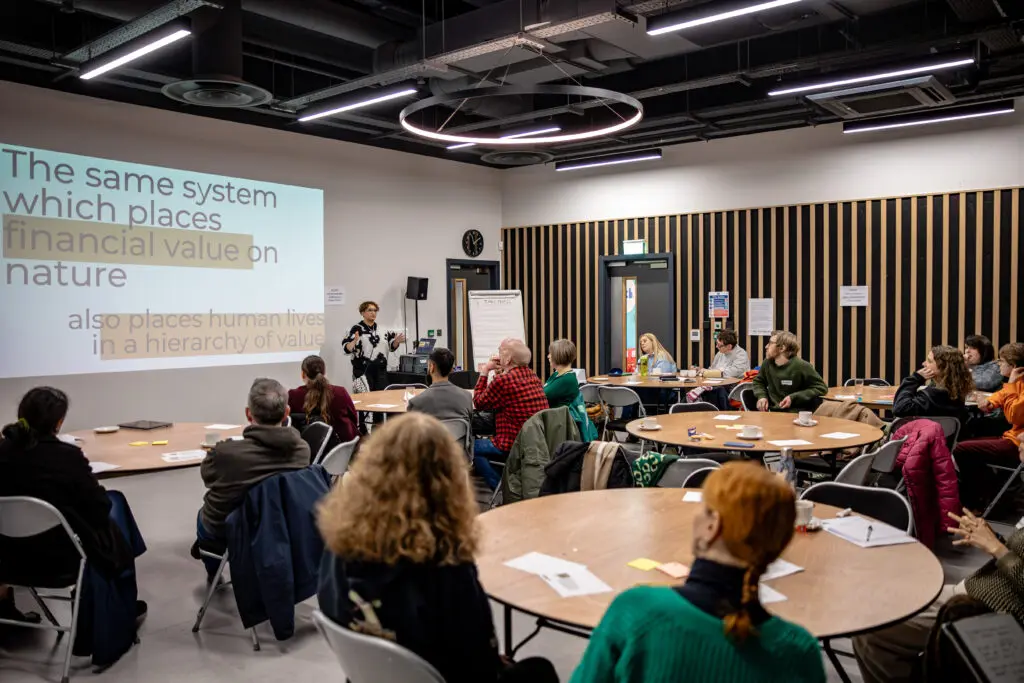
The room brought together participants from our Adaptive Futures and Creative Climate Accelerator programmes, representing creative organisations and spaces, artistic freelancers, community organisations and leaders and local wildlife experts. Both Arts Council England programmes aim to build creative capacity for place based climate adaptation, exploring where and how culture and creativity can support communities to adapt, finding their own role and opportunities to contribute to creating positive climate futures.
This first session focused on immersing participants in adaptation context, frameworks and creative ways to start conversations with communities about climate futures.
We opened by inviting participants to reflect on the species identified by Yorkshire Wildlife Trust as endangered, grounding the conversation in beyond human impacts and towards interspecies perspectives. The group were then guided through the global picture of climate justice, creating an informed and important space to reflect on communities and lived experiences disproportionately felt.
We unpacked climate adaptation together, a concept the participants reflected is often left out of their climate conversations. This built a shared language and understanding of the urgency of this work, supporting the room to make links to local outcomes such as health and wellbeing, transport, food systems and community agency.
The group explored the importance of combining climate futures data with local knowledge as a springboard for change, hearing from local born and bred citizen scientist, Martyn Priestley. Before diving into further creative adaptation case studies from across India, Palestine and the north and south of England.
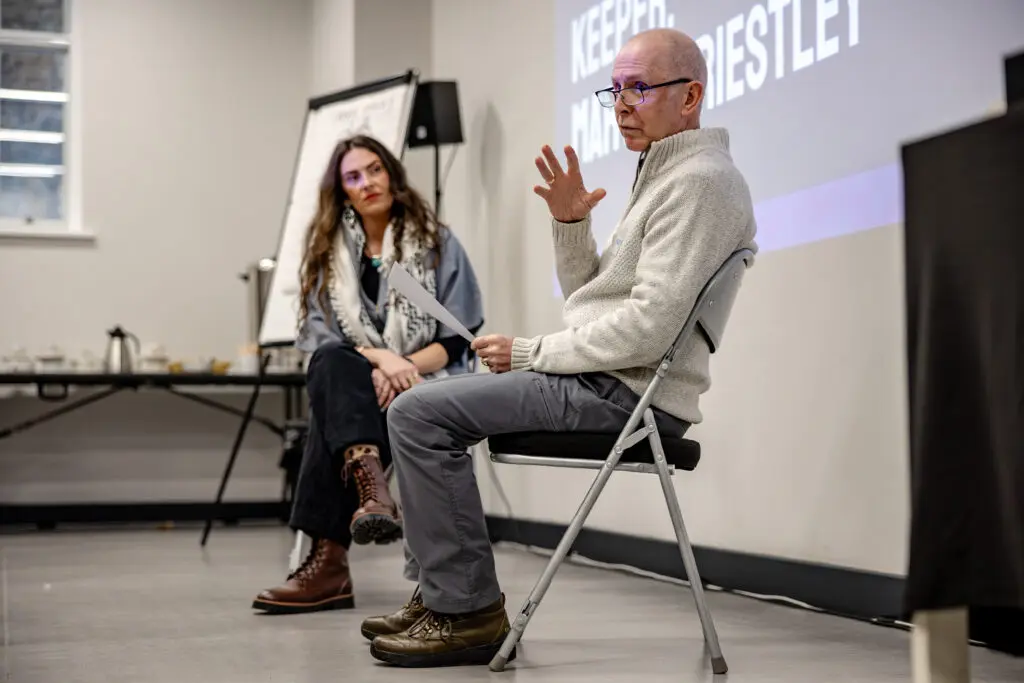
Martyn Priestley on how a potential conflict with a local business turned into a partnership supporting biodiversity and long-term stewardship.
Using a local story from social enterprise Vesper Hill, the group imagined life in 2048 if communities do and don’t adapt. It unlocked conversations about collective care and pathways to change.
And we closed the day exploring JB’s principles for place based adaptation, opening thoughtful and honest discussions around inclusivity, the perceived separation of humans and nature, plus the possibility for stretch and collective action.
By the end of the day, participants reported a stronger understanding of climate adaptation and were excited to continue exploring real life projects through the framework, connecting it back to their own work and the collective energy, expertise, passion and lived experience in the room for the future of Bradford.
March 2026
Our March in-person session focused on the role arts and culture can play in helping communities adapt, finding ways to bring people together and spark creative activity that becomes a starting point for building resilience in place. We began with Dr. Tom Payne, who shared work connected to Bradford 2025 UK City of Culture through the Bradford Ark project and Storm Cycle programme. Alongside a carousel of images showing groups gathering to eat, share stories, sit together in green spaces and make things, he spoke about the power of an invitation.
The kind of invitation that brings people together around food. One that carries curiosity with it and sometimes a little uncertainty too! Through his work in Bradford he explored the idea of a flood, using it as a prompt for people to talk about deeper social and systemic issues, as well as the possibilities for change.
We then moved into an immersive session with Talking Birds, who ran the UK’s first deeply explorative Citizens’ Assembly selected by sortition in 2021 in Coventry. Within minutes participants were naming shared concerns for Bradford, from fly tipping to inaccessible green spaces. They began imagining how the city might operate differently to support them. These were issues close to people’s own lives, so the ideas came from lived experience. The invitation to think differently arrived through play and time travel. Not fifty years ahead, but five. Close enough to picture and feel possible.
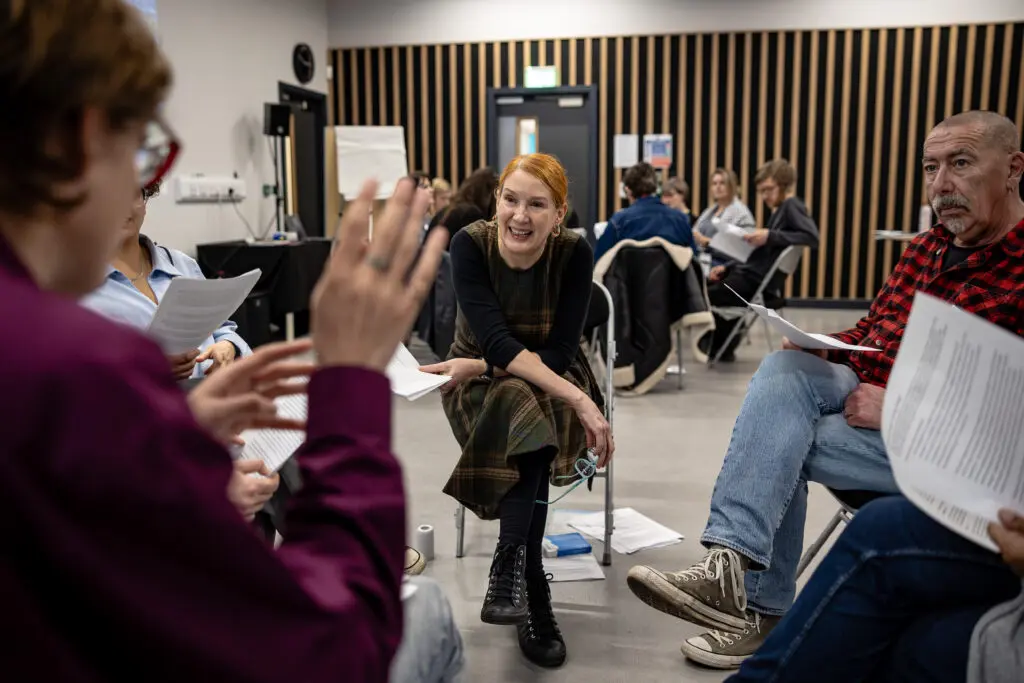
After a lunchtime walk that encouraged participants to notice the “other planets” around them (small moments of accidental art and everyday life that are often passed by) we moved into Forum Theatre with Bradford’s Old Bird Theatre company, drawing on techniques from Augusto Boal. Participants used creative prompts to devise two theatrical scenarios. They rehearsed conversations that might involve activists, teachers, housing developers, local mayors, older residents or caretakers. The scenes paused and restarted as people stepped in to explore how power plays out and how those conversations might shift toward better outcomes for more resilient futures.
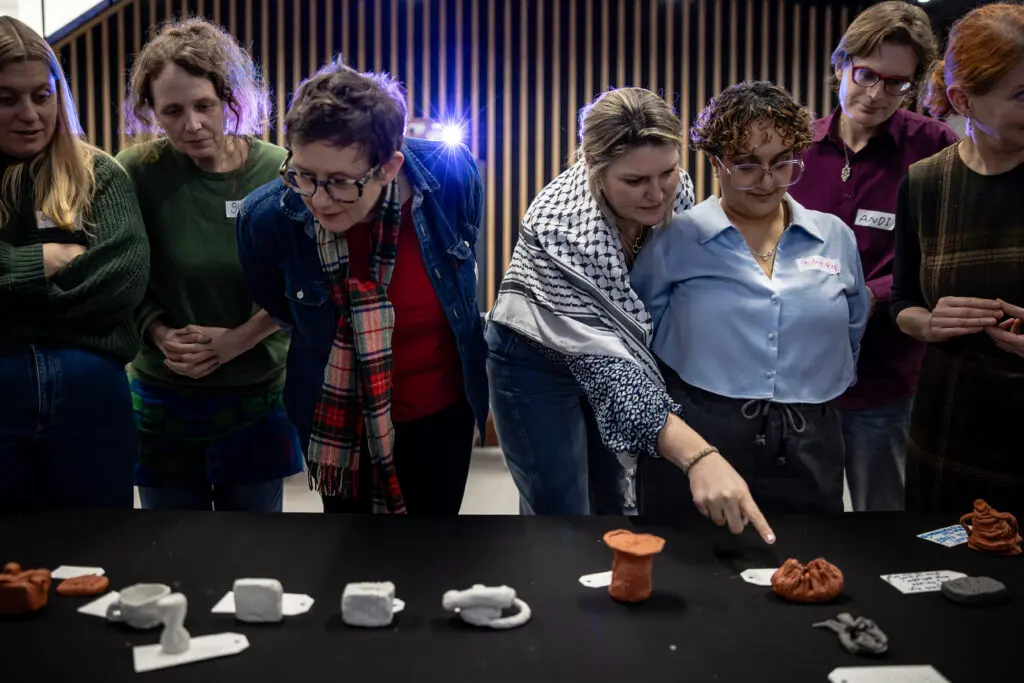
The day ended with another moment of time travel, this time to 2050. Participants created clay objects for an imagined exhibition about how we built resilient futures back in the 2020s. Some objects represented community like cups, chairs, things that bring people together. Others were practical like trowels, recycled leather seed pouches. These were reminders of the hands on work involved in caring for place. We closed by asking what message they would want visitors in 2050 to know about us.
We didn’t give up.
We came together.
We were resourceful.
We wanted better for you.
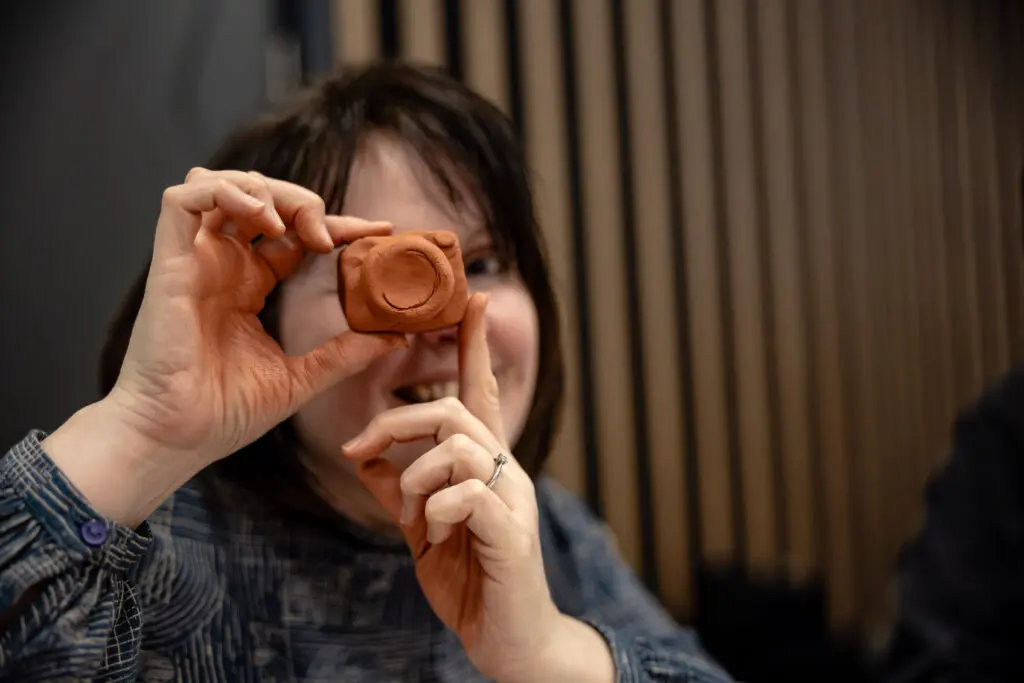
By the end of the day participants spoke about feeling closer to one another and energised by what they had experienced.
So much climate adaptation work rooted in place focuses primarily on infrastructure. It often stops at behaviour change or communicating the science. Important work, absolutely but not the whole picture. Creative practitioners spend years developing the skills needed to hold spaces for imagination, experimentation and play. Community practitioners spend just as long learning how to listen deeply, to navigate disagreement, to help groups work through complexity together. Care and empathy rarely appear at the top of impact frameworks for place based transformation. Yet without them it’s hard to reach healthier, happier, more resilient places.
That’s why the skills explored in this work go far beyond what is often called “soft skills” alongside technical green skills needed to build the future. They are specialist practices and they matter if we are serious about building communities that can face an uncertain climate future together.
Photos by Karol Wyszynski.
Spread the word