

For Arts Council England and Julie’s Bicycle’s Annual Report 2024-25, we feature over 70 practical examples of cultural organisations taking climate action including in depth case studies like this one. Check out the full interactive report.
Thackray Museum of Medicine have established an environmental risk register as a crucial tool to help them manage their approach to sustainability. Based in a 165 year old, grade 2 listed building, the museum faces a number of challenges to tackle their environmental impacts and achieve a resilient strategy.
Applying the principles of a health and safety and risk management approach was the initial first step to develop a method for creating the environmental risk register. Starting with estates and facilities, a review took place which looked at the museums’ existing infrastructures and where improvements and upgrades could be made to reduce carbon emissions. The assessment considered what could be done quickly and what would require longer term investments.
After this initial assessment, team engagement was key to bringing the risk register to life and ensuring it could be used as a tool by everyone. Working closely with staff across the organisation, the estates team established each department’s ways of working and associated impacts; collecting insights on the staff’s views for how Thackray’s environmental and carbon footprint could be improved.
What is in a risk register?
The risk register is a live document, which everyone can update and contribute to. It includes different categories for areas of action; such as energy, waste, heating and lighting. Against each category the organisation has established a ‘status’ including recommendations of actions for that area, as well as a current environmental impact risk rating, ranked as low, medium or high. A score rating of 1-5 is used to monitor the level of responsibility for different actions, and how much potential investment and resource is needed to achieve each one. All of this information is then summarised to create a residual risk impact following the recommended improvements.
Organisational Sustainability Benefits
Thackray has found that the risk register has been an invaluable tool, driving change throughout the organisation. It has been used to plan and prioritise works, and influenced decisions on applying for funding for specific projects, including carbon reduction surveys and lighting upgrades. Aside from helping to inform practical changes, the risk register is also a collaborative tool, shared with the environmental working group and as part of environmental network meetings, for example with Sustainable Arts In Leeds (SAIL) and Museum Development North. Sharing the register in this way has embedded an ethos for change, reflected in the way staff think about their work; from how they deliver projects and events to how materials are used, bringing sustainability considerations to the fore.
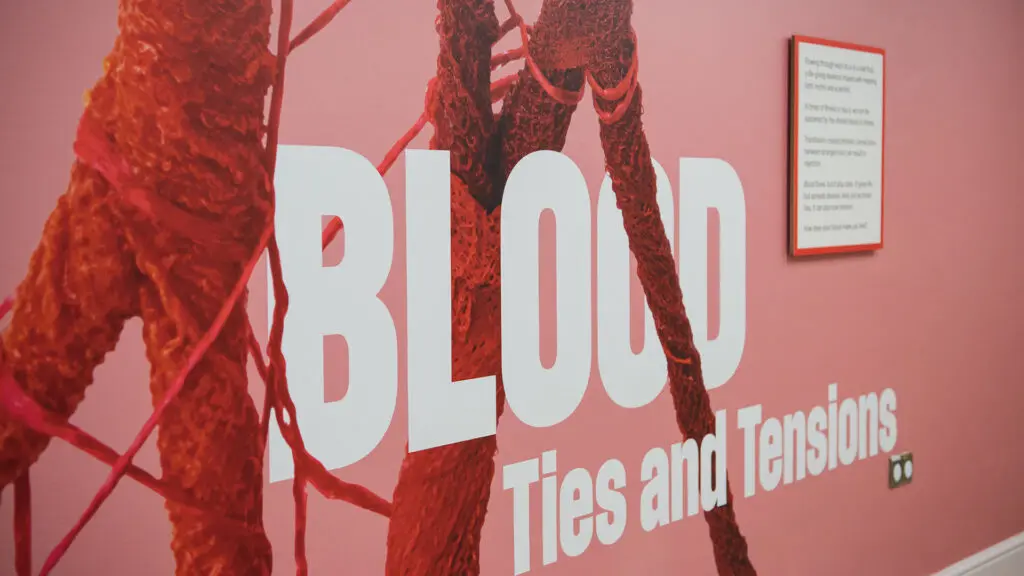
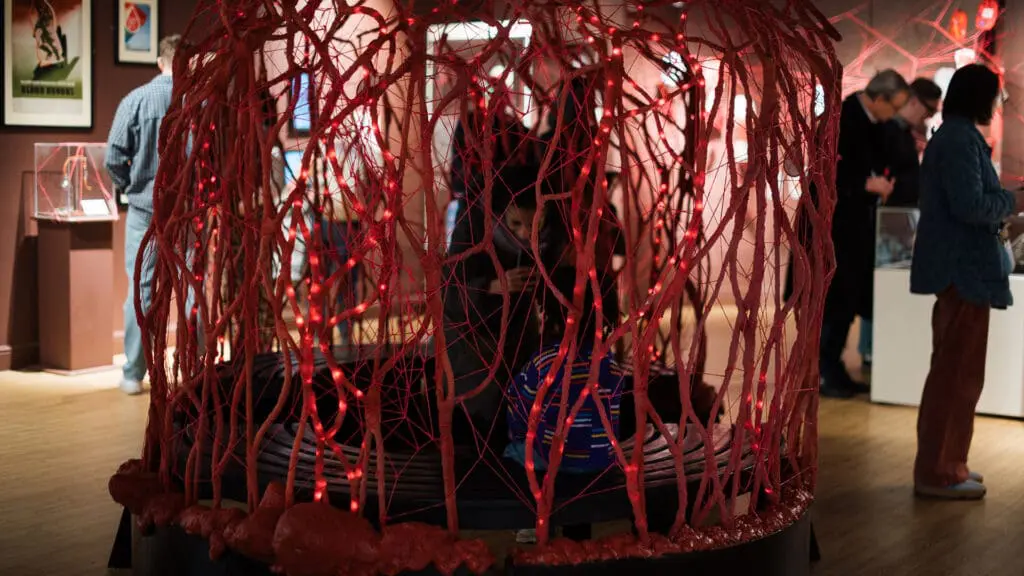
A good example of how this has come to fruition is the museum’s recent first sustainable temporary exhibition ‘Blood’. The exhibition was designed to incorporate the principles of ‘Reduce, Reuse, Recycle’. Wall coverings were made from recycled plastic bottles and paint was sourced for a recycled paint supplier. The artist commissioned for the project has agreed for the installations to be reused for future projects, so the legacy of the exhibition will be felt for years to come.
Daisy Orton, Lead Producer at Thackray, sums up the benefits felt by the organisation:
The focus on sustainability has really benefited the museum overall – from food waste bins in the staffroom, to the travel surveys for visitors and beyond. From a programming perspective – it encourages us to think creatively about our approach to temporary exhibitions, events, and community projects. Without the Environmental Working Group, and Lee Dutton’s work with SAIL and Julie’s Bicycle, we wouldn’t have prioritised embedded greener practices to the extent we have. Our programme has become richer, and the processes behind it more thoughtful – from community sewing workshops using upcycled fabrics, to temporary exhibitions with recycled and recyclable print.
Images: Thackray Museum of Medicine
Spread the word