

Integrating Environmental Responsibility into its DNA
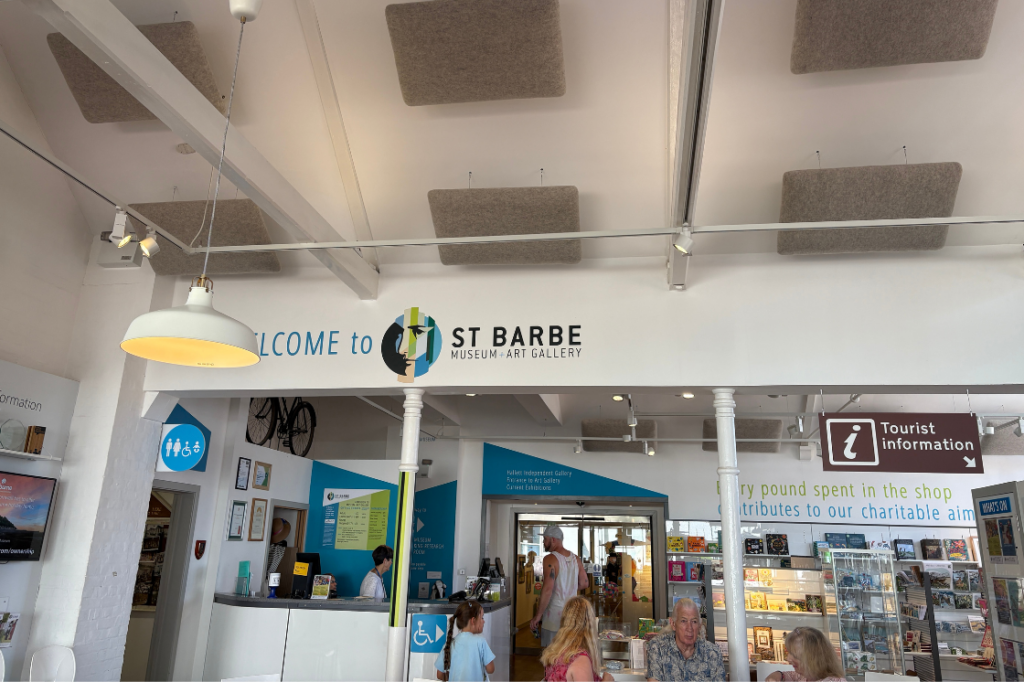
Located on the New Forest coast in Lymington, St Barbe Museum + Art Gallery is an independent charity housed in a renovated Victorian school building. Welcoming over 111,000 visitors annually with a lean team of six full-time equivalent staff, the organisation holds Arts Council England National Portfolio Organisation (NPO) status — a designation that brings both opportunity and a vital platform for sector leadership.
For years, while staff possessed a strong awareness of climate change, this intent remained fragmented across daily operations. Without a dedicated sustainability policy or carbon baseline, environmental action lacked structure. However, achieving NPO status provided the ultimate catalyst: an opportunity to transform informal environmental awareness into formal governance, establishing policies as the bedrock for cultural and operational transformation.
From Intent to Governance: Designing a Policy Framework
In March 2022, St Barbe’s Board took a decisive step by adopting a formal Environmental Responsibility Policy and appointing a dedicated Trustee Environmental Champion. This governance shift ensured that sustainability was no longer treated as an ad-hoc task, but as a core strategic priority accountable to the highest level of leadership.
Embedding Policy into Culture
A policy is only as powerful as the culture that enacts it and to place environmental awareness at the very core of its workplace identity, St Barbe adopted Carbon Literacy Training (CLT) as its primary vehicle for cultural change. Beginning in 2023 with staff and Trustees, the programme achieved an extraordinary 93% completion rate across staff and board members. Today, Carbon Literacy is fully integrated into all recruitment, onboarding, and trustee induction programmes.
To measure progress with confidence and precision, St Barbe adopted Julie’s Bicycle’s Creative Climate Tools. By tracking carbon emissions annually against a baseline of 19 tonnes CO₂e, St Barbe gained clarity on operational impacts, directly informing resource allocation and setting the stage for future capital investments, such as solar panel installation to achieve clean electricity generation. Crucially, policy commitment is tied directly to individual and institutional accountability:
- Appraisal integration: Individual pledges made during Carbon Literacy sessions are formally monitored as part of annual staff performance appraisals.
- Board oversight: Trustees actively follow up on personal sustainability commitments, while every internal committee reviews sustainability progress on a quarterly basis.
- Tangible outcomes: Actionable pledges have driven immediate site improvements, including installing bike stands, placing rainwater harvesting butts, recycling cafe coffee grounds, and empowering Young Curators to upcycle exhibition publicity banners into shop merchandise.
Public Engagement and Regional Networks
Climate action is a shared responsibility that extends far beyond their physical walls. Armed with an active policy framework, St Barbe turned its focus outward to mobilise the local community and empower peer institutions.
Our main tool has been to highlight support needs through the management appraisal process and to focus on support through our lead volunteer for sustainability.
Through its sell-out series of public debates titled Climate Chats, St Barbe brings headline speakers, practitioners, and local residents together to explore urgent regional ecological challenges — ranging from soil health and sustainable agriculture to water margins and coastal resilience. These chats provide a vital platform for public education, turning policy commitments into accessible civic dialogue.
Spread the word