

For Arts Council England and Julie’s Bicycle’s Annual Report 2024-25, we feature over 70 practical examples of cultural organisations taking climate action including in depth case studies like this one. Check out the full interactive report.
The South London Gallery (SLG) has a vision to ‘bring art to the people of South London’. Established in the 19th century, today it is one of London’s leading contemporary visual art institutions, with an established reputation for its ground-breaking programme of contemporary art exhibitions, events, and education projects for all. As an institution grown from philanthropic roots, SLG is characterised by its commitment to engaging local residents in its programmes, including thousands of children, young people, and adults in inspiring creative, social, and training activities.
SLG has not only been on a journey to creating and nurturing its communities, but an environmental one too. From collaboration, to adopting industry best practice, and engaging teams across new processes, we explore how SLG have centred environmental data decision making at its core, and how this translates to day-day operations.

Measuring Carbon Data (and How To Use It)
As a gallery which has a number of exhibitions across the year, the question of ‘how do we measure the impact of an exhibition’, began circulating team meetings. For the first time, SLG decided to calculate the carbon footprint of their exhibitions using the Gallery Climate Coalition Calculator (GCC) – providing them invaluable insights to the largest emissions for exhibitions, whilst unlocking opportunities to make environmental progress and engage a wide range of stakeholders.
The GCC calculators enabled teams to reflect on work at an exhibition-by-exhibition basis, providing a much clearer picture of the specific factors driving emissions for each project. With learnings such as ‘collecting data as you go’, and sharing responsibilities with all team members, these were key at beginning to embed sustainability to their exhibition footprinting. From measuring exhibition environmental impacts, it was seen that flying artists and artwork contributed significantly to their carbon footprint – accounting for the largest emissions source.
Capturing data, and understanding where impact ‘hot spots’ are, has encouraged SLG to further explore the potential for sea freight as a lower-carbon alternative to transporting artworks – with plans to explore this option within early planning conversations for future exhibitions.

Acts of Resistance Exhibition – Influencing and Changing Behaviours
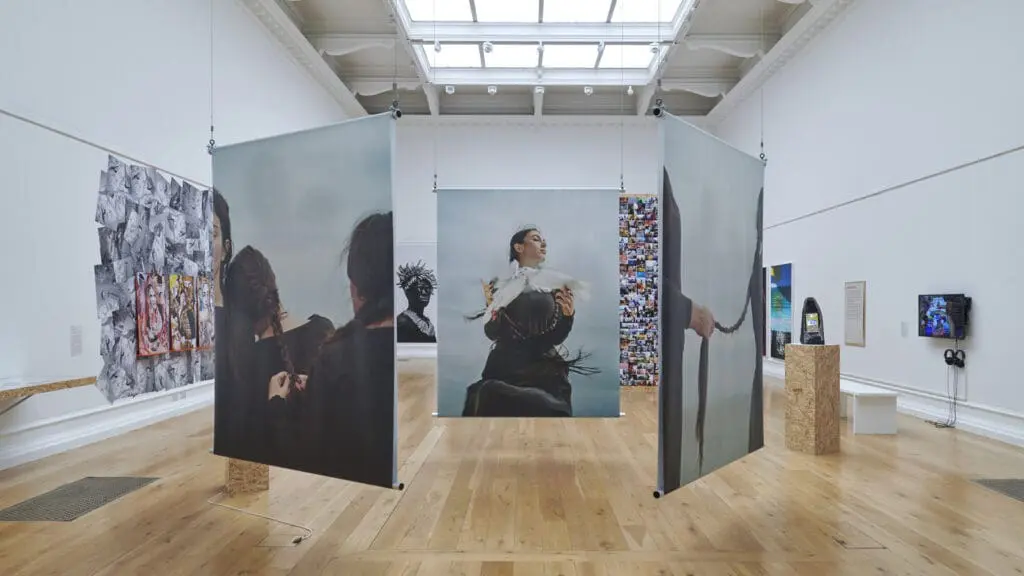
As ongoing exhibition environmental reporting continued, an opportunity to integrate sustainability from the outset arose. The 2024 Acts of Resistance: Photography, Feminisms and the Art of Protest exhibition provided an opportunity to do just that. Through open and honest communication with artists from inception on the ambitions to reduce the carbon footprint of the show, SLG shared that this meant they were going to focus on virtual installations, rather than bringing artists to London for the exhibition. Met with understanding of the motivations behind the approach, and collaboration across the process, Acts of Resistance highlighted what was in the art of the possible.
Driving the sustainability efforts of the exhibition were a team of partners from both SLG and the Victoria and Albert Museum (V&A), who helped to co-curate, whilst supporting the measures taken to reduce the carbon footprint of the show.
For SLG to increase awareness of the environmental efforts taken for their Acts of Resistance exhibition, they published an exhibition environmental statement on their website to increase transparency and share knowledge with visitors and peers. Their commitment included:
- Producing exhibition copies of photographs locally instead of shipping them, to avoid higher impacts on transportation emissions.
- They chose not to fly or travel artists for project meetings or to install their work in the exhibition.
- The exhibition build was minimised – and with plans to reuse and recycle after.
- Low carbon impact materials were prioritised for exhibition furniture.
- Wall texts and in-gallery guides were produced instead of takeaway guides.
- The majority of food for the private viewing was plant-based.
Sustainable Exhibition Learnings
Trust
‘Building trust was key to allowing us to install the show in a more sustainable way’, where team members of SLG took time to ensure one complex work was installed perfectly per the artist’s instructions, which was crucial to building artist trust with the new approach to exhibiting.
Communication
Alongside keeping open communication with artists, internal communication was important too. As the team at SLG trialled new processes, a key learning was to ensure open and clear communication with internal teams and freelancers on what actions are necessary to meet the environmental goals of the exhibition.
Planning
With any new approach to exhibiting and programme planning, the more time allowed for preparation, the more sustainable it can be. This allows for further time thinking about core goals, material choices, processes for all stages of exhibiting, and to engage teams throughout. With any sustainability journey, it is underpinned by collaboration and engagement from all stakeholders, and this was key to the success of Acts of Resistance.
Collaboration
As SLG became more confident with measuring their environmental impacts of exhibitions, they began connecting to environmental consultants to begin developing their new data-driven approach, essential for achieving tangible decarbonisation. Collaboration didn’t stop there, networking with other galleries, heritage organisations, and museums, SLG took to learning from others’ sustainability journeys and began embedding them into their own operations.
Through conversations with industry peers, they picked up practical ideas on how to integrate sustainability data into budgets and created a Green Committee, ensuring representation from across all teams.
Action Plans and Tracking Progress
Working closely with the newly formed Green Committee, examples of cross-sector action plans were shared with the group to support their thinking. Committee members then devised sustainability actions for their departments, which were then refined and shared gallery-wide. The collaborative approach taken increased accountability, with teams having ownership over their goals, and with the motivation to achieve them.
Each action is tracked against qualitative or quantitative data, and the action plan is split into scopes, to help aid teams in understanding what areas they are taking the most action.
We learned early on that collaboration was key. By connecting with peers, learning from other sectors, and involving teams across the gallery, we built an action plan that feels both ambitious and achievable—and most importantly, owned by everyone involved.
– Sarah Cooper, Operations Manager
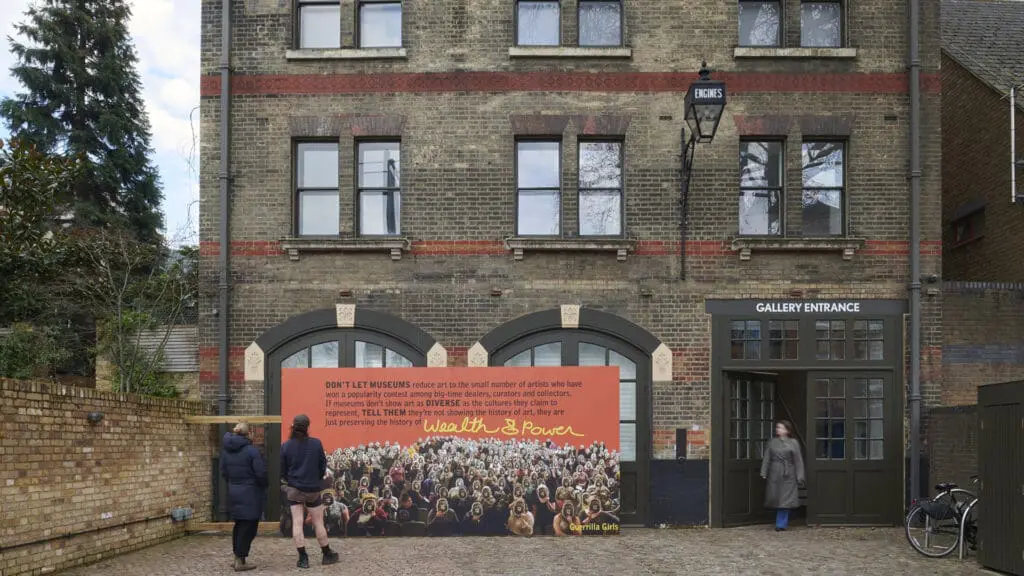
Images: Acts of Resistance: Photography, Feminisms and the Art of Protest – South London Gallery
Spread the word