

For Arts Council England and Julie’s Bicycle’s Annual Report 2024-25, we feature over 70 practical examples of cultural organisations taking climate action including in depth case studies like this one. Check out the full interactive report.
Settle Stories is an independent arts charity in the UK that uses storytelling to promote understanding, connect communities, and inspire people
The Challenge
As an organisation, Settle Stories were faced with the problem of wanting to develop the reach of their initiatives while wanting to limit the environmental impact. The traditional approach of a high volume of travel for events, a significant number of printed materials, and large-scale physical gatherings came with significant carbon and employee costs that scaled as their impact grew.
As a result, Settle Stories worked with the Management School at Lancaster University to assess their current environmental impact. They connected the team to the Management School at Lancaster University, who were able to incorporate the project into a work experience module that students undertook with support from Settle Stories and representatives from Lancaster University Management School. Together they created an Environmental Management Plan with actionable strategies for future environmentally-influenced strategic decisions.
Our Digital Initiative Evolution
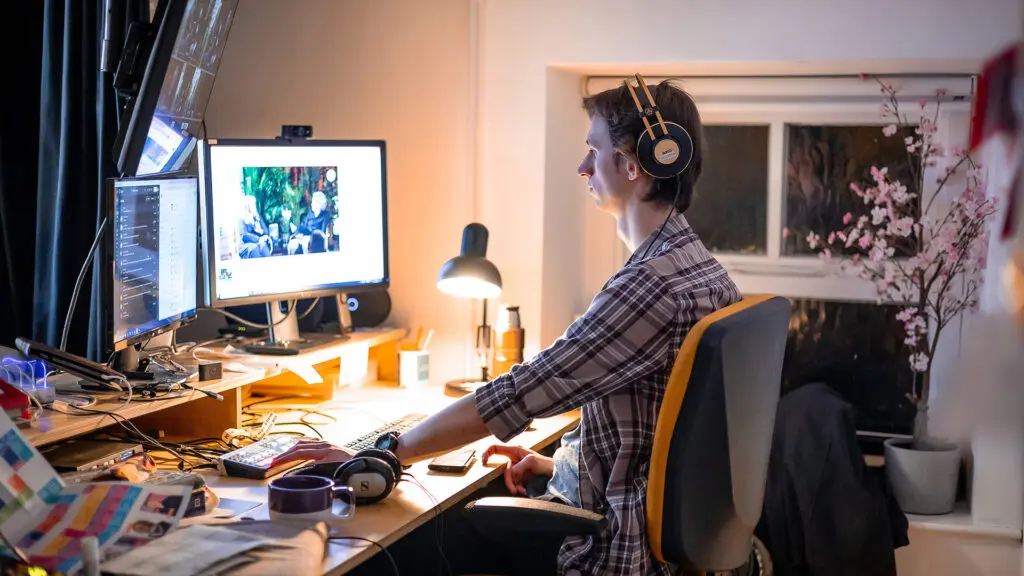
In response to this, over the past year, Settle Stories have transformed how they deliver their work, discovering that digital-first approaches don’t just reduce environmental impact, they often enhance what is achievable. This new pioneering approach to digital and hybrid festival delivery has set a new benchmark for accessibility, inclusion, and global reach in the arts.
Global Stories with a Controlled Carbon Footprint
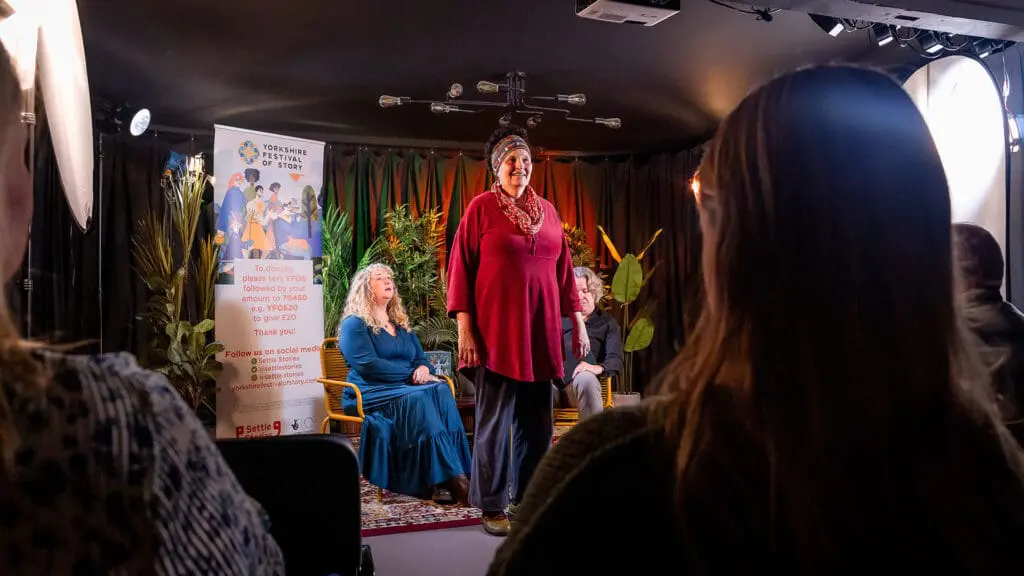
The Yorkshire Festival of Story (YFOS) exemplifies this shift. The festival is a celebration of storytelling organised annually by Settle Stories, and is based in Settle, North Yorkshire. The festival explores themes around empathy, sustainability, inclusivity, and social change.
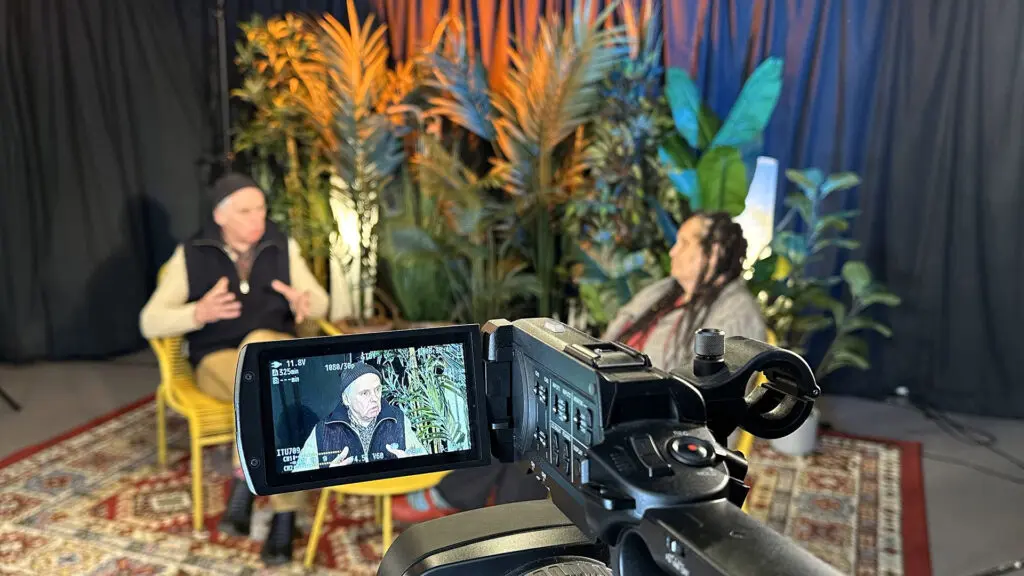
By moving to a predominantly digital format, Settle Stories maintained their ability to bring together diverse voices from around the world while eliminating travel-related carbon emissions.
By making the programme almost entirely free and online, the events were openly accessible, eliminating traditional barriers such as travel, cost, and physical ability.
This approach ensures that people in remote or underserved communities, particularly in rural areas like the Yorkshire Dales, can engage meaningfully with high-quality storytelling experiences that might otherwise be out of reach. At the same time, it enables rich international collaboration, making it easier for artists and speakers from across the globe to contribute without the constraints of travel.
YFOS24 reached audiences in 48 countries across six continents, including Egypt, Argentina, China, and the UAE, audiences that would be impossible to gather in Settle Stories’ single physical venue in North Yorkshire. This global impact would simply not be achievable without the festival’s digital-first, hybrid delivery model. Offering both live and on-demand content gave audiences the flexibility to choose how and when they participate, while also extending the lifespan of each event. It fostered deeper engagement, allowing for real-time interaction through Q&As and online discussions, and built a stronger, more connected global community of storytellers and listeners.
Critically, the model also served underrepresented communities. 20% of attendees identified as deaf, disabled, or having a long-term health condition, and 12% identified as neurodivergent, clear evidence that digital access meets real needs. Artists also thrived in this format: 90% said the festival contributed to the development of their arts practice or business, and 85% said it opened their minds to new possibilities.
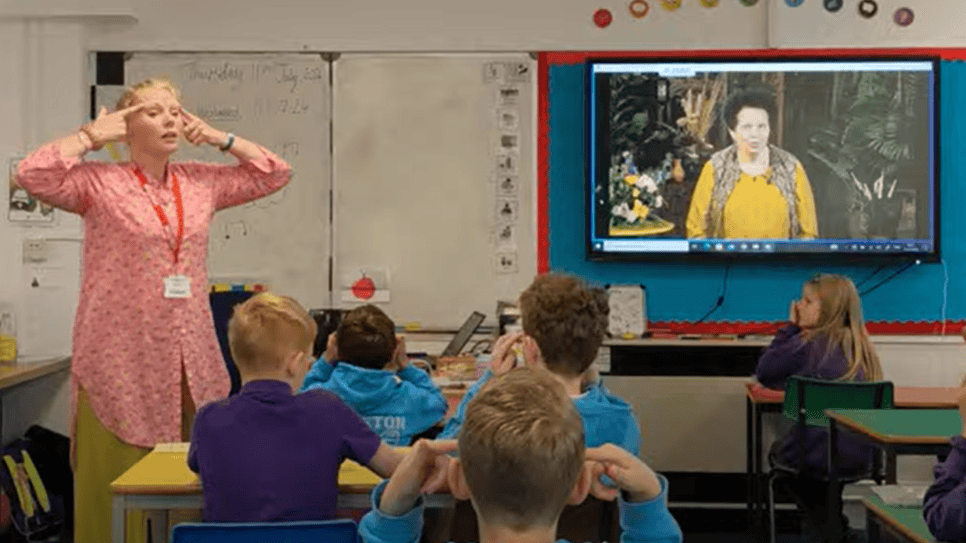
The hybrid model also proved an educational triumph with YFOS24 reaching 239 schools in its delivery of tailored content for EYFS, KS1, and KS2 students, laying the groundwork for a lifelong appreciation of storytelling and culture.
What we’ve discovered through our digital transformation is that storytelling doesn’t lose its power when it travels through screens, it amplifies it. When audience members say ‘We were right there with everyone via a screen, we felt everything deeply,’ and 90% of our artists tell us the festival contributed to their practice, we know we’re onto something profound.
We’re not just reducing our carbon footprint by going digital, we’re expanding our heartprint. We’ve reached 48 countries, supported neurodivergent and disabled audiences, and brought global stories into classrooms across Yorkshire and beyond. While we’re monitoring our AI usage and working with Lancaster University on sustainability, we’re simultaneously creating lasting cultural bridges that inspire the next generation of storytellers. That’s the kind of legacy work that makes every digital choice worthwhile.”
– Sita Brand, CEO and Artistic Director
Images: Header image: YFOS by Jess Cowie / Image 2: Settle Stories Livestreaming by Jess Cowie / Image 3: Settle Stories Livestreaming by Jess Cowie / Image 4: Settle Stories Schools Work by Jess Cowie
Spread the word