

Introduction: A Cinema Chain with Character and Commitment
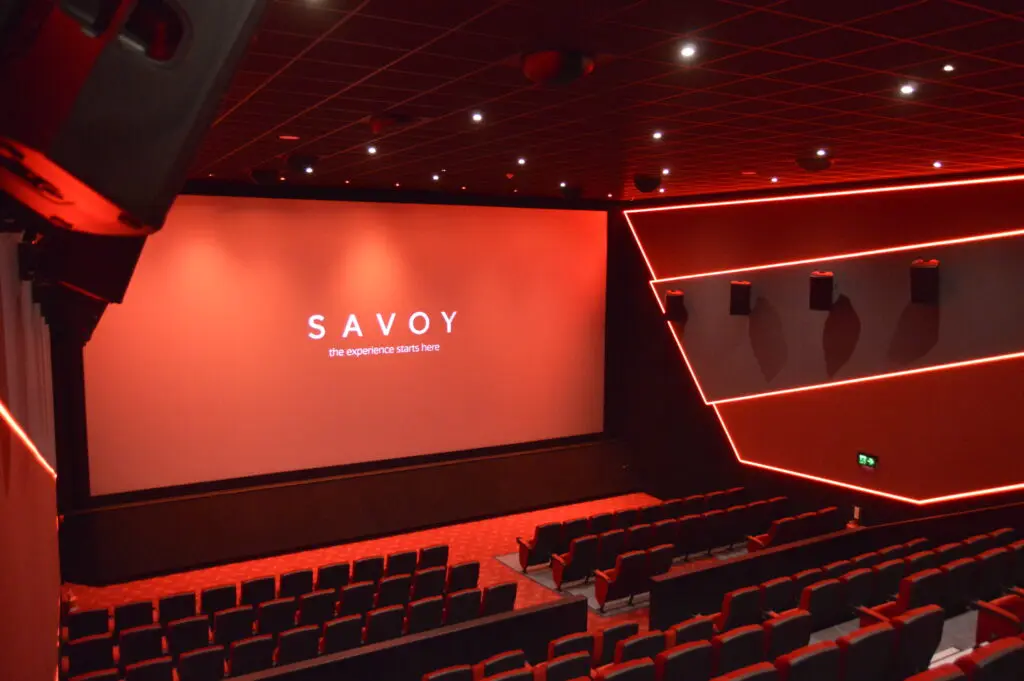
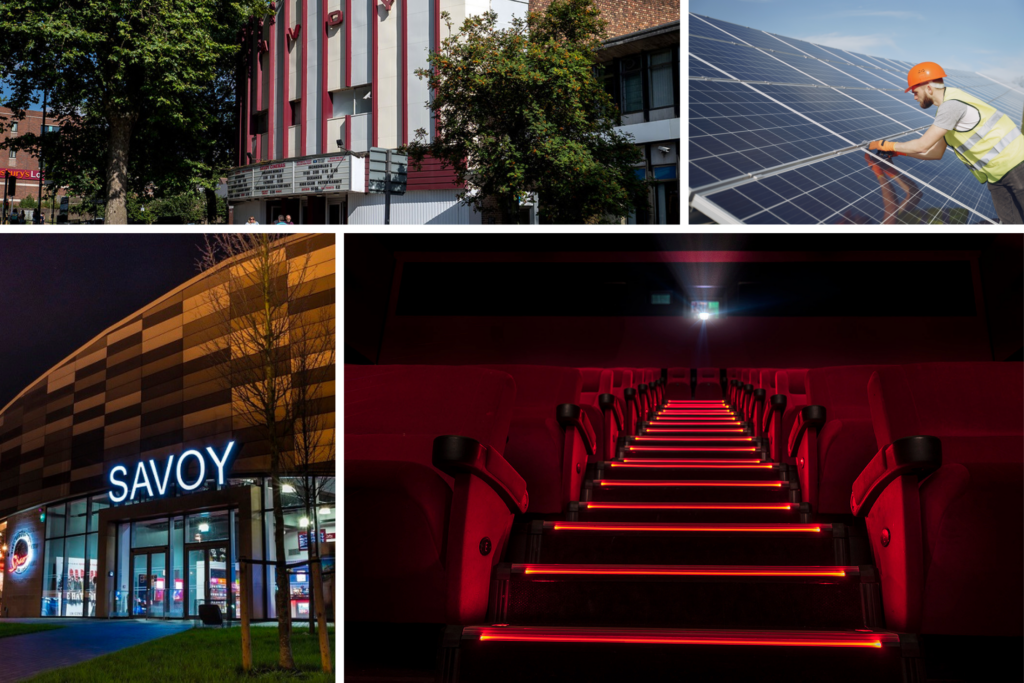
Savoy Cinemas is a proudly independent UK cinema chain with eight cinemas, both historic and modern venues. With a strong community presence in towns across the UK and a heritage stretching back to the 1930’s, Savoy offers a unique mix of charm and technology. Its portfolio includes iconic sites such as the pre-war Nottingham cinema as well as newer venues like the recently opened Gainsborough site.
Sustainability is embedded in the company’s values. In 2022, Savoy began their journey to understand and reduce its carbon emissions, working with environmental consultants to measure its footprint, create a comprehensive action plan, and deliver tangible change. Their commitment to embedding sustainability in all aspects of its operations is laid out in their 2024 Sustainability Policy and Plan. This case study, part of the BFI Sustainable Screen programme ‘Beyond Production’, shares key insights from that journey, focused on capital projects.
Starting Point: Building Understanding and Setting Direction
With a long-standing ethos of responsibility, Savoy had already implemented sustainability measures including the rollout of LED lighting and a full conversion to laser projectors. But in 2022, it was clear a more structured and measurable approach was needed.
Savoy calculated a full carbon footprint using Julie’s Bicycle’s Creative Green Tools. The company established a baseline footprint of 836 tonnes of CO2e (carbon dioxide equivalent) for 2022, covering Scopes 1 and 2, and part of Scope 3 emissions. Gathering the data needed to calculate the footprint from utility companies, suppliers and internal systems, was a significant undertaking, but once in hand, the footprint measurement was relatively quick to complete. Savoy was supported in this process by environmental consultants Trigage.
From the outset, senior leadership was actively engaged. Managing Director James Collington appointed a Sustainability Lead and teams were engaged across the business. Cinema managers and frontline staff contributed insights into building operations through workshops, and a staff-and-customer travel survey generated over 1,400 responses to better understand mobility patterns. The survey outcomes fed into a range of measures to promote low and zero carbon staff travel. Savoy worked with the local authority to install its own dedicated ‘Savoy Cinema’ bus stop directly outside the Nottingham cinema, an invaluable asset for both customers and staff. All newly built cinemas now include EV charging stations, and Savoy is actively exploring additional initiatives to help educate customers about public transport options.
Identifying Priorities: Data-Driven Decisions
Using building-level energy consumption data and insights from their partners, Savoy prioritised sites for investment based on:
- Historic inefficiencies (e.g. Nottingham’s 1935 building structure)
- High gas usage (e.g. Boston)
- Payback modelling for solar photovoltaic (PV) panels, battery storage and Heating Ventilation and Air Conditioning (HVAC) upgrades
The approach balanced ambition with commercial pragmatism, recognising that all sustainability investments had to be viable in the context of a mid-sized operator.
Actions Taken: From LEDs to Batteries
Across the estate, Savoy has implemented a wide range of upgrades:
- Laser projectors: Replacing all xenon-based projectors with laser projectors cut projection electricity use by 75%.
- LED lighting: All auditoriums, foyers, signage and staff areas now use LED lighting. The investment delivered a 12 month payback period.
- Smart controls: Use of Passive Infrared (PIR) sensors, Theatre Management System (TMS) automation and smart HVAC systems across sites.
- Solar PV and battery installations: Doncaster had solar PV from day one; Nottingham, Boston and Worksop now also have solar PV, as well as the new site in Gainsborough. Large battery units were installed at Nottingham, Worksop and Gainsborough. This allows Savoy to charge the batteries during the day when sunlight is peak and cinema energy usage is low, then run the cinemas from the batteries during the evening. These investments deliver around a five to six year payback period.
- HVAC recycling: Upgrades have been applied to Boston to significantly reduce gas reliance. The technology involves heat recovery – heat from expelled air is recovered and used to pre-heat incoming air – and air recirculation. CO2 sensors ensure fresh air levels are proportionate to auditorium occupancy, as opposed to the conventional method of providing 100% fresh air heating/cooling. The new control systems installed to make this possible have resulted in a 30% reduction in gas use.
- Water efficiency: Low-flow taps and dual-flush cisterns installed estate-wide.
All projects are mapped against cost, carbon, and commercial return. Full expensing has supported CAPEX decisions.
Finding the best options
Like many independents, Savoy faced difficulties identifying trusted sustainability suppliers. A good amount of time was spent evaluating solar PV and battery proposals and reviewing return of investment. Practical considerations such as recycle rates of batteries, the quality of the solar panels and their warranties were an important part of the decision-making.
While heat pumps were explored, the initial payback periods and disruption involved in retrofit installations meant they were not pursued. Heat pump technology is evolving and we are sure that at some stage in the future they will be economically viable for our cinemas.
Outcomes and reflections
Positive outcomes:
- Significant reduction in Scope 1 and 2 emissions
- 75% reduction in projection-related electricity use
- Improved customer and staff comfort in buildings using recycled heat systems
- Better data visibility on energy usage (half-hourly metering)
- Stronger staff engagement and sustainability ownership
Challenges:
- Complexity in retrofitting heritage buildings
- Lack of clear supplier standards
- Balancing upfront cost with long-term savings especially when evaluating heat pumps
Advice to others:
- Start with measurement: use half hour energy monitoring, carbon calculator tools and engage your whole team
- Build a roadmap that balances business and environmental impact
- Don’t let perfect be the enemy of good: focus on easy wins to build momentum
- Involve staff and customers in the journey – their buy-in is critical
Looking ahead
Savoy is now developing a detailed environmental action plan spanning Culture, Buildings, Retail and Supply Chain. It continues to engage with manufacturers, suppliers and other stakeholders such as local authorities to drive commercially sustainable carbon reduction plans, exploring measures such as insulation.
By taking a practical, people-led and data-informed approach, Savoy is proving that independent cinemas can lead the way in energy and carbon reduction.
Spread the word