

adaptation & climate resilience for arts organisations and buildings
As the impacts of climate change become increasingly visible across the UK, cultural organisations face a double challenge: drastically reducing their carbon footprints while simultaneously protecting their physical spaces and communities from extreme weather, rising temperatures, and shifting environmental demands.
To help building-based cultural venues navigate this complex landscape, Julie’s Bicycle hosted Session 1 of our Not the New Normal event series — a dedicated, practical exploration of climate adaptation and resilience. We are now delighted to share the full video recording of this session as a permanent resource for the sector.
Moving Beyond “The New Normal”
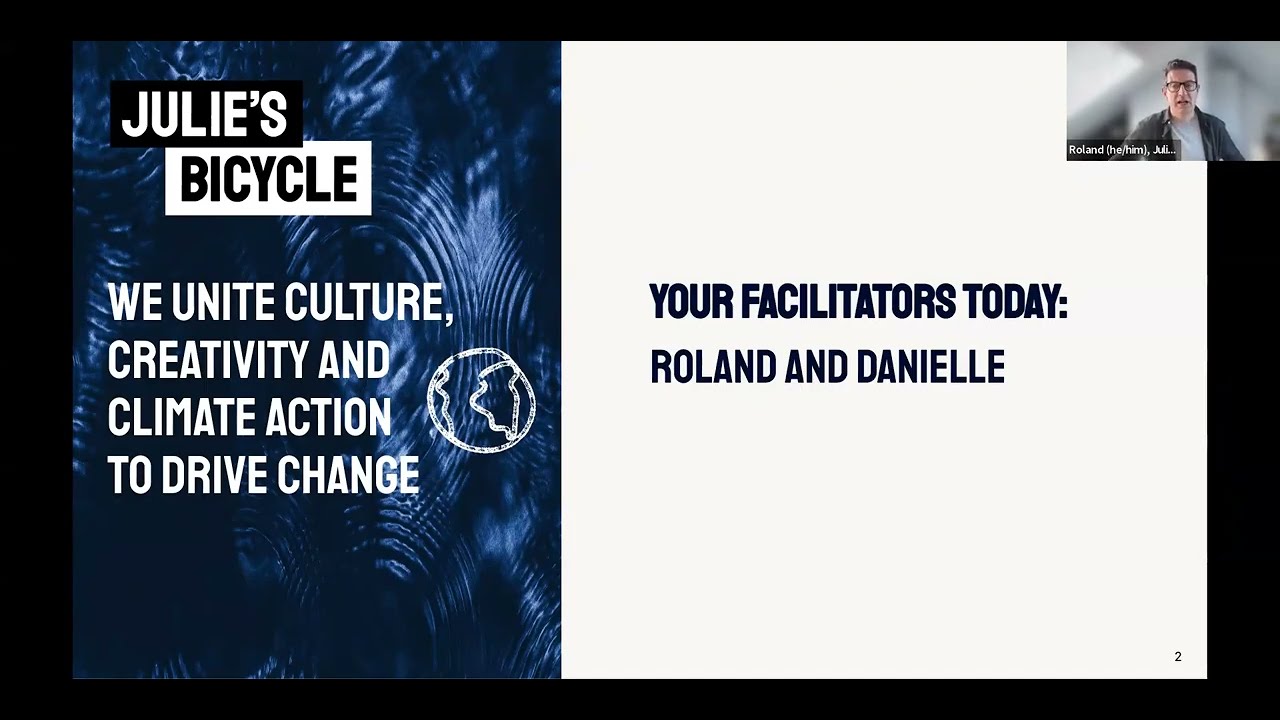
Led by Roland Smith (Julie’s Bicycle), the session challenges the comfortable notion of a static “new normal.” Instead, it equips cultural leaders to recognise sustained, ongoing environmental change and provides a clear framework to embed adaptation directly into existing decarbonisation strategies, rather than treating resilience as an isolated task.
The recording breaks down how shifting UK climate patterns ripple across the four core operational domains of cultural venues:
- Buildings: Safeguarding physical infrastructure against overheating, flooding, and structural wear.
- Programming: Adapting event schedules, outdoor activities, and public access around extreme weather events.
- Conservation: Managing environmental controls to protect delicate collections, archives, and heritage assets.
- Communities: Position cultural spaces as safe, resilient hubs that support local audiences through environmental disruptions.
Real-World Insights from the BFI
A highlight of the recording is a practical contribution from guest speaker Libby Martin, Organisational Lead for Environmental Sustainability at the BFI. Libby shares invaluable technical expertise from the frontlines of cultural estate management, detailing how she works to translate climate ambition into tangible, structural change.
In her segment, Libby outlines the practical realities of driving the BFI’s net-zero transition and decarbonising their physical estate. She offers actionable advice on embedding climate action into long-term strategic plans—such as the BFI’s 2033 Screen Culture Strategy—while navigating complex statutory reporting frameworks like Task Force on Climate-related Financial Disclosures (TCFD) and Greening Government Commitments. Her insights demonstrate how technical compliance and estate management can become powerful vehicles for cultural climate leadership.
Who Should Watch?
Whether you are an operations lead, building manager, sustainability officer, or executive director across an NPO or independent cultural venue, this video offers immediate value. It will help your team:
- Gain a clear, working grasp of UK climate risks specific to arts and heritage settings.
- Align capital projects and building maintenance with long-term resilience goals.
- Build confidence in communicating your adaptation progress publicly to audiences, funders, and stakeholders.
Spread the word