

For Arts Council England and Julie’s Bicycle’s Annual Report 2024-25, we feature over 70 practical examples of cultural organisations taking climate action including in depth case studies like this one. Check out the full interactive report.
At the very heart of its community, South Shields Museum celebrates the rich heritage of South Tyneside and the people who shaped it. Housed within an 1860s building, it showcases the borough’s social, industrial and maritime history through a range of displays, exhibitions and nationally significant works of art.
Through strategic investment, community engagement, and education, the museum has dramatically reduced its carbon footprint while deepening its commitment to environmental responsibility.
Clean Energy Transition
South Shields Museum’s sustainability journey centres around a series of innovative energy upgrades designed to reduce reliance on fossil fuels and improve operational efficiency. Supported by a £540,000 grant from Arts Council England via the Museum Estate and Development Fund (MEND), the upgrades demonstrate how heritage institutions can make the transition to renewable energy.
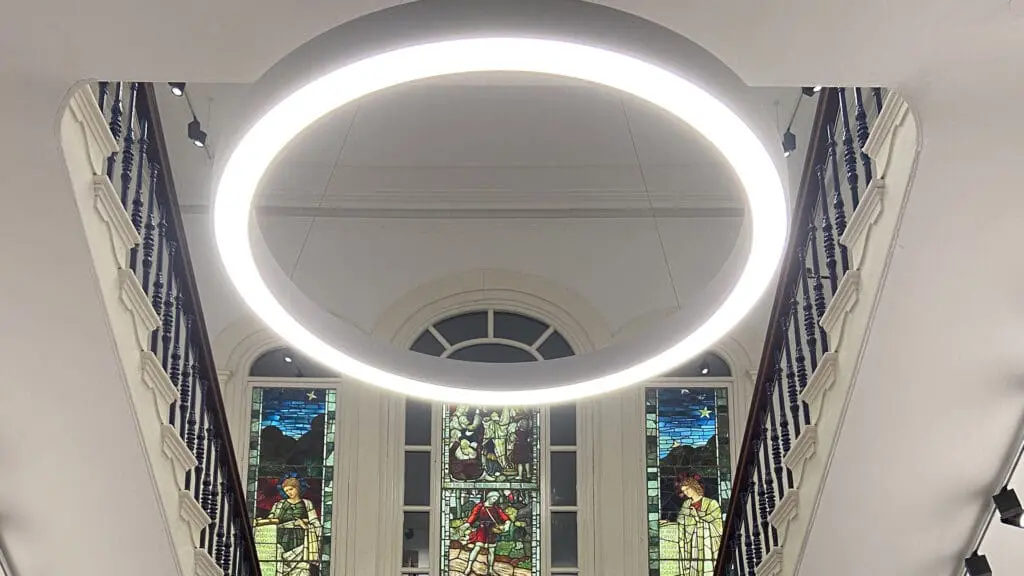
The museum installed solar roof panels, air source heat pumps (ASHPs), and LED lighting systems throughout the museum, reducing reliance on fossil fuel while providing long-term environmental and financial benefits.
The results so far have been striking. In the first year following installation, gas consumption dropped by 77%. While electricity use has increased a little to power the new systems, overall energy consumption decreased by 57%, equivalent to a reduction of 32 tonnes of CO₂e emissions, the museum’s lowest figure on record. The upgrades also improved visitor and staff comfort while ensuring optimal conditions for collections care, a complex balance in a listed heritage building. Despite the challenges of retrofitting a historic structure, the museum succeeded in balancing sustainability with conservation.
This significant investment not only allows us to address essential maintenance and infrastructure needs but also aligns with our commitment to sustainability and environmental responsibility, as well as reducing energy costs.
– Geoff Woodward, Museum Manager at South Shields Museum & Art Gallery.
Staff and Visitor Engagement
Transitioning from traditional gas systems to air source heat pumps represented both a technical and cultural shift. The museum team took proactive steps to ensure that staff understood how the new systems worked and the benefits they delivered. This included formal briefings, informal discussions, and ongoing communication across the North East Museums network.
To ensure long-term impact, North East Museums has also provided carbon literacy training for staff through a partnership with MD North and Roots and Branches at Manchester Museum. This initiative empowers staff to understand the carbon implications of their work and to embed sustainability into everyday decision-making.
The group is also an active partner in MAGNET (Museums and Galleries Network for Exhibition Touring), engaging in professional training delivered by the Touring Exhibitions Group (TEG) and the Design Museum. These sessions focus on developing sustainable exhibition models, reducing transport emissions, reusing materials, and sharing resources across venues.
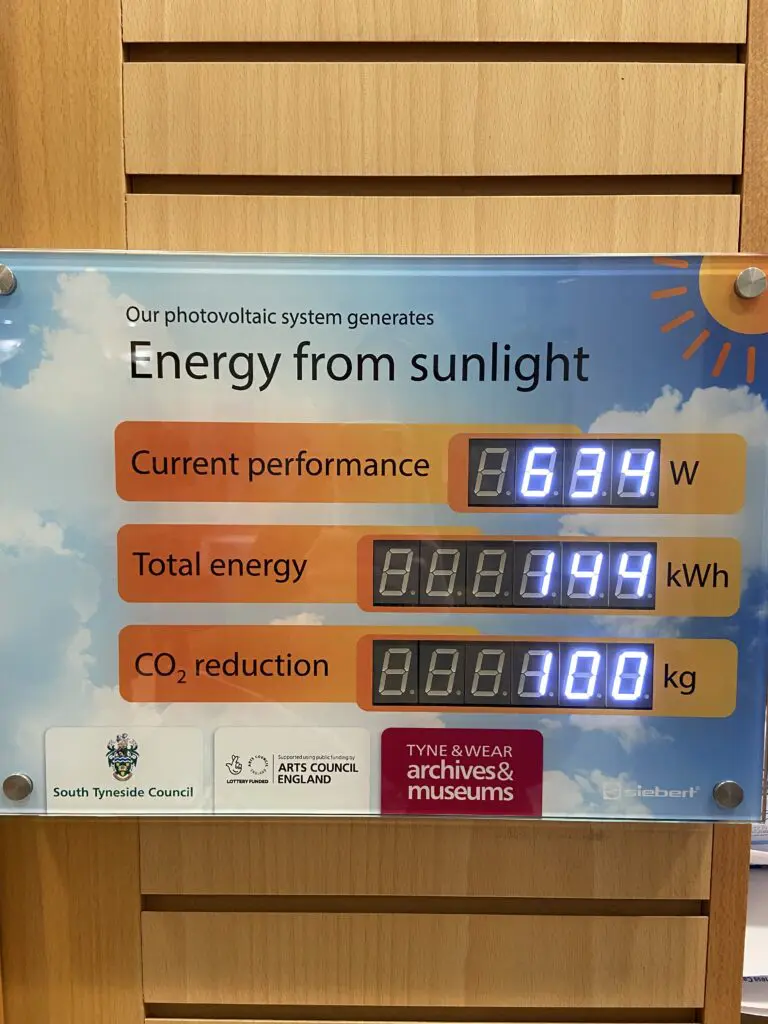
A digital energy monitor in the reception area displays solar energy data, sparking visitor interest and conversations about the new green energy systems, including the heat pump.
To boost public engagement further, the museum used social media and press outreach to share progress updates and celebrate milestones. Posts about the installation of solar panels, lighting upgrades, and reopening received high levels of interaction, highlighting public enthusiasm for sustainability initiatives and helping the museum reinforce their commitment to their environmental pledges directly to their audiences.
Creative Programming
South Shields Museum’s sustainability initiative is part of a wider regional effort by North East Museums to link energy innovation with public engagement. Across the network, exhibitions and learning programmes are tackling the topic of energy transformation from creative and scientific perspectives.
At Newcastle’s Discovery Museum, the exhibition “Steam to Green: A North East Energy Revolution” explores the region’s historical role in energy innovation, from the industrial revolution to the renewable technologies shaping today’s transition. Similarly, Great North Museum: Hancock partnered with the Natural History Museum and LEGO’s Build the Change programme, inspiring young audiences to engage with sustainability challenges through hands-on creativity.
The Hatton Art Gallery hosted “Sustainable Clay”, an exhibition examining the environmental impact of ceramic production. Artists reflected on the material’s ecological footprint, from resource extraction to kiln firing and showcased innovative, low-energy practices.
Beyond energy systems, the North East Museums group’s work also highlights how sustainability can nurture community resilience. The Shipley Art Gallery hosted a series of free workshops exploring food, growing, and biodiversity in its community garden. Led by experts from the Royal Horticultural Society (RHS) and Herb Hub, the sessions helped museum staff, community workers, and educators integrate environmental learning into their practice.
Looking ahead, South Shields Museum & Art Gallery continues to monitor its energy performance, refine operations, and share best practices across the North East Museums network. The success of this project has sparked wider conversations about energy resilience, sustainability education, and the museum’s evolving role as both a cultural and environmental leader, proving that museums can not only preserve the past but also power a greener, more sustainable future.
Images: North East Museums
Spread the word