

For Arts Council England and Julie’s Bicycle’s Annual Report 2024-25, we feature over 70 practical examples of cultural organisations taking climate action including in depth case studies like this one. Check out the full interactive report.
The National Centre for Writing (NCW), based at the historic Dragon Hall in Norwich, has long understood that creativity flourishes best in environments that are open, inclusive, and rooted in community. Over the past several years, NCW has developed initiatives that both promote literature and artistic engagement as well as fostering environmental responsibility, shared resources, and collective wellbeing. At the heart of this work is a commitment to community access and sharing, whether that means opening up green spaces in a ward with limited outdoor provision, providing free opportunities for families and writers, or collaborating with neighbours to strengthen the cultural and social fabric of King Street and St Ann’s Quarter.
Sharing Spaces for Collective Wellbeing and Nature Connection
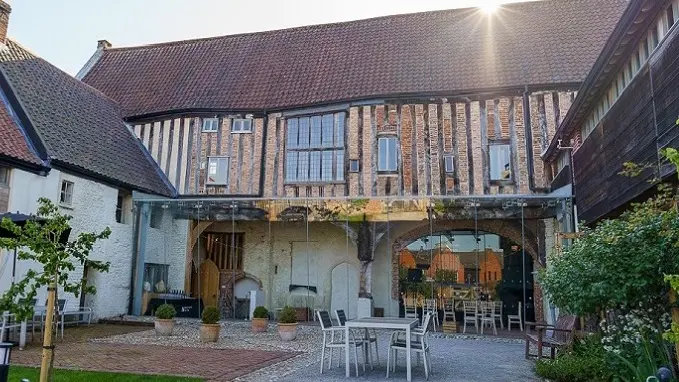
Dragon Hall sits within Mancroft, a Norwich ward identified as being highly deprived of green space. As building density increases, with a census showing a 6.2% rise in flats, apartments, and maisonettes, the presence of accessible outdoor environments becomes ever more vital. Recognising this, NCW has committed to sharing its own garden with neighbours and community groups.
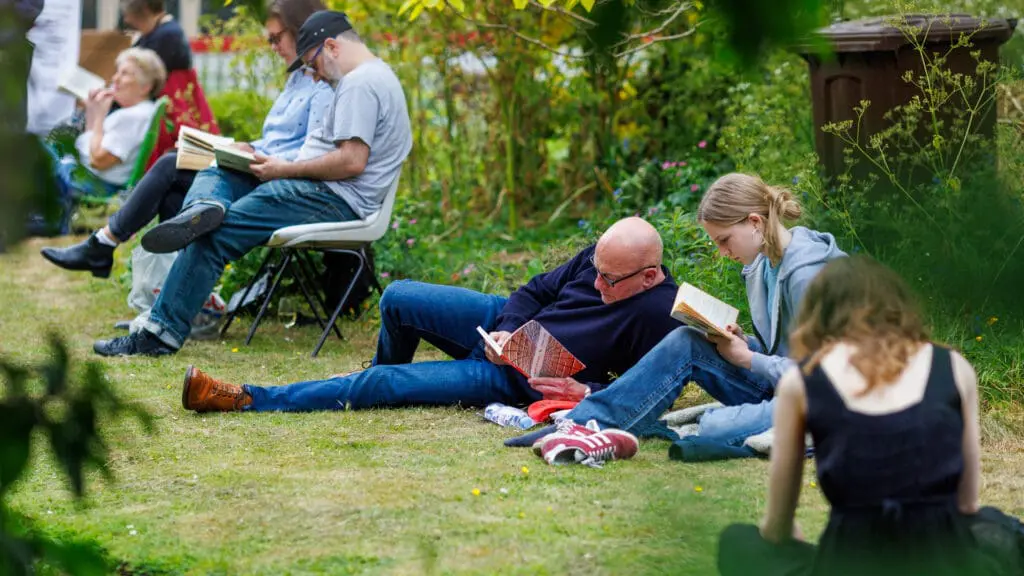
NCW opens the garden three days a week for the public and two for writers. Families attend regular activity days, older residents join workshops, and writers use the free ‘Writer’s Room’ for reflection and clarity. As one visitor described:
Take a coffee flask and a sandwich and enjoy the peace of the garden whilst you read!
The space offers a sense of welcome and belonging, reflecting NCW’s vision of Dragon Hall not only as a heritage site, but as a living, breathing community hub.
Building Shared Environmental Responsibility
Community access at NCW is tied closely to environmental responsibility. The organisation’s Greener Organisation Group continues to embed sustainable practices with a focus on gaining Carbon trust accreditation, sharing best practice, and informing programme decisions.
NCW work closely with Creative Arts East with whom they share space, working together on reducing resource use and waste. They are also working with the Norwich Business Improvement District, participating in the “Upcycle Your Waste” project, with the aim of quantifying their impact and contribution to city wide recycling and green agendas.
But beyond internal practices, NCW actively brings people together to explore climate responsibility through creativity. Its artistic programme integrates themes of climate change and social justice, commissioning writing and trails that encourage audiences to experience the city and its environment in new ways. By connecting literature with environmental awareness, NCW shows that community access is not only about physical space but also about opening intellectual and imaginative spaces where pressing global challenges can be discussed.
At NCW, we believe that words and writing can change lives, help us make sense of big questions and inspire action. Over the past year, key moments addressing the climate on physical and digital stages include a global online symposium ‘Fiddling while Rome Burns: What can we do about the climate emergency?’, which brought literary professionals together to consider the role of writing in tackling environmental issues; welcoming award-winning contemporary writers Katie Hale and Ned Beauman for an eco-thriller discussion, and hosting Patrick Grant at the Norfolk & Norwich Festival to a sold-out audience a lively talk exploring sustainability in consumerism and fashion
– Dan Scales, Development Manager
Community Collaboration and Local Identity
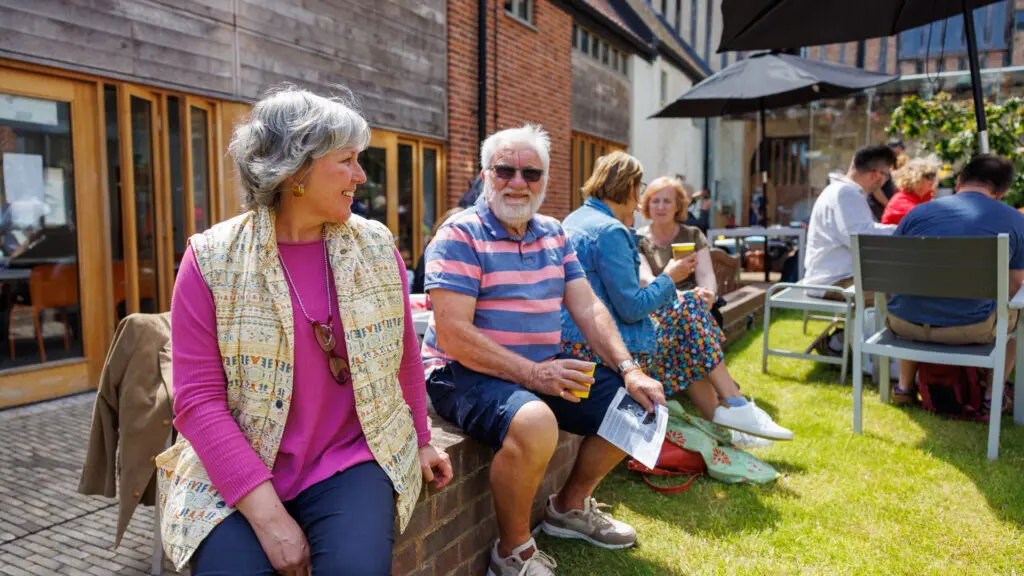
By opening the garden, NCW sparked wider community projects. In 2025, volunteers created murals with King Street Neighbours and Orbit Housing, resurfaced a disused space, and NCW invested in new lighting to improve safety and accessibility.
Reflecting the importance of the venue to those around NCW, they’ve secured a new National Lottery Heritage Fund grant to deliver participatory, visitor and volunteering opportunities at Dragon Hall; all designed to unearth new stories of the local area by-and-for residents, making Norwich’s King St. quarter a better place to live and create.
Such developments contribute to a wider sense of pride and ownership among residents. Dragon Hall is no longer seen solely as a cultural venue, but as an anchor point for neighbourhood identity and creative expression. 90% of audiences agree that NCW enhances a sense of community in Norwich and 92% feel NCW is welcoming for everyone.
Impacts on Families and Young People
In 2025, NCW hosted 25 free Family Activity Days with writing, crafts, and play. Feedback showed 96% of attendees had a positive experience, and 75% developed new creative writing skills.
For many families, affordability is a decisive factor. As one volunteer observed:
For a lot of families it costs a lot to take kids to some activities. And here some families were staying for quite a long time; upstairs, doing arts things, hanging out and playing in the garden. And it all wasn’t costing anything.
These activities demonstrate the value of community sharing in reducing barriers to cultural participation. Free, welcoming events encourage long-term engagement and allow children and parents to experience creativity without financial pressure.
Older People and Lifelong Access
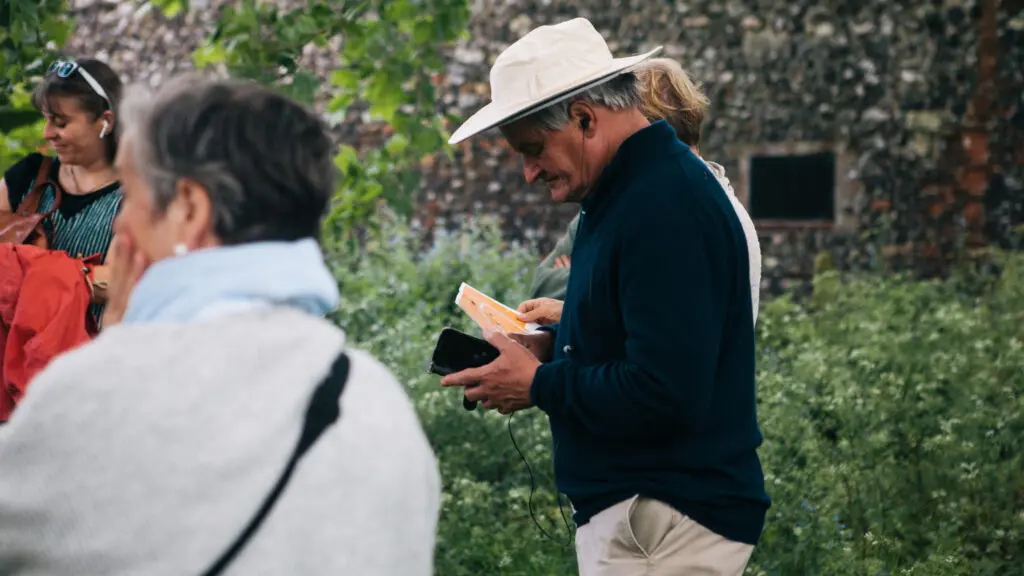
Older residents have also benefitted from NCW’s open garden policy and community-oriented programming. Many participants have requested more garden-based sessions, reflecting how important safe and welcoming outdoor space is for this demographic.
Survey data highlights that 61% of older participants engaging in 2024/25 were new to NCW, and 6 out of 10 returned for further sessions after their first visit. These figures suggest that access to Dragon Hall’s green space and programming has not only introduced older people to NCW but also helped foster sustained participation. NCW hope that these activities will help to tackle social issues such as isolation and encourage intergenerational engagement.
Looking Forward: Sharing as a Long-Term Vision
Visitors and participants routinely say they feel encouraged, included and proud of this place. Dragon Hall isn’t just a heritage site or just a literary venue – it’s a hub for storytelling, learning, relaxation and connection – used in many of ways by residents of Norwich City of Literature.
Looking ahead, NCW views Dragon Hall and its garden not simply as amenities, but as ever evolving heritage assets that can generate artistic, environmental and social value. The vision is one of continual evolution: a heritage site alive with community activity, a literary hub open to all, and a green space shared for wellbeing, creativity, and environmental awareness.
Images: Header image: City of Literature Weekend, Norfolk & Norwich Festival, Photo: Luke Witcomb / Image 2: View from the Cottage into garden, photo by Luke Witcomb / Image 3: City of Lit Sunday, photo by Luke Witcomb / Image 4: Workshop, photo by Jo Millington.
Spread the word