

For Arts Council England and Julie’s Bicycle’s Annual Report 2024-25, we feature over 70 practical examples of cultural organisations taking climate action including in depth case studies like this one. Check out the full interactive report.
Motionhouse, a UK-based dance-circus company, tours from major theatres to rural communities and international festivals. Touring is central to its mission, but also its biggest environmental challenge. Recognising the urgency of the climate crisis, Motionhouse is rethinking how it tours, embedding sustainability across its practice whilst keeping art accessible everywhere.
Motionhouse believes everyone deserves access to great art. Touring nationwide reduces barriers by bringing performances directly into communities, rather than requiring audiences to travel long distances.
Embedding Environmental Responsibility
A dedicated Green Team of staff and trustees leads Motionhouse’s sustainability work. Environmental responsibility is embedded into board and team decisions, supported by resources from Julie’s Bicycle and peer networks. In 2024/2025, the company set a clear aim: reduce the impact of touring while maintaining reach and accessibility.
Adapting the Touring Model
Travel is a particularly challenging area to address as we are a touring company and will always need transport for our set and company. Our sets are integral to our performances, and our dancers are highly trained in our dance-circus style and train together year-around, meaning that for international bookings our work cannot be replicated by freelance artists overseas, as some companies are able to do.
Touring has always been central to Motionhouse’s identity, with year-round activity in UK theatres, summer outdoor festivals, and international engagements. But traditional touring often involved long, fragmented journeys, flights, and set transport that generated significant emissions.
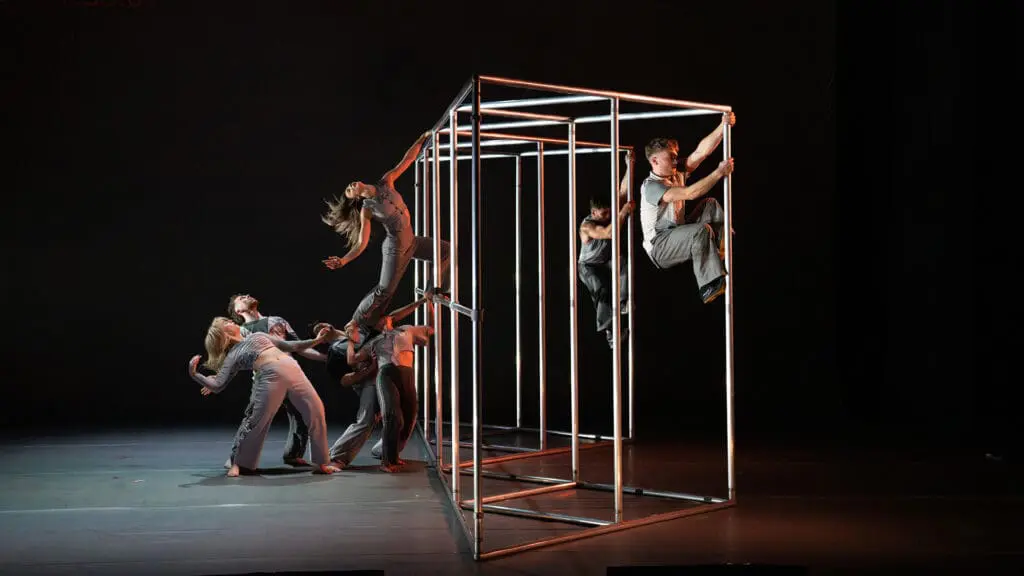
To address this, Motionhouse began to “join up” touring routes, particularly for international engagements. A recent example was the European tour of Hidden, where the company collaborated with venue partners in Germany and Denmark to streamline scheduling, reduce mileage, and cut emissions. By visiting six venues in a single tour, rather than multiple shorter trips, they avoided unnecessary travel and even arranged local set storage between performances, preventing extra journeys back to the UK.
This new approach has been enabled by growing collaboration with venues and networks such as Ecooperation, a European festival alliance connecting organisers to stimulate more sustainable touring for artists. Through the network, more international festival dates can be combined to reduce the number of journeys to the EU, promoting sustainable touring. Encouragingly, Motionhouse has also found venues have shown flexibility, including relaxing restrictive “barring clauses” that previously limited scheduling efficiency.
Partnership and the Green Agreement
Motionhouse has also developed a Green Agreement, introduced in 2022, which sets out sustainable touring practices for both the company and partner venues. Simple but effective, it requests measures such as refill stations instead of single-use water bottles, and information for audiences on eco-friendly transport options. Venues, in return, share their environmental policies, creating opportunities for shared learning.
Engagement with the Green Agreement has been strong. Birmingham Hippodrome has now committed to leading environmental briefings for Motionhouse’s company on arrival; an example of how touring can stimulate positive organisational change in host venues.
Sustainable Sets, Costumes, and Production
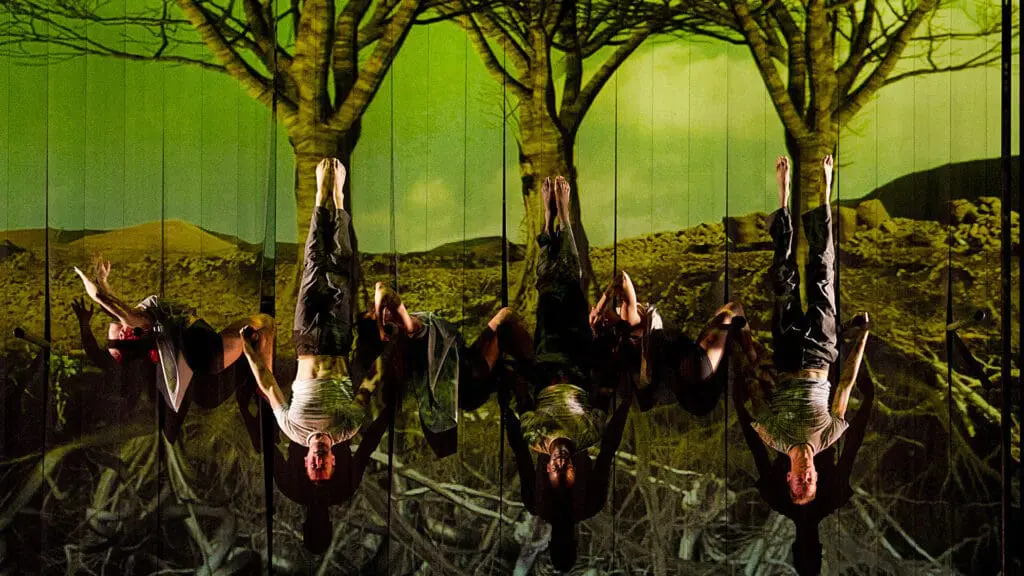
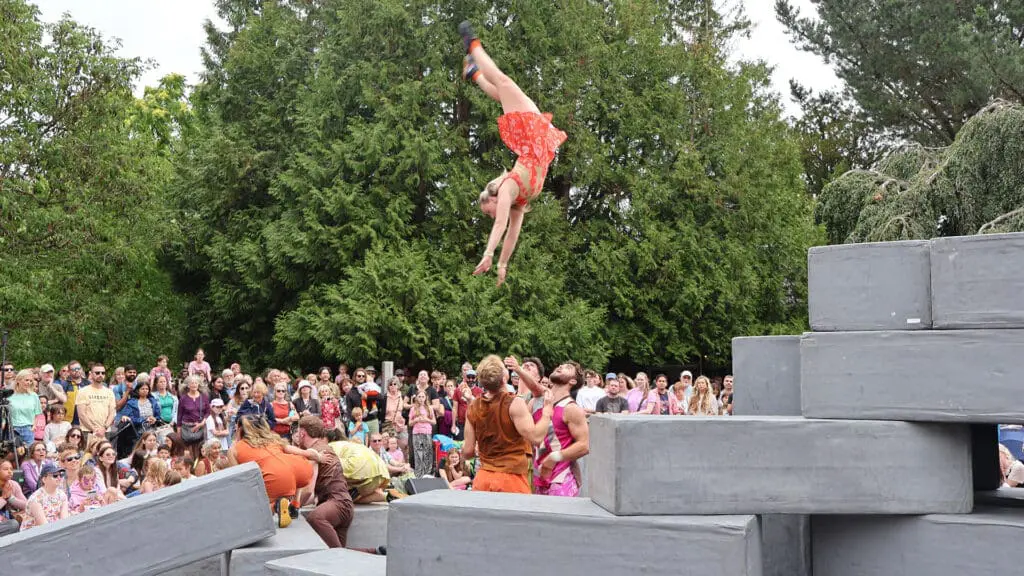
Sustainability is also embedded in the artistic process. The company’s reduce/reuse/recycle policy is applied to all productions. Sets and costumes are reused or repurposed wherever possible: for instance, the set from Broken (2013) has appeared in three subsequent shows, most recently Starchitects Save Santa! (2023). Blocks from BLOCK have been repurposed for HENGE and continue to be used in creative learning activities.
For Hidden, biodegradable plastic wrap made from recycled, compostable material was used and publicised in programmes and on social media to raise awareness. Early R&D for new productions now begins with an audit of existing sets, ensuring sustainability is embedded from the outset.
Cleaner Transport Solutions
Recognising that touring inevitably requires transporting sets and performers, Motionhouse has sought to minimise the impact of essential travel. A major investment was the purchase of a new 7.5 tonne truck, which has significantly reduced emissions compared to the older model. While electric trucks that can meet the demands of international touring are not yet available, the company remains committed to adopting them as soon as technology allows.
Where possible, company members also use rail travel between venues, especially on the continent, further reducing carbon emissions from flights.
Digital Innovation and Reduced Travel
In addition to physical touring, Motionhouse has also reviewed its digital footprint. Using an online calculator, it found its website is cleaner than 67% of all web pages globally. But the biggest leap came with support from Innovate UK, which enabled Motionhouse to trial disguise’s Previz digital tool. This allowed artistic and technical teams, including collaborators in Spain, to work together remotely during the creation of Hidden, avoiding multiple flights and significantly cutting travel emissions.
Balancing Equity, Accessibility, and Sustainability
Sustainability has been balanced carefully with the company’s mission of accessibility. Motionhouse believes that everyone deserves access to art, regardless of location. Touring into rural and underserved areas reduces the need for audiences to travel long distances, ensuring inclusivity while aligning with sustainability goals.
This balance also strengthens relationships with communities, breaking down barriers to engagement and embedding Motionhouse’s ethos of art for all.
Cultural Impact and Advocacy
Beyond operational changes, Motionhouse uses its art to spark dialogue about climate and sustainability. The outdoor production WILD, which explores humanity’s relationship with the natural environment, continues to play a role in the company’s environmental messaging campaign, merging practice with purpose.
Benefits Beyond the Environment
Exploring sustainability has delivered benefits beyond emissions reduction. The process has opened new conversations with venues, strengthening collaboration and creating fresh touring opportunities. These approaches not only support environmental goals but also enhance touring efficiency, audience reach, and financial viability.
Motionhouse’s sustainable touring journey demonstrates that meaningful environmental change is possible without compromising artistic vision or audience reach. Through reimagining touring routes, fostering venue partnerships, embedding recycling into creative processes, investing in cleaner transport, and embracing digital innovation, the company is pioneering a model of touring with responsibility.
Motionhouse’s commitment to continuous improvement and sector-wide collaboration makes it a leader in sustainable touring. Its work provides a roadmap for other cultural organisations seeking to balance accessibility, creativity, and environmental responsibility whilst continuing to share inspiring art to international audiences.
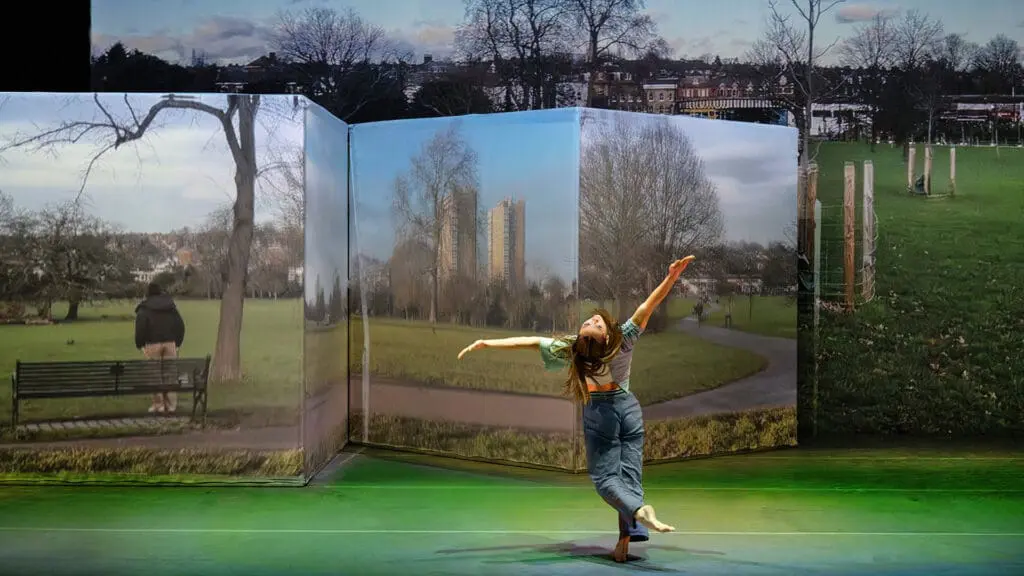
Images: Header image and Image 2: Hidden by Motionhouse. Image by Dan Tucker / Image 3: Set from Broken. Image by Dan Tucker / Blocks repurposed from BLOCK in family show HENGE. Image by Motionhouse.
Spread the word