
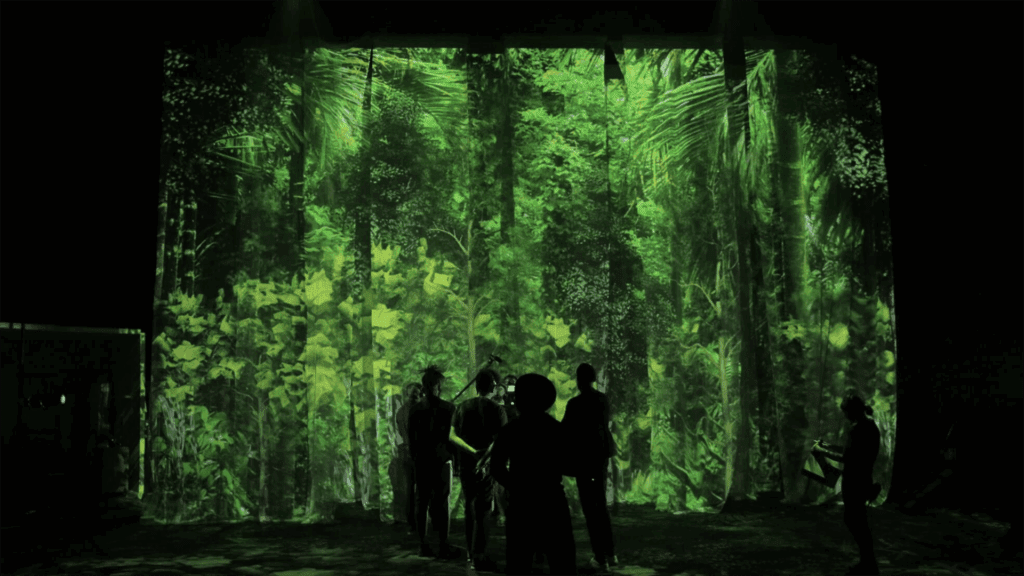

For Arts Council England and Julie’s Bicycle’s Annual Report 2024-25, we feature over 70 practical examples of cultural organisations taking climate action including in depth case studies like this one. Check out the full interactive report.
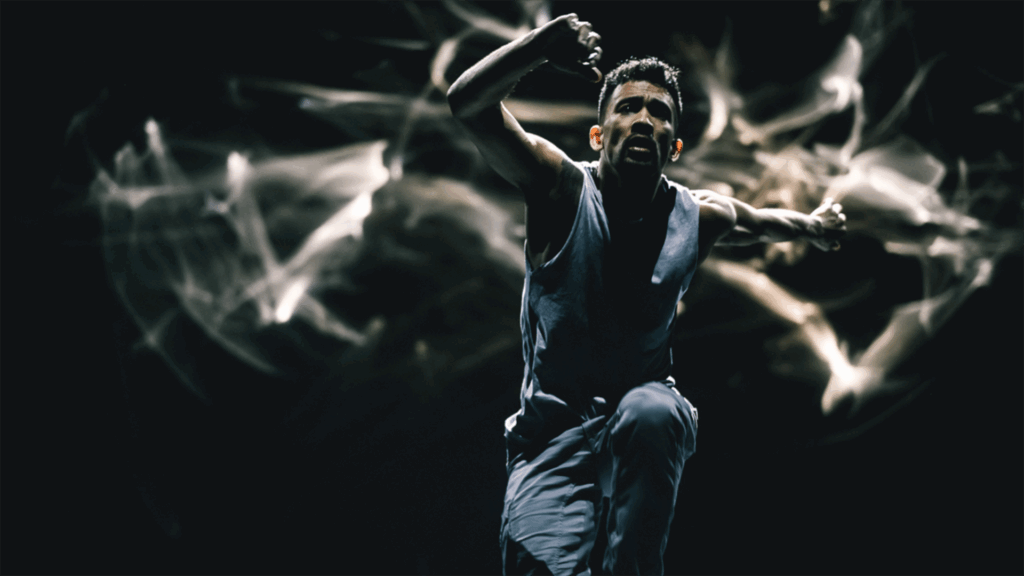
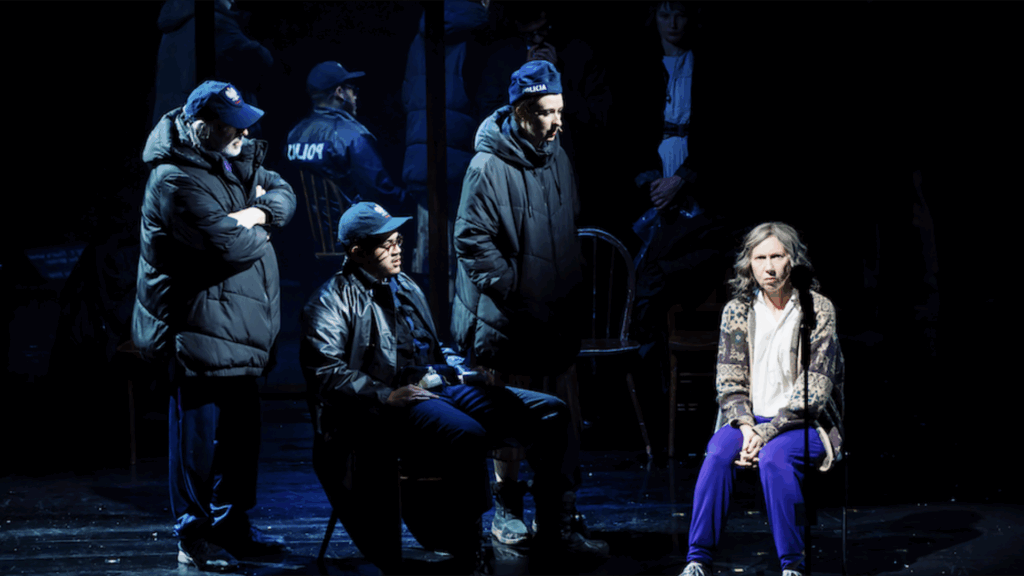
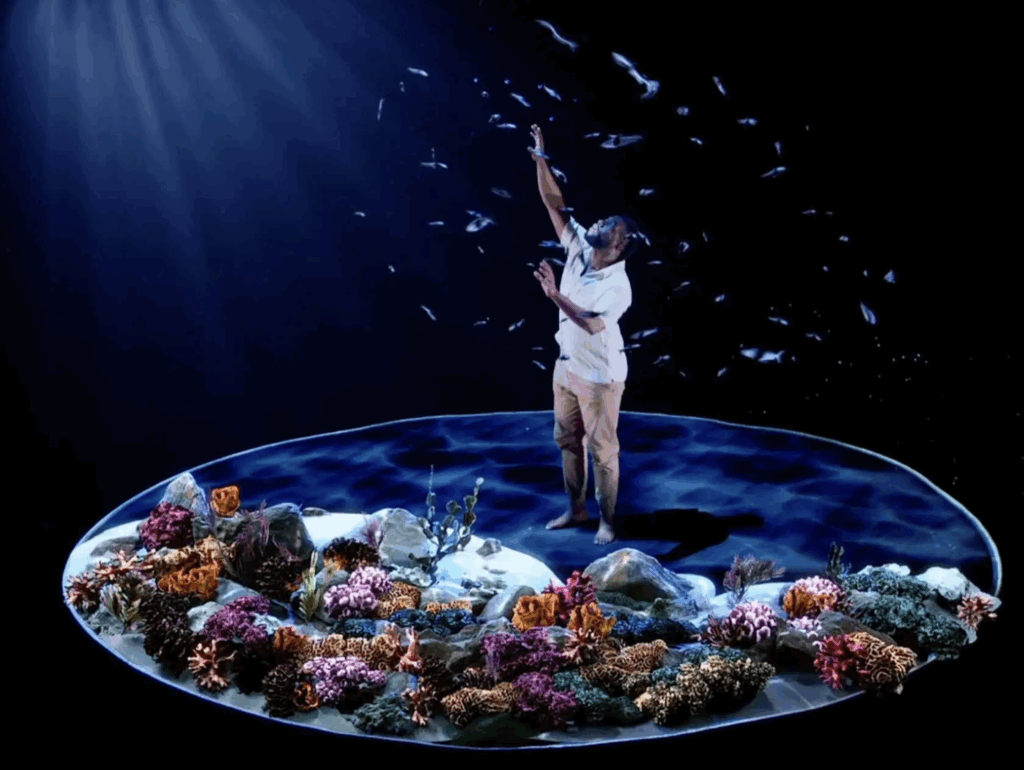
Complicité is recognised as one of the UK’s most innovative and internationally respected theatre companies. They create work that strengthens human interconnection, using the complicity between performer and audience that is at the heart of the theatrical experience. Working across theatre, opera, dance, film, radio, installation, publication and participatory programmes, the company has always sought to address pressing global issues through its art. In recent years, this has included a growing focus on the ecological and climate crisis through productions which centre climate, justice and ecology such as Can I Live?, Figures in Extinction, and Drive Your Plow Over the Bones of the Dead.
However, as the company explored these issues on stage, it became increasingly aware of the need to reflect these values within its internal practices. As Executive Director Susie Newbery explains:
Complicité is a company that thrives on collaboration, that reaches across borders, that takes creative risks and embraces the unknown. We know our work has an impact; creatively, socially, and environmentally. We also know it carries contradictions and that we must continue to assess our own practices through the sustainability lens.
From Artistic Values to Organisational Practice
Complicité decided to create a comprehensive environmental strategy after recognising that, despite making significant progress in the last few years, its internal practices didn’t yet match its artistic commitment to the environment and sustainability. Previous measures including staff climate leave, a Green Rider and the use of the Theatre Green book had positive impact but lacked a unifying framework for accountability and long-term alignment within the context of the company.
Complicité sought to design a strategy that is as bold and imaginative as its creative output. As the leadership team described, the aim was to move beyond individual projects toward a holistic approach that embraces the inherent tensions faced by arts organisations trying to make work sustainably in a resource-constrained, globally connected sector.
Complicité has always believed in the power of art to provoke, to transform, and to connect. We create from the world, in the world. We can’t ignore that the world is in crisis…As an international touring company, we rely on travel. We draw in large teams. We make things. But we also make meaning. And that, too, has weight.
Susie Newbery, Executive Director
First Steps Towards a New Strategy
To begin this process, Complicité commissioned 3Adapt, a Bath-based sustainability consultancy with experience working across the cultural and heritage sectors. The partnership, initiated in August 2024, reflected Complicité’s own relocation to the South West as part of its Arts Council England National Portfolio Organisation transfer.
The partnership began with a comprehensive review of Complicité’s existing policies, practices, and documentation. This “sustainability maturity assessment” provided a clear picture of where the company stood on its journey. It involved benchmarking against sector peers, evaluating alignment with frameworks like the UN Sustainable Development Goals and the Theatre Green Book, and assessing the depth of current environmental practices. The resulting report, delivered in September 2024, recognised many strengths, such as the company’s proactive use of the Green Rider and its thematic engagement with environmental issues, but also identified key areas for improvement. These included the need for greater coherence across departments, clearer reporting structures, and stronger governance mechanisms.
Crucially, the process was not simply technical. It was reflective, dialogic, and participatory, qualities that resonate deeply with Complicité’s collaborative ethos. Through interviews, workshops, and internal consultations, the entire team; creative, administrative, production, and freelance Associates and regular collaborators were involved. This inclusivity fostered a sense of ownership among staff and Associates, reinforcing the idea that sustainability is a shared responsibility, not a top-down directive.
What stood out most was the degree to which sustainability was already a shared concern across the team. Interviews with staff, associates, and collaborators showed a wide range of insights and a desire for better tools and support to act on those values more systematically.
One of the most insightful aspects of the maturity assessment was its illumination of the “tensions” that define Complicité’s work. As a company that tours internationally, collaborates across borders, and works with large creative teams, Complicité faces the contradiction between artistic ambition and environmental impact. Similarly, the need to maintain creative freedom can at times seem at odds with the discipline of sustainable production. Rather than attempting to resolve these tensions prematurely, their consultancy partners encouraged Complicité to name and work with them consciously as part of the strategy.
The process was deeply reflective. It gave us a framework not only to assess where we are, but also to imagine how sustainability could become a more embedded practice. From this point we were able to move to the co-creation of a cohesive, ambitious and achievable sustainability strategy.
Important processes for a collaborative approach
Following interviews with every member of the team as well as group workshops, each of Complicité’s eight sustainability themes now includes clear actions and assigned responsibilities. For example, the Company Administrator tracks energy use, while the Creative Campaigns Producer leads on audience inclusion metrics. By distributing responsibility across roles, the company ensures that sustainability is woven into day-to-day operations rather than siloed in one department.
Monthly sustainability meetings provide a forum for updates, shared learning, and collective problem-solving. These conversations keep sustainability visible and encourage continuous reflection. The company has also introduced practical tools such as carbon budgets and materials trackers as a direct response to the resource constraints and rising costs of making and touring work faced by arts organisations. This allows them to integrate environmental considerations into project planning from the outset, whilst fighting the perception of sustainability as a constraint.
Creating a Cultural Shift
While Complicité acknowledges the value of early momentum, such as introducing regular sustainability conversations and tracking data that had previously been invisible, the organisation has consciously resisted the “quick wins” mentality. The team recognises that meaningful change requires patience, iteration, and collective commitment. As one of their core learnings, they emphasise that sustainability is not about solving a finite problem, but about cultivating an embedded practice that shapes how the company thinks and acts at every level.
Sustainability in the arts can’t be reduced to fast fixes. It requires slow thinking, careful trade-offs, and long-term commitment.
The framework Complicité is developing operates across three layers of impact:
- Direct: what the organisation directly controls (e.g., energy use, materials, production processes)
- Indirect: Complicité’s partners and suppliers
- Enabled: how their creative work can shift audience awareness and inspire broader change
These three layers help to acknowledge that even if their organisational footprint is small, their ripple effect can be significant, especially through sharing creative work globally.
Looking Ahead
As Complicité moves into the next phases of its strategy, it remains committed to co-creation, transparency, and learning. The forthcoming sustainability framework will guide the company toward greater coherence and accountability while maintaining the flexibility and imagination that define its artistic practice.
For Complicité, this process represents more than an operational change, it is an act of alignment between what the company creates and how it operates. As Susie Newbery puts it,
Action on the climate and environmental crisis is urgent and essential; and art has a central role to play in advocating for what we stand to lose if we do not act now.
Complicité describes the work as a “process of transformation”. They are “moving forward with clarity, purpose, and with external expertise guiding the way where needed.” Complicité’s approach demonstrates that effective policy and strategy development in the arts can centre creativity, collaboration, and courage, the same qualities that make great theatre possible.
Images: Header image: CAN I LIVE, David Hewitt / Image 2: Figures in Extinction, Rahi Rezvani / Image 3: Drive your Plow, Alex Brenner | Image 4: CAN I LIVE, David Hewitt.
Spread the word