
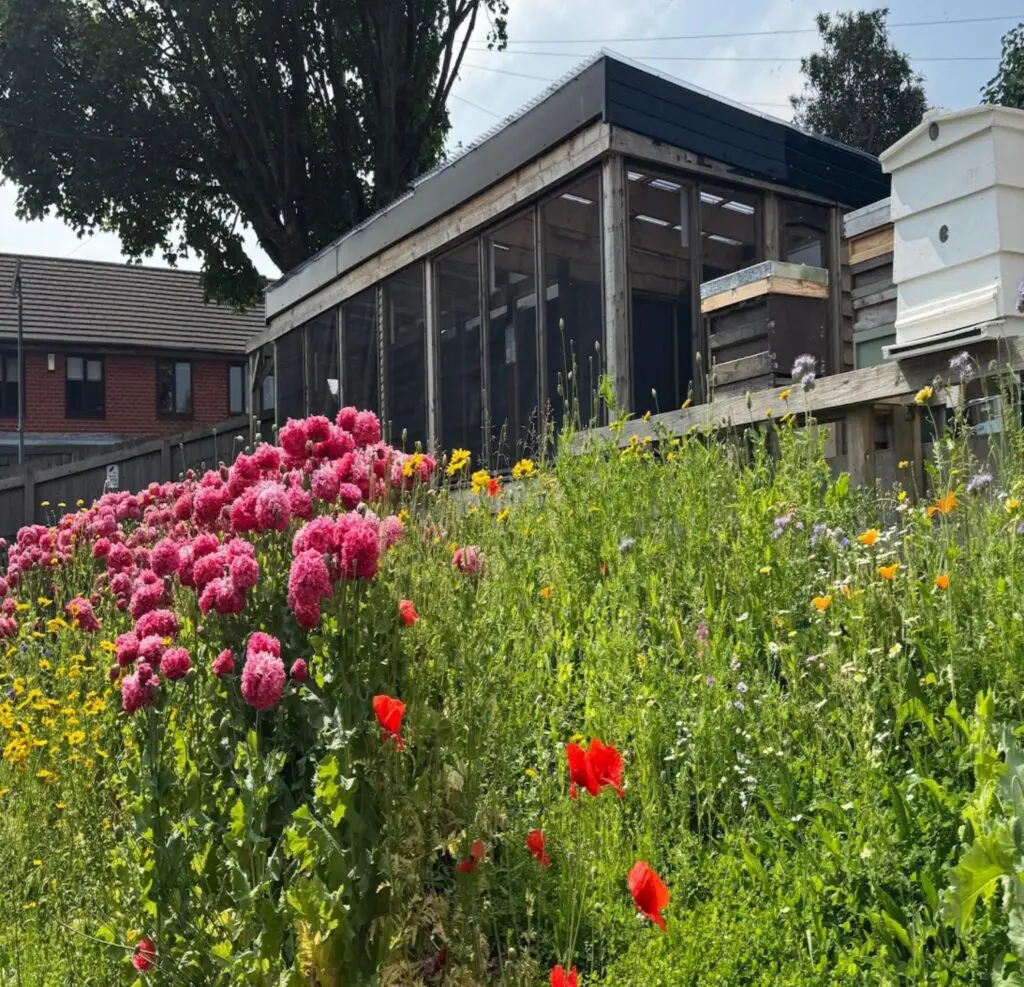

Reflections one year into the Green Library Hubs project
Green Library Hubs is a National Lottery Climate Action Fund project to establish 10 public libraries as hubs for climate action in their communities by 2028, led by CILIP – the UK library and information professionals association – in partnership with JB, the British Library, CAG Consultants and participating library services.
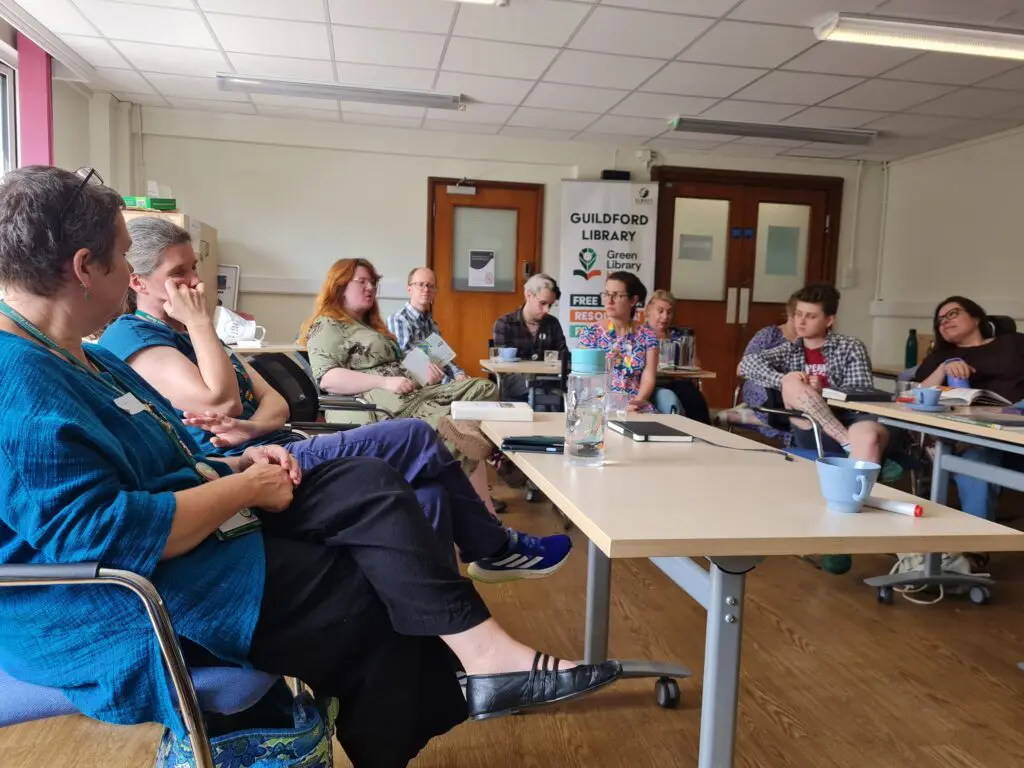
The thermometer in Cherry Tree community library’s sweltering training room peaked at 31.5o celsius during our June workshop, with a brilliant group of employees and volunteers from Blackburn with Darwen’s library service. Despite the heat, the overriding mood of the day was one of positivity and optimism about the difference libraries can make by connecting with their communities on climate action. Blackburn with Darwen’s five libraries, along with Surrey Libraries’ Guildford branch and Camden Libraries’ Pancras Square branch, in partnership with the British Library, are the first three of 10 hubs to be established over the three year programme.
Connecting climate to the issues which matter for Camden’s communities
Summer 2026’s extreme heat brought an extra lived dimension to workshop discussions across all three libraries about their role as climate action hubs. Emergent themes were generational differences in people’s perception of how our climate is changing and how libraries can support communities on climate resilience. For example, as cool spaces for people living in poor quality rented housing and a source of information on how to cope with extreme heat. So it’s no surprise that more than a hundred libraries across the UK are already early signatories to the Cool Off in Culture Campaign.
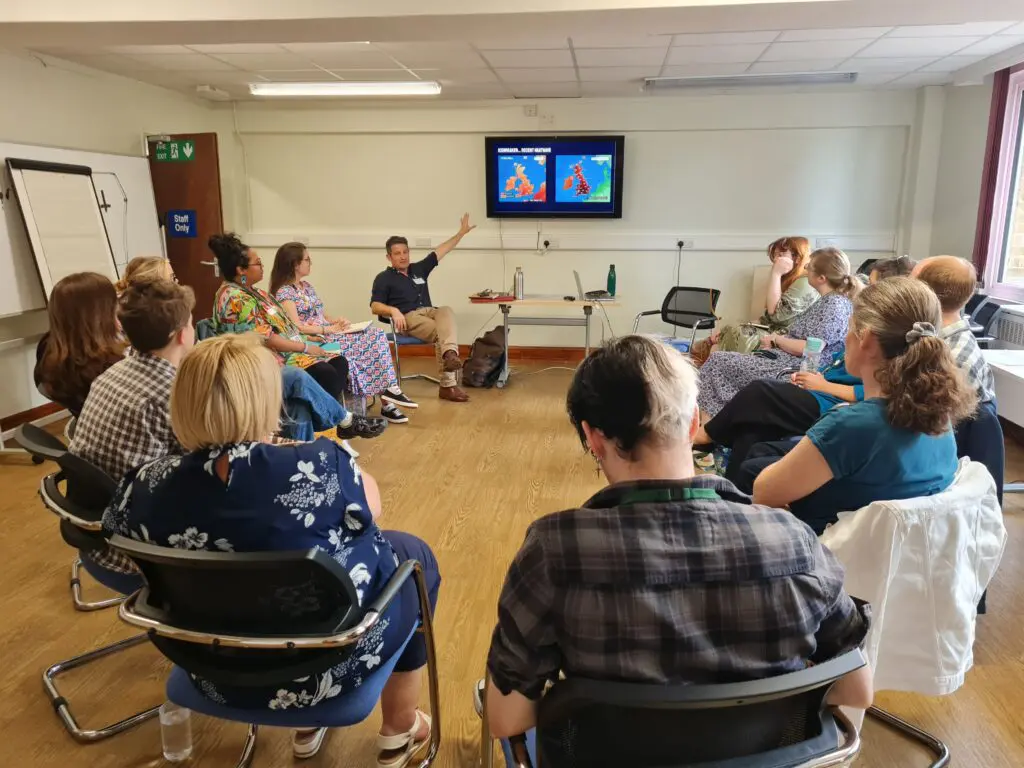
For each year of the Green Library Hubs project, JB is running a series of in-person workshops and online sessions for library employees and volunteers for at least three hubs. The overall aim is to build understanding and confidence to support the libraries in their role as climate action hubs. Through the sessions we work together to join the dots between the climate and nature crisis and the wider issues of concern to communities, and explore green hub initiatives through the lens of justice and inclusion. We also delve into specific topics (e.g. energy, food), sharing examples from other libraries and providing opportunities to consider broader communication and community engagement: why action matters and what they can do about it.
“The training approach brought out a lot of positivity and more of a ‘we can do something about this’ attitude. You also can’t underestimate the power of a session where everybody’s welcome, no matter where you come from.” – Blackburn with Darwen library service training participant
The biggest theme which emerged from this year’s training was the power of connection:
- the energy, motivation and ideas which come when people have the chance to connect with each other on climate action
- the opportunities to affect more meaningful change when we connect environmental action to the issues which matter to local communities and people – from fuel poverty to air quality and health and well-being
- the ability to engage with people from different walks of life when we connect climate action to its wider benefits – bringing people together, learning new skills, building a greater sense of pride and belonging in local communities
- the potential to leverage resources and scale impact when libraries connect with existing partners, to build new partnerships through climate action – from beekeeping associations and mental health charities to local wildlife trusts and national campaigns
68 library employees and volunteers participated in the first year of training – from the first three hubs and the British Library. Feedback on the training was not only overwhelmingly positive (95% of participants rated it as great, very good or good) but also led to improvements along the way. People particularly valued the chance to connect with their colleagues on climate action and to learn about what other libraries are doing, as well as the creative and nature-based training activities and the positivity, openness and interactivity which JB’s facilitators brought to the sessions. Post-training evaluation showed an average 20% increase in environmental understanding, knowledge and confidence. The biggest change (26%) was in how confident people feel about talking to library communities about environmental issues and the different ways they can take action – a great result!
“It can be depressing to learn about climate change, so it’s been great to learn what we can do about it. I’ve taken a lot of what I’ve been learning on different topics such as transport and nature into the library. The nature session was the most fun.” – Guildford Library training participant
Initiatives for Lasting Change
“It’s been great to have the chance to get together with other library colleagues. It’s the first time we’ve had dedicated time together on climate action. I really enjoyed reviewing what we have already been doing, what’s worked well and what we can improve, and hearing other library staff opinions about this.” – Camden Library training participant
We’ve seen a wide range of initiatives already from the first three hubs just nine months into their green hub journey. These are our training team’s top picks:
- Claire: The first creative climate event programmed by Blackburn with Darwen library service was a performance of Behold Ye Ramblers, by Townsend Theatre Productions. A play about the beginnings of the right to roam campaign against landowner activities and laws that prioritised private property over the well-being of others, it illustrates the power of collective action and the importance of access to nature for all. The library ran a range of activities around the show: a peatland pop-up before the show, with a talk by the Lancashire Wildlife Trust about Peatland Restoration Project’s work to protect the Sphagnum Moss which grows in the moors; post-show discussions during which people shared their stories of the moors; distributing information about local group hikes for all abilities organised by the Council’s Re:Fresh team; a Lancashire Wildlife Trust event about local nature and community togetherness, and; a peatland foraging book display and sharing of foraged food recipes.
- Tenaya: Camden Libraries’ green hub activities have put a lot of emphasis on providing safe, supportive spaces in which people can come together and learn. For example, the sewing club, run with volunteer-led StitchbyStitch, provides a relaxing, supportive space to sew, fix clothes and learn together. It has been attended by over 80 people so far, many of whom couldn’t previously use a sewing machine. Another example is the workshop series run by mental health charity Waythrough – who support people with mental health, drugs, alcohol or related challenges – exploring how connection with nature can support recovery.
- Roland: The circular economy is an important theme for Guildford Library, which is home to Zero Carbon Guildford’s Library of Things. In June 2026, Science Owl ran a Broken Umbrella Challenge workshop at the library, working with children to take apart broken toys and make them into something new. The workshop was a fun way for children to learn about waste and repurposing materials and learn new skills in the process.
To find out more about what the green library hubs have achieved in the first year of the project, click here.
As a team, we gained a more up-close appreciation of public libraries as places of trust and community service, who do so much with limited resources, and a deeper understanding of why they are so well-placed to catalyse climate action in their communities. We are also seeing libraries considering how to make their green hub initiatives part of their wider services beyond the three-year project funding. The next training programme kicks off in November, where we’re excited to welcome three new hubs, spanning the whole length of the country: Redruth Library in Cornwall, Gateshead Libraries and Leabharlainn nan Eilean Siar/Western Isles Libraries.
Final Reflections
All Green Library Hubs take part in the Green Library Campaign’s annual Green Libraries Week, running 21st-28th October this year. The theme is Climate Facts for a Greener Future: navigating mis- and disinformation in libraries. JB Programme Lead, Claire Buckley will be speaking at Libraries for positive climate action: accessible climate information on October 26th, one of a wide range of the British Library’s Green Libraries Week events.
Check out the Green Libraries Week map to see what’s happening across the UK
Spread the word