
– Written by Graciela Melitsko Thornton, Creative Green Programme Lead
In mid-June, when I arrived in Paris, the city was in the middle of the most intense heatwave it had ever experienced. I was there for the final day of La Caverne du Pont Neuf, an immersive, multi-sensory art installation created by the artist JR, and was joined by the Creative Green team who were advising on its carbon footprint.
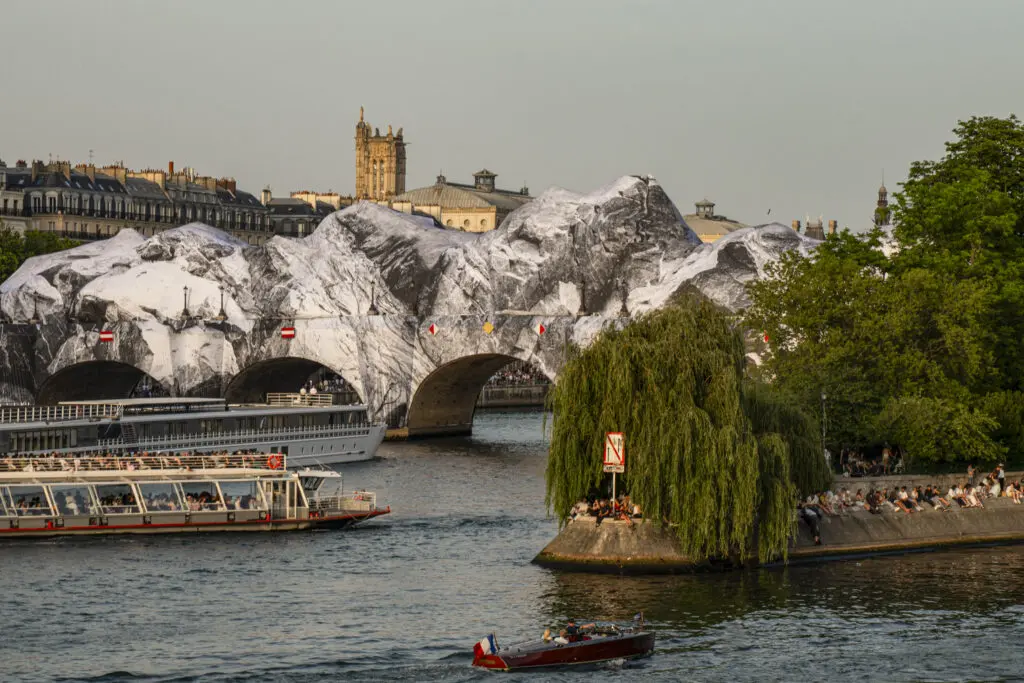
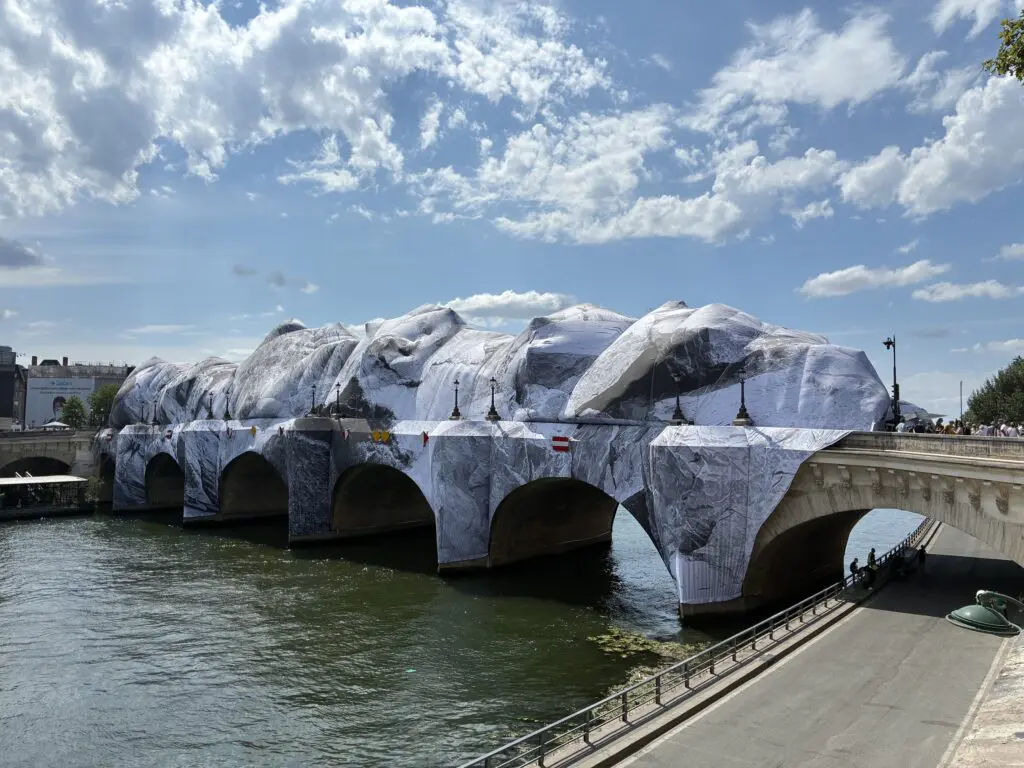
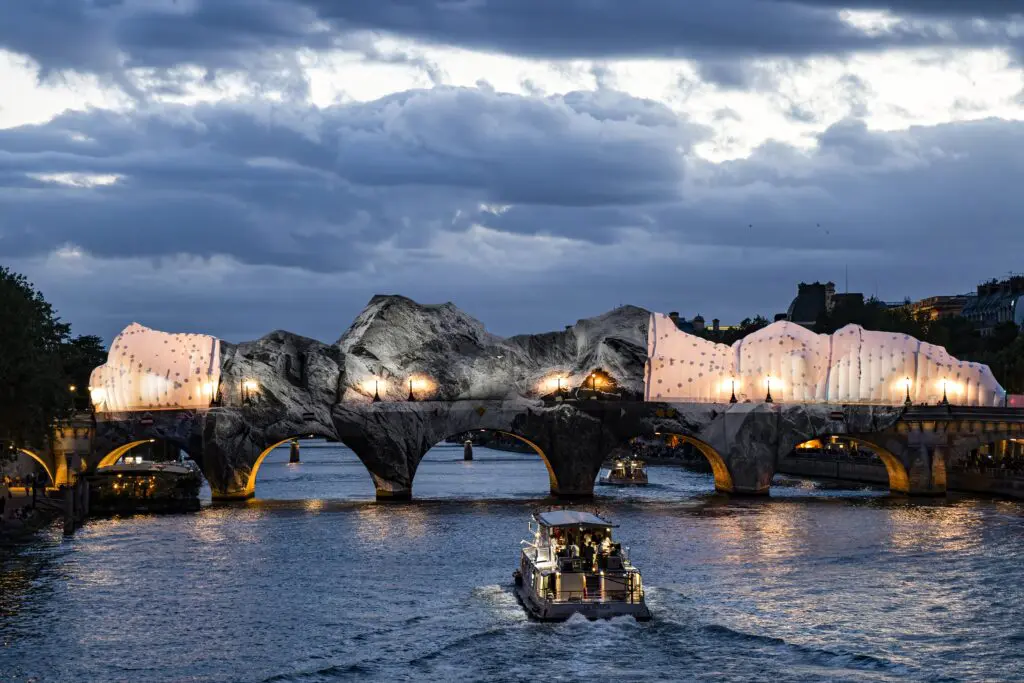
The bridge was 120 meters long and up to 18 meters high, but had been transformed into a cavernous, music-filled walkway after being wrapped with grey, black-and-white fabric inspired by the quarries of l’Oise, from which the stones of the bridge originated.
When I arrived on the final day of the installation, I met a happy, yet visibly emotional collective, celebrating the culmination of their enormous efforts that spent over three years in the pipeline.
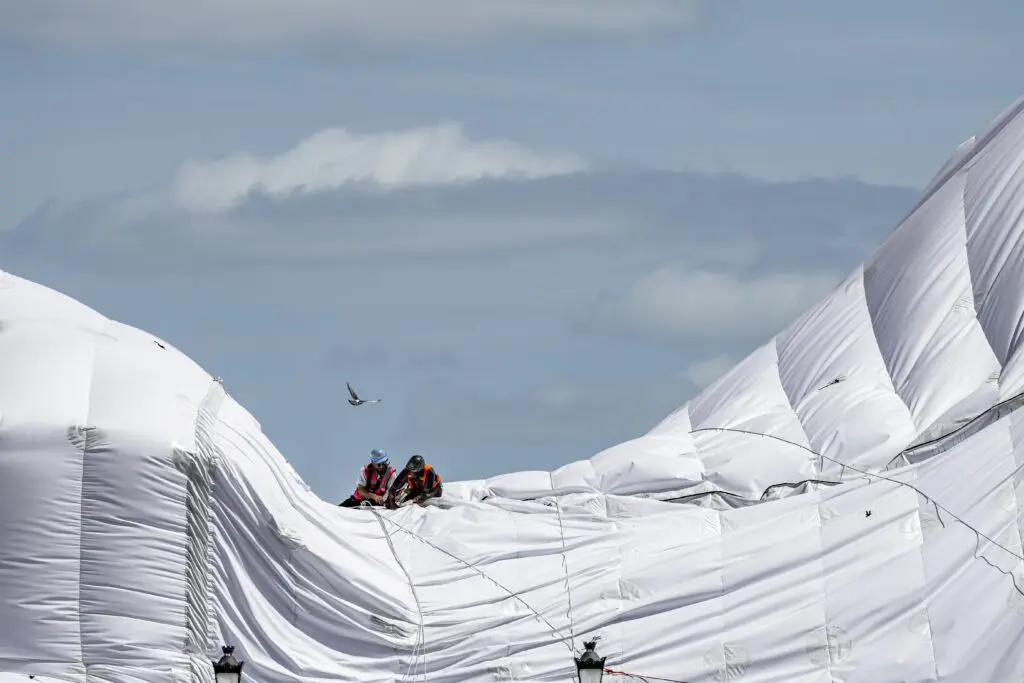
The artists, designers and installers described the process as a ‘climate odyssey’, having navigated a range of challenges during installation, from near-freezing temperatures and sleet to fierce storms. Powerful gusts even compromised the structural fabric of La Caverne du Pont Neuf, forcing an agonising impasse and postponing the launch until the record-breaking heat arrived, with temperatures exceeding 40 degrees for nine days.
The collective agreed that resilience, tenacity and creativity were essential to overcoming these obstacles. They were motivated by a belief that public art should be free to all, and united by a shared commitment to revealing familiar urban architecture in new ways while repairing, sustaining and enduring the complex construction of the artwork.
public art and events in the time of climate emergency
The increasing frequency of extreme weather events underscores the urgency of prioritising city-level adaptation across all areas of our lives, given the systemic interconnectedness of climate impacts. As weather becomes more unpredictable, projects and organisations need robust contingency plans and thorough assessments of how extreme weather could affect their work.
Consequently, significant questions arise about how cultural activities should be integrated into wider climate adaptation and extreme weather planning at the city level.
In France, one of the early responses to the heatwave was to restrict alcohol sales during the Fête de la Musique in an effort to reduce pressure on emergency and healthcare services, allowing medical staff to focus on those most at risk. Early estimates suggest the heatwave contributed to around 1,000 excess deaths in France, highlighting the urgent need for governments across Europe to review how they prepare for extreme heat and invest in measures that better protect vulnerable people
How France’s heatwaves have changed
As the installation opened, France experienced the most severe heatwave ever recorded – an event that would have been very unlikely or virtually impossible without fossil-fuel-caused global warming. In 1976, three years before Christos and Jeanne Claude planned for the original Pont Neuf Wrapped started, a similar June heatwave would have been about 3.5°C cooler during the day, and 2.4°C cooler at night. These warm extremes will continue under 2°C of global heating, becoming 290% more likely in France; the annual likelihood of ‘unprecedented’ summer heat will increase by 67% across Europe.
JB’s role on the project
Similar 1970’s art installation Pont Neuf Wrapped considered its environmental impacts at every stage of the project. Likewise, the Creative Green team developed a methodology to measure the carbon footprint of La Caverne du Pont Neuf.
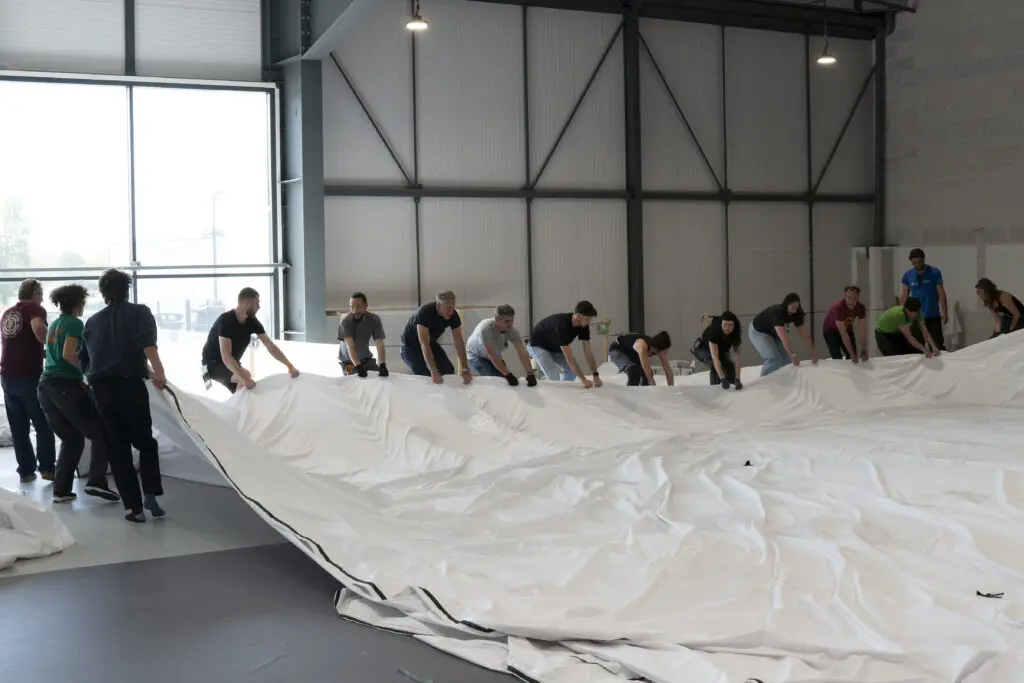
The art piece’s design, which relied on inflation and structural arcs, was measured precisely to reduce the amount of fabric required, helping eliminating waste. The team also sourced nearly all materials from within Europe and is focusing on providing opportunities for Paris-based workers and French artists. Part of the internal fabric will be kept by the artist for future installations, while sections of the inflatable and outer textile will be upcycled and donated to social projects and schools, with support from a local circular-economy organisation that will monitor the process.
The installation’s metal structures and all IT equipment will also be reused.
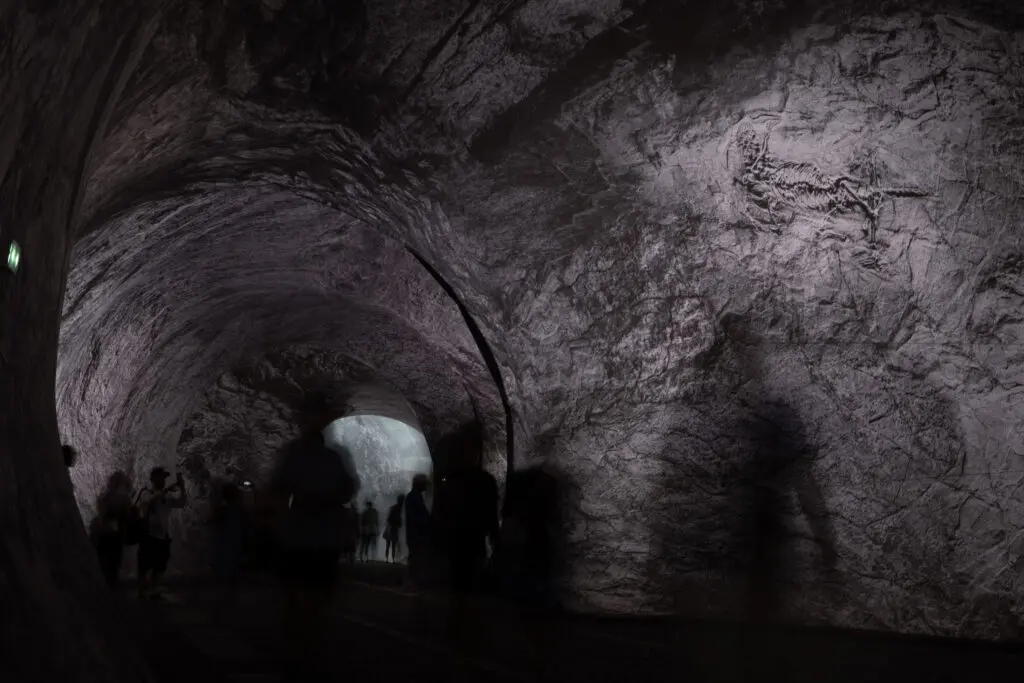
The project relied on the city’s energy grid, a largely low-carbon electricity mix, without harmful fossil-fuel-based generators and lights and sound equipment were chosen with energy efficiency in mind. Specific measures were also implemented to reduce energy and water consumption during construction and the installation of the workshop.
The JR team involved JB to support environmentally based decision-making from very early in the project. The process of collecting accurate data involves detailed meetings and ongoing effort from the JR project team and their entire supply chain. To gather this data, the JB team co-developed templates for collecting environmental data across:
- materials (including material type and origin, product name, weight, and how it would be reused, recycled, or disposed of)
- electricity metering and water use
- freight and other transport
The information and resulting CO2 calculations were assessed by JB and an external independent consultant for quality assurance. The results will be shared publicly at the end of the decommissioning process.
Culture’s role in spotlighting environmental impact and justice
When we were approached for this work, we had already worked with Christos’ studio, which meant we were already familiar with JR’s practice. We were struck by JR’s commitment to addressing social justice and environmental issues through art, as well as the ambition behind his work. Find out more via the links below.
Déplacé·e·s – a series of large-scale public works created in collaboration with displaced communities, particularly those displaced by climate change.
Standing March – a video projection created by JR and Darren Aronofsky during COP21 in Paris
Spread the word